Click here to read the previous post Adjusting to Life in Spain: Exploring the Roman Ruins in Mérida
In the two years I’ve lived in Spain, I’ve gotten used to many things, like:
Weird foods eaten on a regular basis, like grilled pig's ear and tripe stew
Crazy local festivals that involve setting a broom on fire and chasing people with it
Teaching my brain to understand the 24-hour clock
Hanging my freshly washed clothes on a clothesline
Ordering wine by the region, not by the grape (but I don’t know the regions!)
Fish, seafood and basically any other sea-faring creature for Christmas dinner
Weekly—nay, hourly—parades and holidays, all of them apparently required by law to pass directly beneath my window
But if there’s one thing I just can’t get used to, it’s the extremely late dinner time.
In Spain, eating your last meal of the day at 9 or 10 p.m.—sorry, 21:00 or 22:00—is completely normal. And 11 p.m. is by no means unheard of. Ask a Spaniard why dinner is so late, though, and you’re unlikely to get a satisfying answer. The response tends to be something along the lines of, “Because...that’s when we eat dinner?”
Fair enough.
But, determined to figure out the origin and reason behind this acid-reflux-induing custom, I dove down the rabbit hole. And as it turns out, the explanation I kept encountering—Franco did it—is only part of the story.
Is Spain the Only Country with a Late Dinner Time?
First, I wanted to know whether Spaniards actually eat unusually late or whether this was just the habit of my boyfriend, his family and my Spanish friends.
A large study comparing eating times across 10 European countries found a clear north-south divide. In Spain, the most common meal times are:
Breakfast: 9:00
Lunch: 14:00
Afternoon snack: 18:00
Dinner: 21:00
In northern European countries, all these meals tend to happen earlier. The study found that Mediterranean countries generally ate later while also consuming a larger proportion of their daily calories earlier in the day.
Another survey found that 85% of Spaniards eat dinner after 9 p.m., with 34% of those eating after 10 p.m.
So the answer? Yes, Spain really does eat dinner late.
And, I discovered, surprisingly Spain is not alone—Greece also tends toward these late meals, with Italy and France eating relatively late.

Source: PubMed
Which leads to the obvious question: Why?
So…Are Late Dinners Franco’s Fault?
If you Google why Spaniards eat so late, you’ll quickly come across one simple explanation: Franco.
Before the second world war, mainland Spain kept the same standard time as the UK and Portugal. But in March 1940, during the dictatorship of Francisco Franco, Spain moved its clocks forward by one hour. The story goes that Franco made the change specifically to align Spain with Hitler’s Germany.
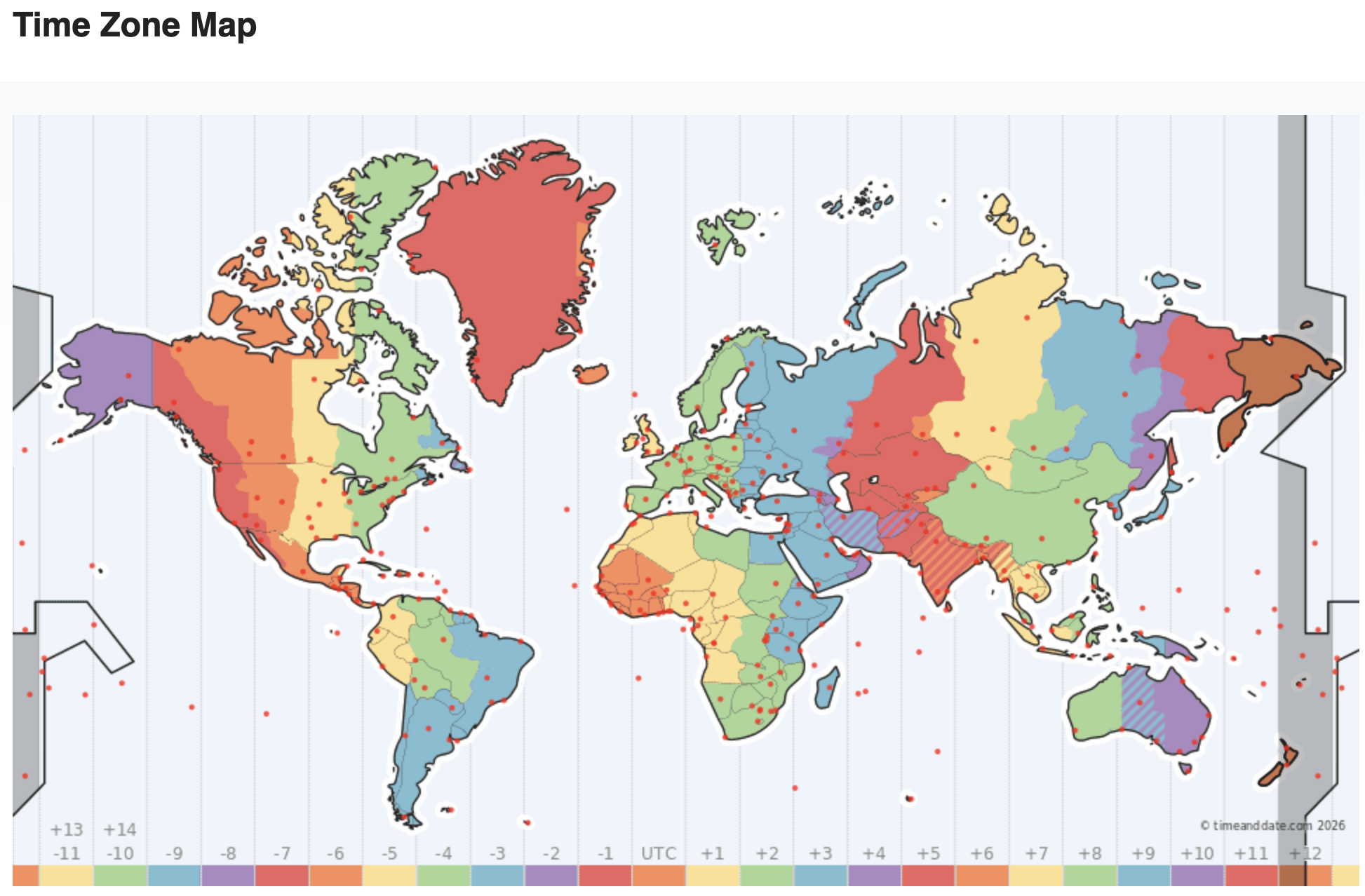
Source: Time and Date
Not only could I not find enough evidence to state that as fact, but the government’s official explanation was fairly vague: It simply wanted Spain’s schedule to line up with those of “other European countries” and cited unspecified benefits of advancing the clock. This comes from the official 7 March 1940 order published in the Boletín Oficial del Estado on 8 March 1940, no. 68, pages 1675–1676.
The red-circled paragraph says:
“Considerando la conveniencia de que el horario nacional marche de acuerdo con los de otros países europeos, y las ventajas de diversos órdenes que el adelanto temporal de la hora trae consigo.”
The translation is:
“Considering the desirability of having the national timetable conform with those of other European countries, and the various advantages that temporarily advancing the clocks brings with it.”
Even more interestingly, the change was not intended to last forever. The government indicated that a future date would be announced for returning to the previous time, but. . .that date never came.
This might explain why Spanish life can look incredibly late on the clock. Solar noon occurs later by official clock time than it does in places farther east within the same time zone, and summer daylight saving pushes the lateness even further. A 10 p.m. summer dinner with sunlight still lingering outside doesn't psychologically feel quite like a 10 p.m. dinner in pitch darkness.
At this point I thought, “Ok, mystery solved.” Franco changed the clocks for no reason. Spaniards kept doing everything according to the sun. Therefore lunch became 2 p.m., dinner became 10 p.m., and voilà.
Except there was one big problem with this theory. . . .
Spaniards Were Already Eating Late
Apparently, Spaniards did not need Franco’s assistance to eat dinner at 10 p.m. They were doing just fine on their own.
In the 1920s—more than a decade before Spain changed its clocks in 1940—late Spanish meal times were already attracting criticism. In 1929, dictator Miguel Primo de Rivera complained that middle- and upper-class Spaniards were eating lunch around 2:30 or 3 p.m. and dinner around 9:30 or 10 p.m., hours he considered absurdly late.
This is an excerpt from the Spanish newspaper La Rioja from 10 October 1929:
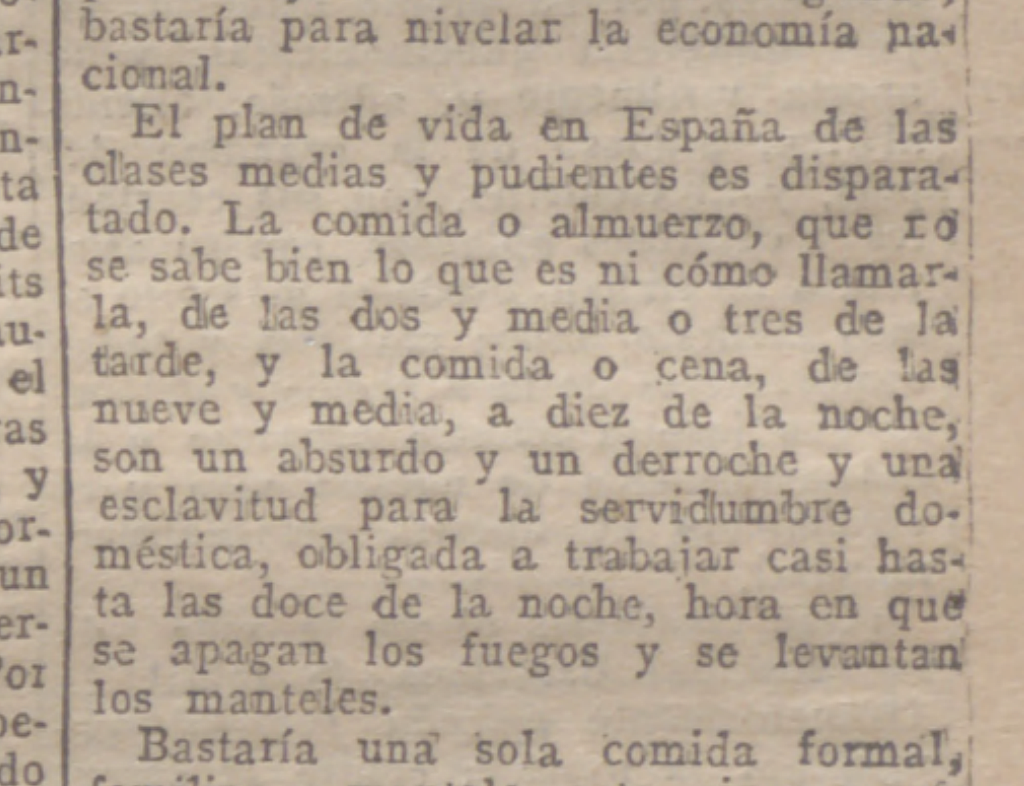
Newspaper article translation:
“The lifestyle of the middle and wealthy classes in Spain is preposterous. The midday meal—or lunch, or whatever one chooses to call that repast taken at two-thirty or three in the afternoon—and the evening meal or dinner, served between nine-thirty and ten at night, represent an absurdity, a waste, and a form of servitude for domestic staff, who are forced to work until nearly midnight—the hour when the fires are extinguished and the tablecloths are cleared away.”
Primo de Rivera proposed moving the main meal to somewhere between late afternoon and early evening. And the Spanish people responded to this initiative in roughly the same way they respond to me when I suggest eating dinner at 6 p.m.: No.
So Franco changed Spain’s clock, but he did not invent Spain’s late dinner. The habit already existed.
Okay, so now I had a new question: Why were Spaniards eating so late before the famous time-zone change?
Lunch Is Late—and It’s the Main Event
In Spain, lunch is the main meal of the day, complete with appetizer, entrée, coffee and dessert.
Mediterranean countries tend to consume more of their daily energy earlier in the day, even though their meals occur later by the clock. In Spain, lunch is commonly between 2:00-3:30 p.m., compared with noon in many northern European countries. (Scroll up to check out that European mealtimes chart again.)
So if you’ve eaten a substantial lunch at 3:00, sitting down to another meal at 6:00 doesn’t make much sense.
And there is another piece to the Spanish eating puzzle: merienda. This afternoon snack fills the big gap between lunch and dinner. In the same European meal-timing study, the most common time for an afternoon snack in Spain is around 6 p.m.
So a person might eat lunch at 2:30, then have coffee and fruit, pastry or a small sandwich around 6, and then eat a lighter dinner at 9:30 or 10. Seen as a complete system, this makes sense.
But I still have a question. . . .
What About the Famous Spanish Siesta?
It’s easy to make the mid-afternoon siesta the culprit: Spaniards eat lunch late, everyone goes home and sleeps for three hours, they return to work until 8 p.m., and naturally dinner gets pushed to 10.
Except...most Spaniards are not spending every afternoon unconscious. In one survey of more than 3,000 adults, 58.6% said they never took a siesta; only 16.2% said they did so every day after eating.
The split workday, however, is a different matter.
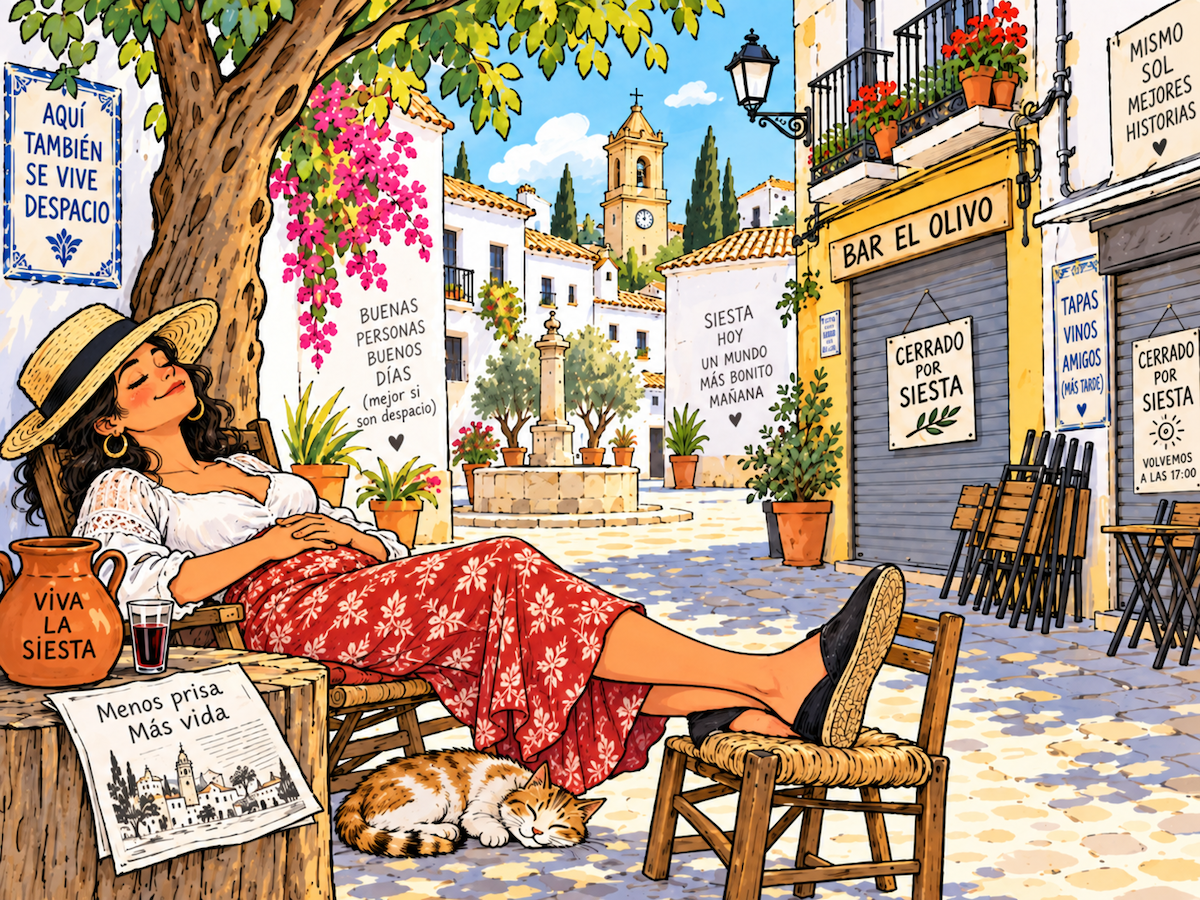
Spain has a long tradition of businesses closing for a generous midday break and reopening later in the afternoon. Many independent shops, professional offices and other businesses close around 2 p.m., reopen around 5 p.m. and remain open until 8 p.m. or so. Several of my friends have had doctor’s or dentist’s appointments at 7 or 7:30 p.m.
And this long midday interruption matters even if nobody actually sleeps. Because if work, shopping, appointments and social life continue well into the evening*, dinner naturally gets pushed back, too. And once everybody else operates on that schedule—your employer, your friends, your kids, stores, restaurants—you can't personally decide that Spain will henceforth eat dinner at 6:15. (Well, you can. You'll just be eating alone.)
*Don’t get me started on the fact that in Spain they refer to the time up until about 9 p.m. as tarde (afternoon), with noche (night) starting then.
Isn’t Eating Dinner That Late Unhealthy?
Now we arrive at my real concern: It’s not so much the late dinner hour, but the fact that it occurs so close to bedtime. Isn’t eating a meal and then going right to bed (as many Spaniards do) hard on the digestive system?
As it turns out, yes, a large meal just before bed may cause or worsen these issues, particularly when it becomes a regular habit:
Acid reflux: Going to bed before the stomach has fully emptied can aggravate reflux-related symptoms, leading to heartburn, regurgitation or throat discomfort—especially for people with GERD. It’s recommended that you eat at least three hours before going to bed.
Sleep quality: Reflux symptoms like heartburn can interrupt sleep and a full belly can make it harder to fall asleep, so people who eat ‘n’ sleep may wake more often or sleep less comfortably.
Appetite and weight: In a controlled crossover trial, late eating increased hunger, lowered leptin and reduced waking energy expenditure—changes that could make weight management more difficult.
Blood sugar regulation: During the night, the body can’t clear sugar from the bloodstream as efficiently. That isn't necessarily harmful after one late dinner, but regularly having elevated blood sugar over long periods is associated with metabolic problems such as type 2 diabetes.
There was a study of 845 people in Spain on the metabolic effects of glucose given four hours before habitual bedtime with the same amount given to another group just one hour before bedtime, simulating earlier and later dinner times. When participants ate closer to bedtime, their melatonin levels were 3.5 times higher, their post-meal glucose response was 8.3% higher and their insulin response was 6.7% lower.
In simple terms: a late meal caused a somewhat larger blood-sugar rise, while the body produced slightly less of the hormone that normally helps lower blood sugar.
So Why Does Spain Eat Dinner So Late?
After spending way too much time researching a question that most Spaniards seem perfectly content never to ask, I have reached the deeply unsatisfying conclusion that there is no single reason.
It wasn't just Franco.
It isn't just the “wrong” time zone.
It isn't because everyone takes three-hour siestas.
Spain's late dinner appears to be the product of old cultural habits, a late and substantial lunch, afternoon snacking, historically split working hours, social synchronization and, yes, an official clock that makes the whole day appear even later than it otherwise would.
The key thing is that all these habits reinforce one another: Dinner is late because lunch is late. –> Lunch fits into the workday. –> The workday fits into Spanish social life. –> Merienda bridges the gap. –> Restaurants serve customers when customers expect to eat. –> Everybody coordinates with everybody else.
And once an entire country has agreed that 10 p.m. is a perfectly reasonable time to start thinking about dinner, there is apparently very little one Canadian immigrant can do about it.
Except keep eating dinner at a reasonable time—and just refer to it as a “late lunch”.
Note: All photos taken or created (using DALL-E) by Selena Templeton unless otherwise noted.
If you enjoyed reading this travel blog, check out some of my other adventures:
