Click here to read the previous post Adjusting to Life in Spain: 69 Useful Spanish Phrases for Everyday Life
“Do you want to go see a play in the Roman ruins in Mérida this Friday?” my boyfriend asked me on Wednesday.
“Hell yeah,” I said, knowing that if he was suggesting it, it was going to be interesting.
Then I looked up just what it was I had agreed to.
Mérida, Spain
Mérida is a historic—scratch that; every place in Spain is historic. <ahem> Mérida is a city in the western part of Spain, about 340 km (210 miles) southwest of Madrid and 70 km (45 miles) east of the Portuguese border. It has a population of 60,319.
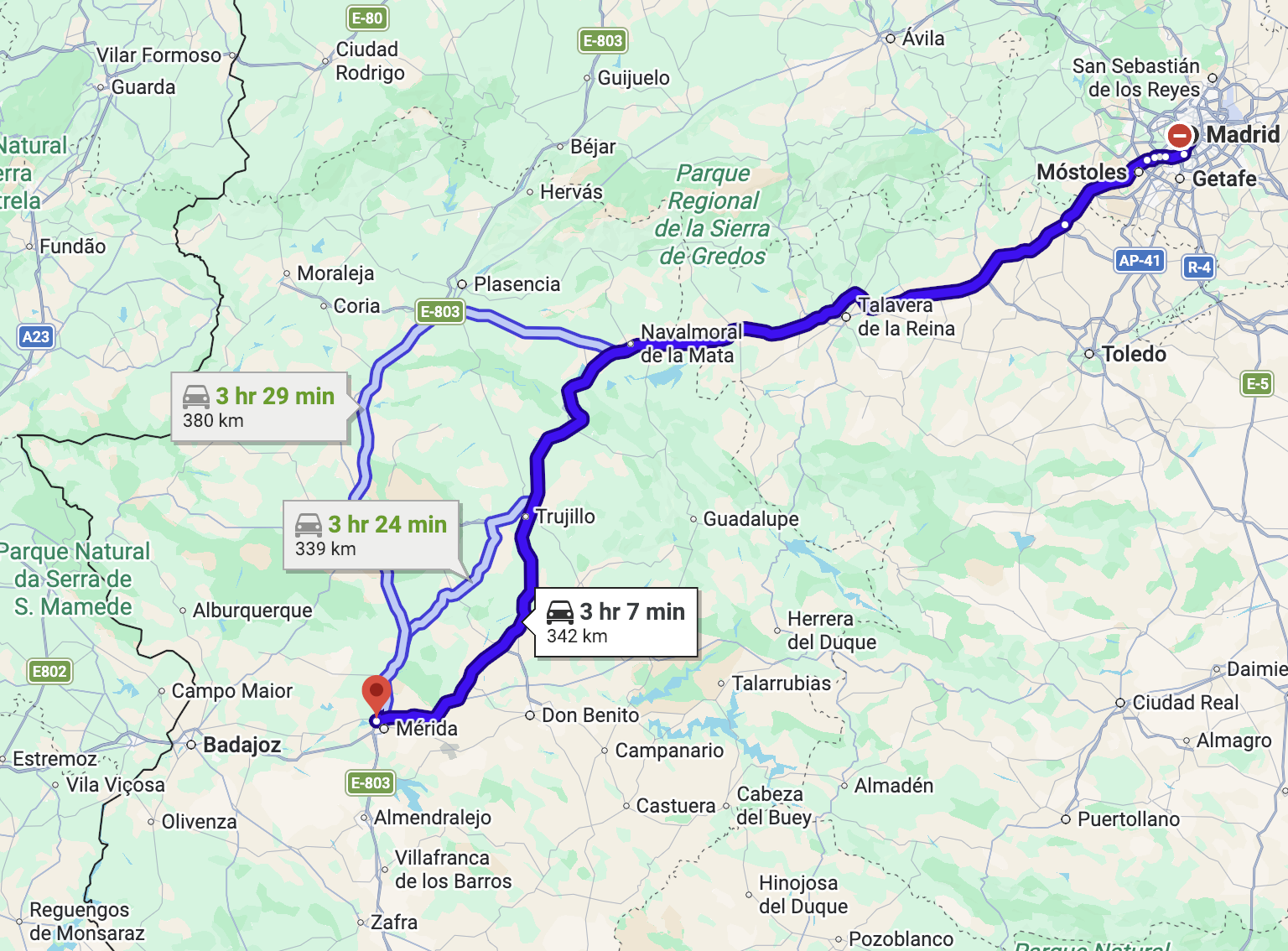
It’s the capital of the autonomous community of Extremadura.
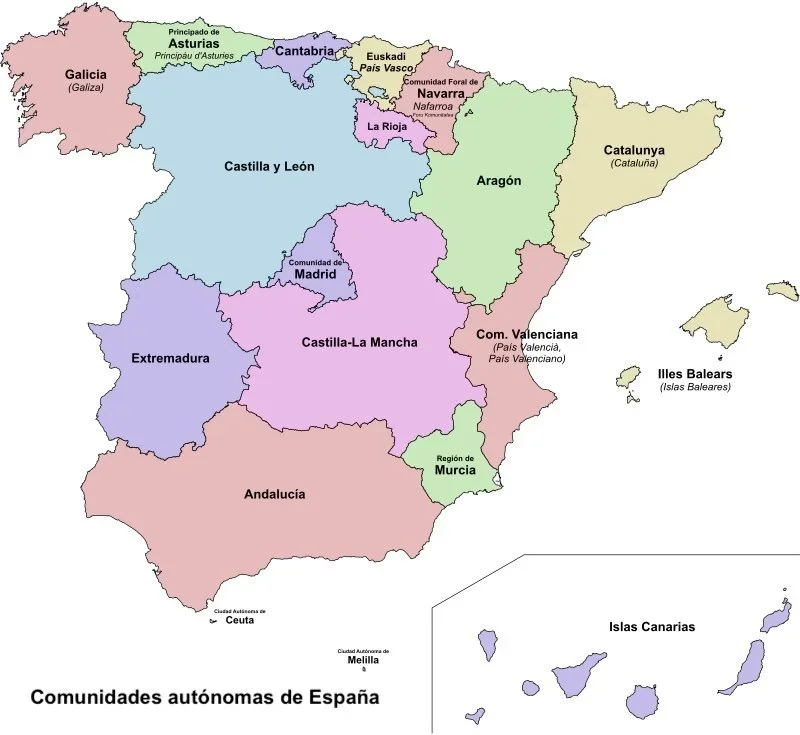
Quick refresher (mostly for myself!): Spain has 17 autonomous communities, which contain 50 provinces. An autonomous community is kind of like a state with its own government, and a province is mainly an administrative division. So Extremadura is the autonomous community, Badajoz is the province and Mérida is both a city and the capital of Extremadura.
My boyfriend A, his teenaged son R and I drove down to Mérida from Jarandilla, and on the way he told us a little bit about the city.
Brief History of Romans in Spain
I was so interested in this history that I researched a bit more to try to get a better understanding of it. Feel free to skip this and continue with our trip to Mérida!
So, the Romans were in the Iberian Peninsula for more than six centuries and called it Hispania, which included modern Spain and Portugal.
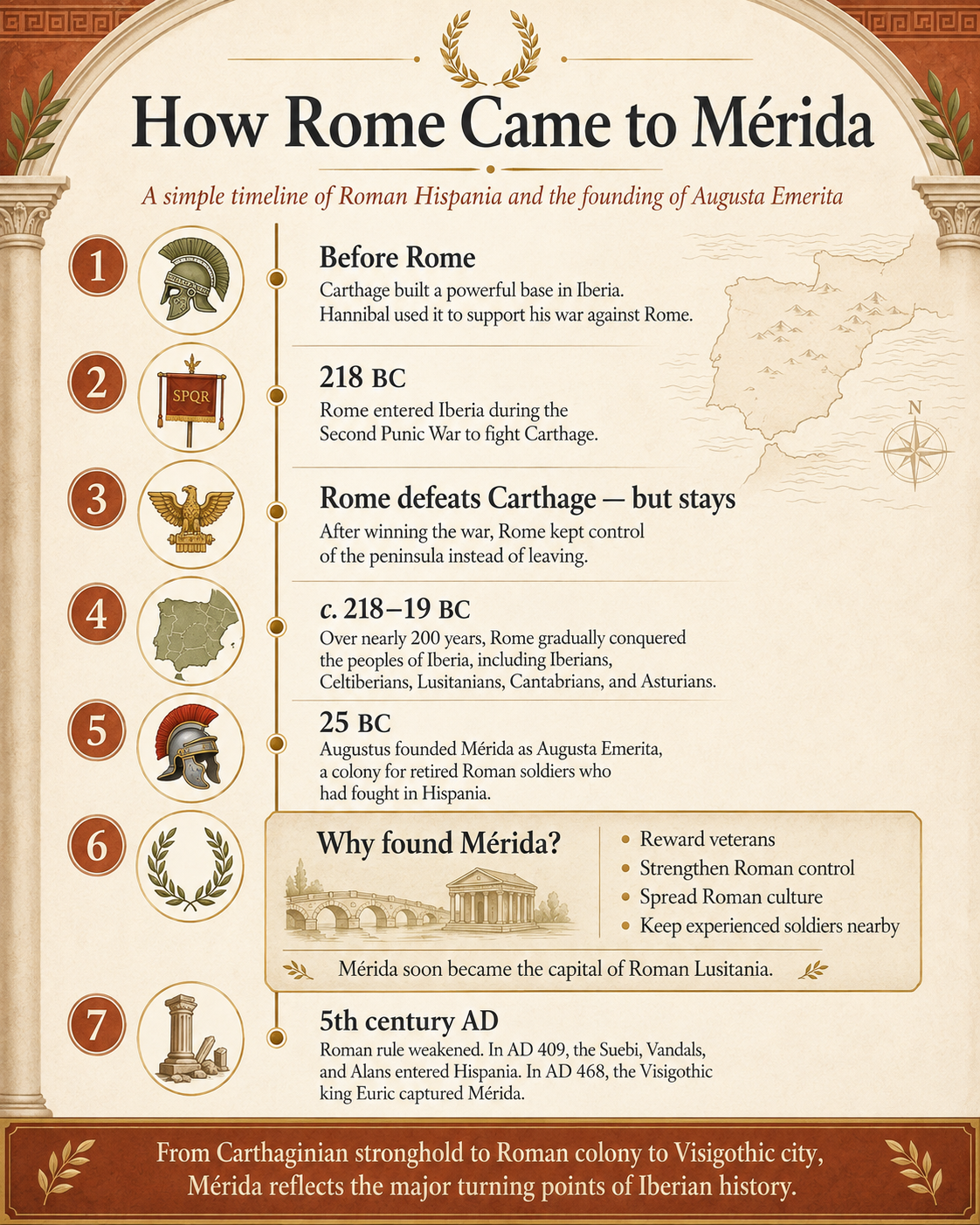
Rome came to (what we now call) Spain during the Second Punic War between Rome and Carthage. Hannibal was a Carthaginian general, and one of Rome’s greatest enemies, and had built a powerful base in Iberia to help them invade Italy. The fighting in Spain started as a war against Carthage, but after defeating them, Rome stayed.
But staying in the peninsula meant conquering the many different groups of people that already lived here, such as Iberian, Celtiberian, Lusitanian, Cantabrian, Asturian and others. It took about 200 years, but finally under Emperor Augustus, Rome's military conquest of the peninsula was completed around 19 BC. And this is when Mérida was founded.
Mérida was created as Augusta Emerita, a colony for retired Roman soldiers who had fought in Hispania, and it soon became the capital of the Roman province of Lusitania. How nice! I thought. Well, not just to be nice. The emperor was “rewarding” the soldiers for their service, but mostly he was using them to strengthen Roman control of this newly conquered territory, help Romanize the region (language, architecture, etc.), and make sure there were warriors on hand should they need to fight in that area again.
Roman authority here gradually unraveled during the 5th century as the Roman Empire in general weakened. Around AD 409, Germanic peoples—including the Suebi, Vandals and Alans—entered Hispania and took control different parts of the peninsula, and Mérida eventually came under Suebi rule. Later in the 5th century, the Visigoths became the dominant power in Hispania when Visigothic king Euric captured Mérida in AD 468, and from that point on Mérida was part of the Visigothic kingdom rather than the Roman Empire.
A new chapter in the city’s history began in AD 713 when Muslim forces took Mérida, but that’s a story for another time.
UNESCO describes Augusta Emerita as having been “created as an idealised model of Rome,” which “is why Mérida has such extraordinary architecture.”
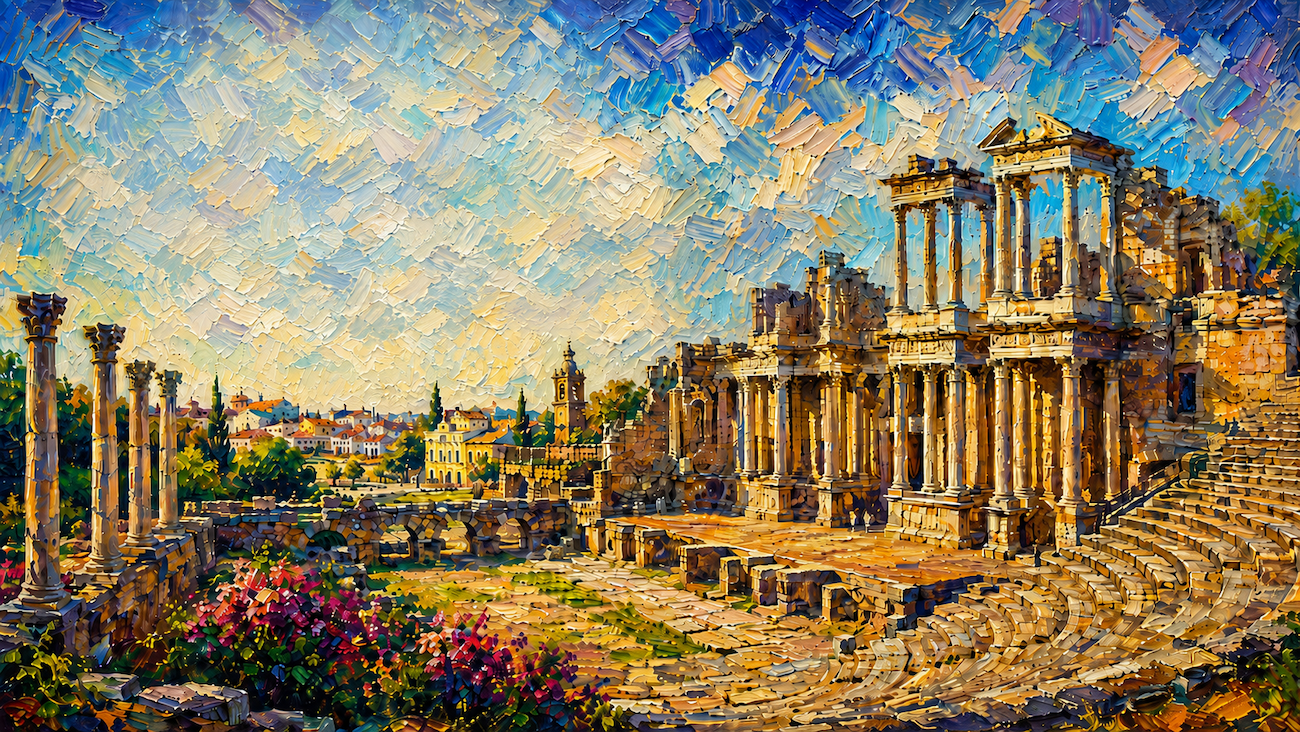
And more than two millennia later, some remarkably well-preserved Roman ruins are still standing (more on that below).
Back to Mérida
Aside from the living history that still exists, the city of Méridad is known for its jamón ibérico (Iberian ham), migas extremeñas (Extremaduran-style fried bread crumbs with olive oil, garlic and paprika, plus bits of chorizo, bacon or pork mixed in),...

Source: Bon Viveur
…and its festivals and performing arts.
International Classical Theatre Festival of Mérida
Mérida’s annual festival takes place in the summer, and this year it was the seventy-second edition, which runs/ran from July 3-August 30.
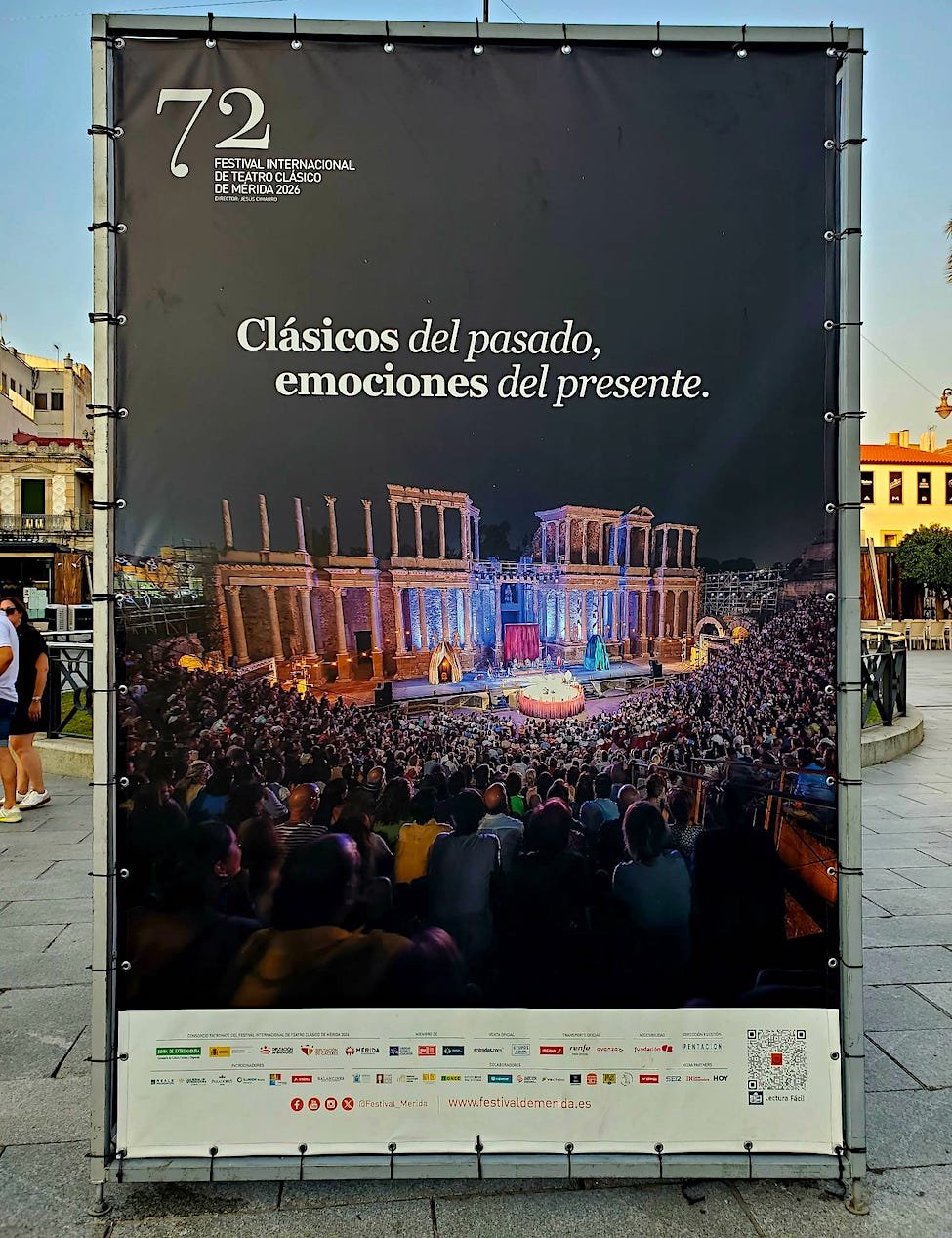
The performing-arts festival is comprised of plays, dance and musicals inspired by Greek and Roman classical theatre, mythology and literature. Whether or not you’re particularly a fan of classical theatre, I think it’s still worth attending because you’re watching a performance in a venue built roughly 2,000 years ago!
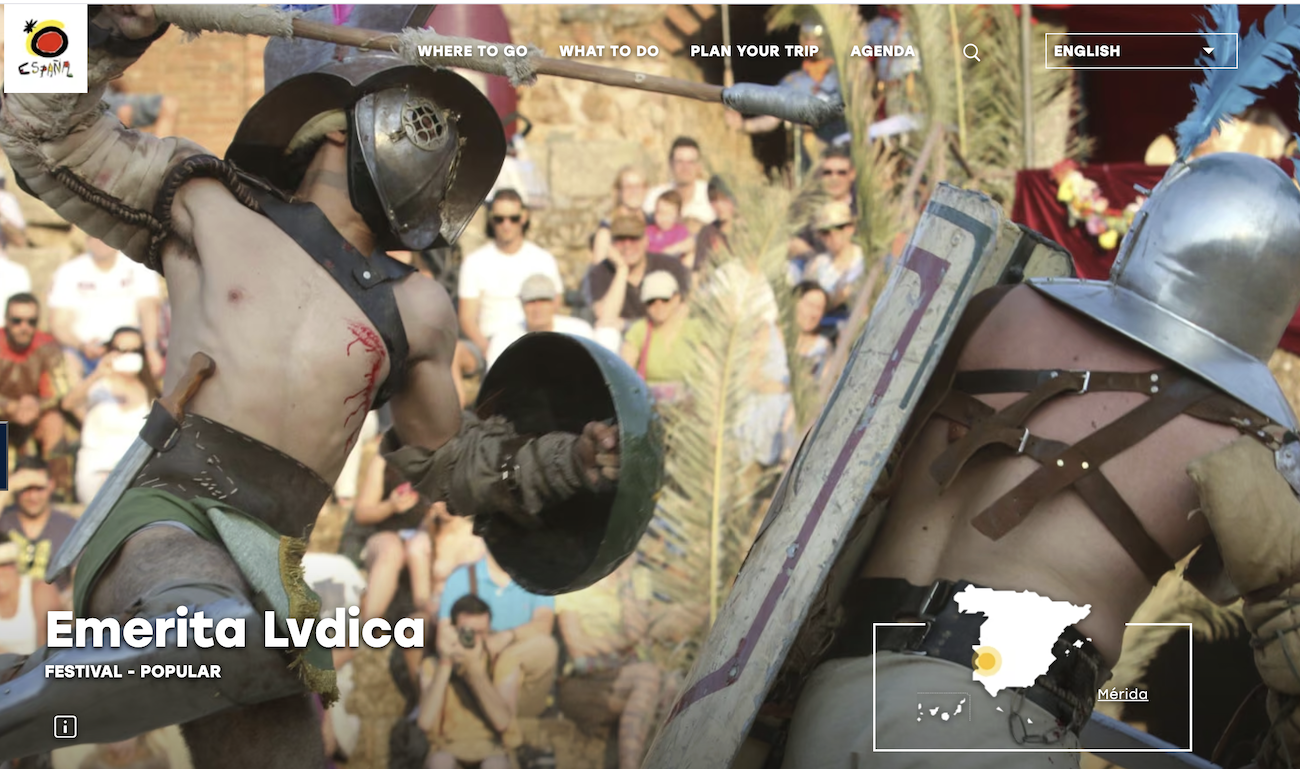
By the way, every May Mérida also hosts Emerita Lvdica, a Roman historical-reenactment festival with legionary parades, gladiator fights, ceremonies, markets, costumes, and other activities that recreate life in ancient Augusta Emerita. So if you’re a fan of ancient Rome, this is the city for you!
Source: Spain.info
Ancient Roman Theatre
We checked into our hotel, had a bite to eat at a nearby bar (which, as a side note, always sounds strange to my North American ears, but in Spain bars often serve actual food), and then walked 1 km (.62 miles) to the archaeological complex which contains the:
Teatro Romano de Mérida (Roman Theatre of Mérida)
Anfiteatro Romano (Roman Amphitheater)
Museo Nacional de Arte Romano (National Museum of Roman Art)
First stop: Museo Nacional de Arte Romano
The National Museum of Roman Art contains objects excavated in Mérida (i.e. ancient Augusta Emerita), including mosaics, sculptures, inscriptions, coins, ceramics, glassware and everyday household objects that are spread across three levels (well, one main floor and two mezzanines).
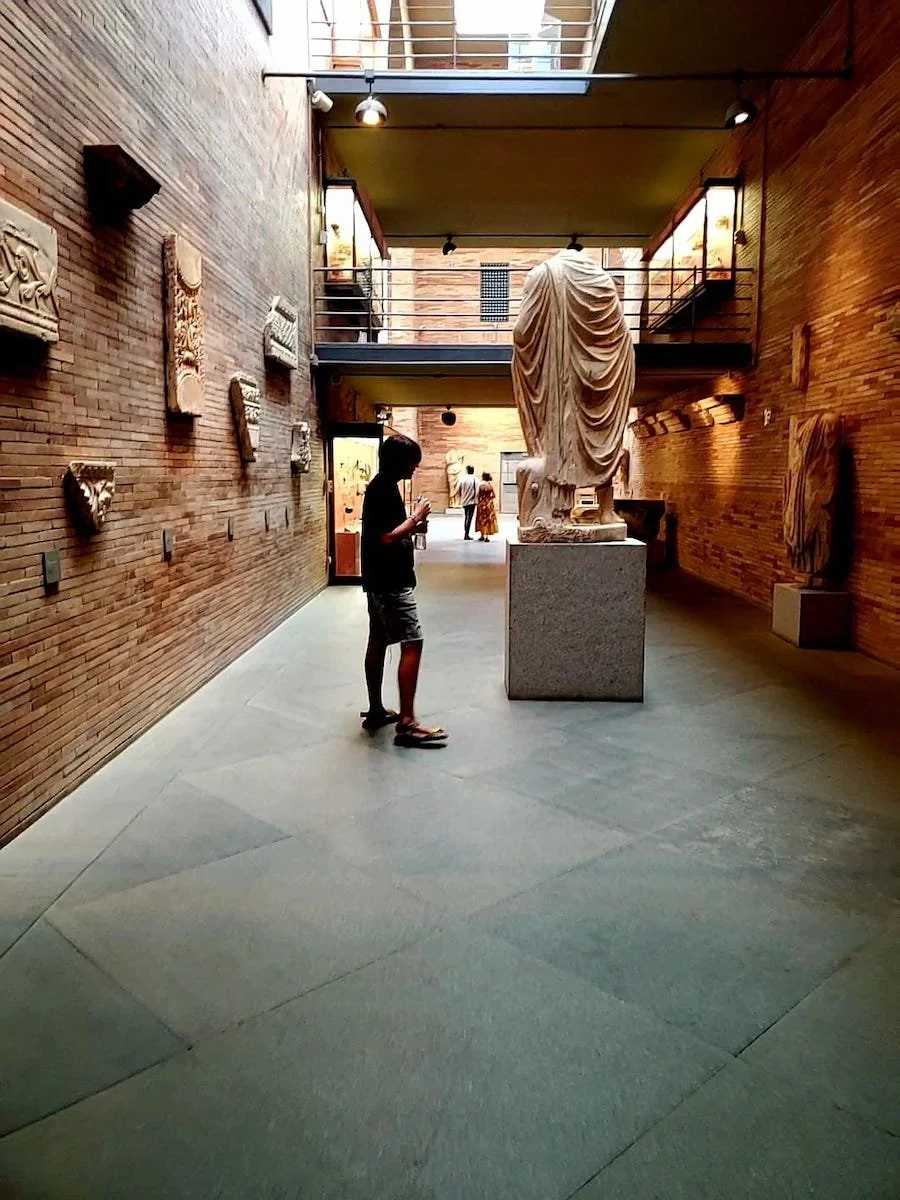
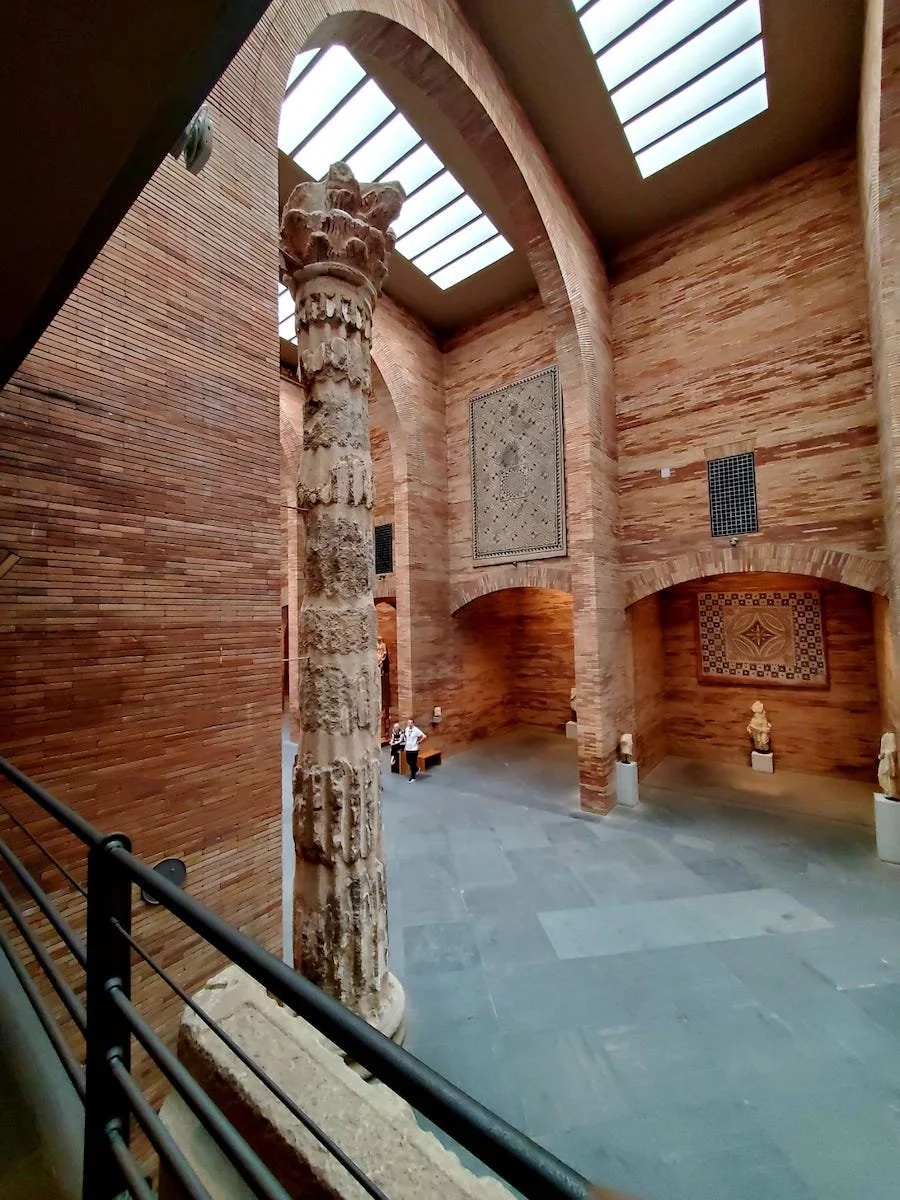
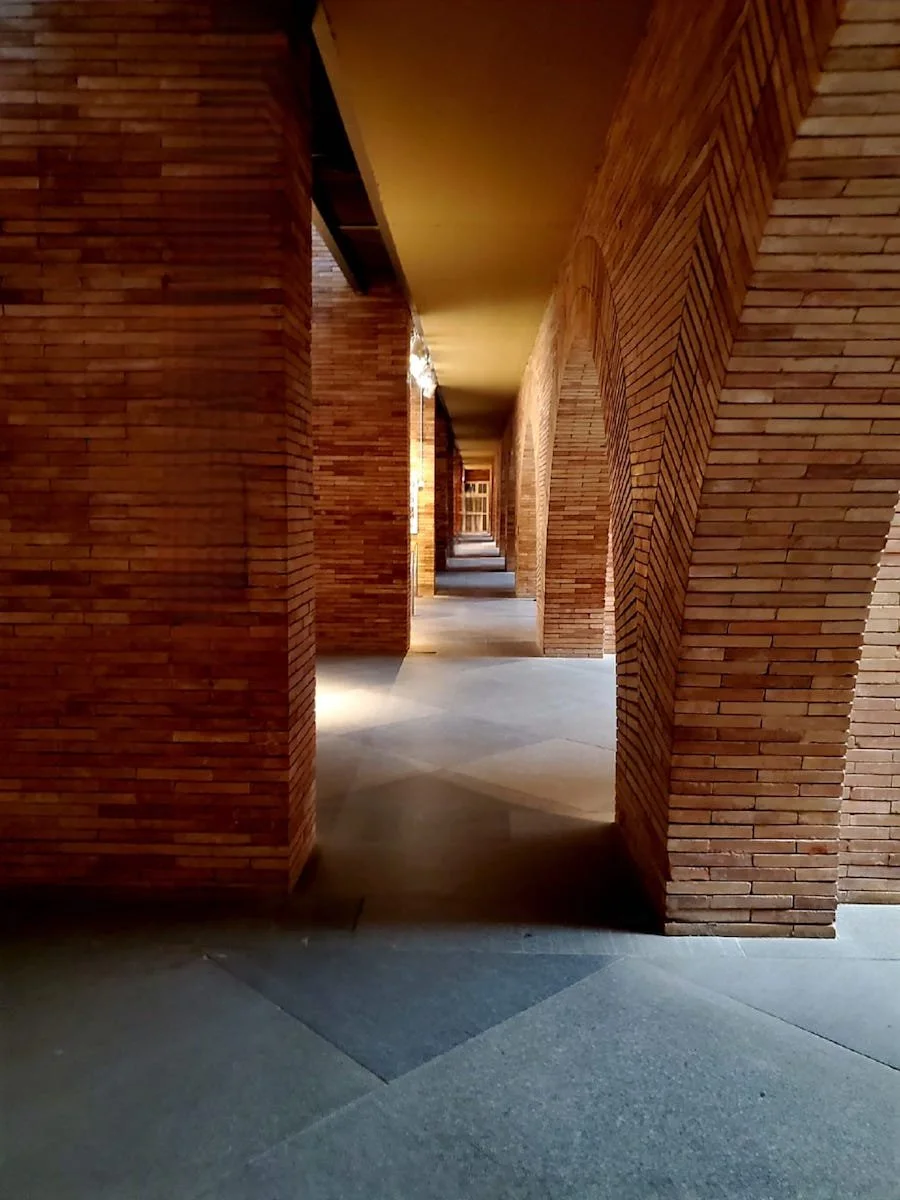
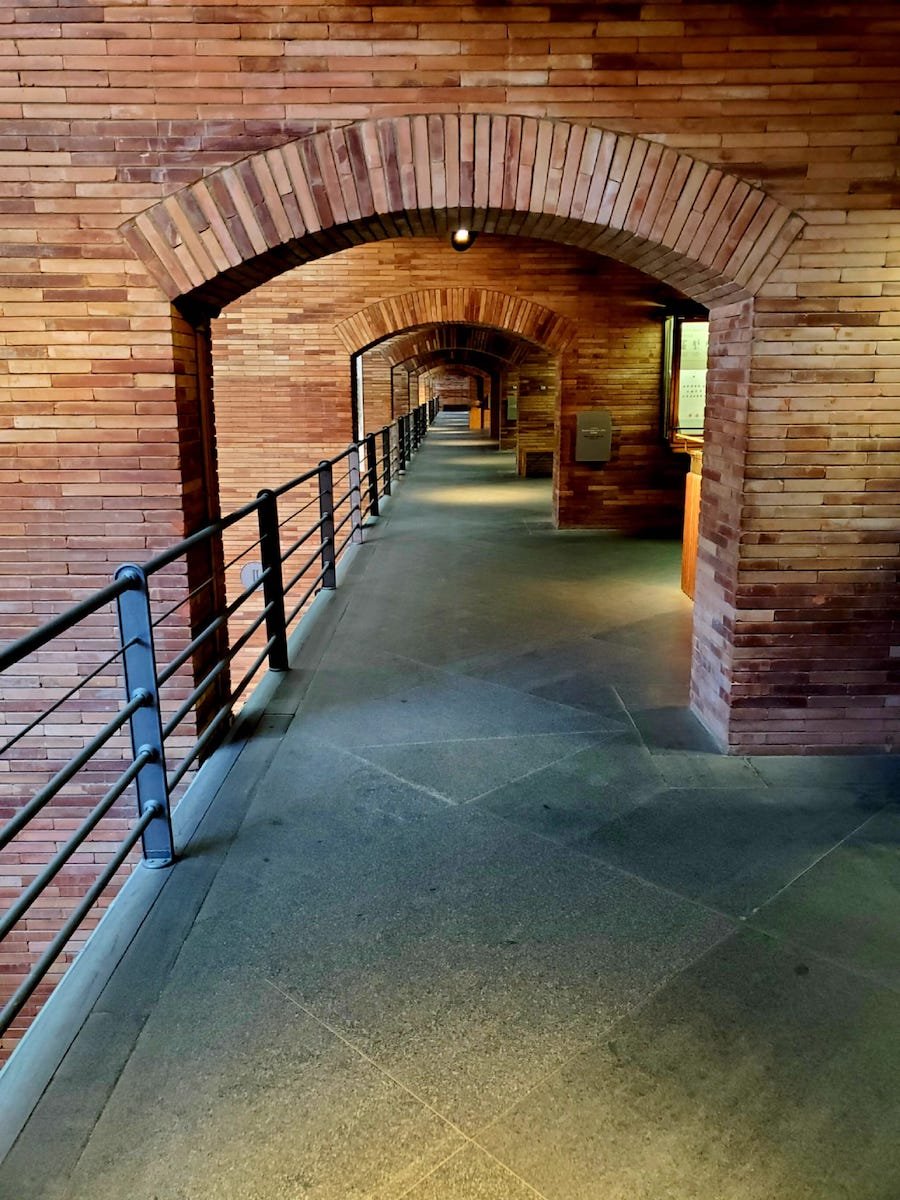
I especially liked seeing the everyday household objects because these items always pull me right back to the era they’re from. And I noticed that by the time we got to this top floor, A’s teenaged son seemed to become more interested in these displays, too.
The building itself, as I learned later, is pretty famous in its own right. Spanish architect Rafael Moneo designed it with enormous brick arches and soaring interior spaces that immediately bring to mind the ancient Roman architecture of the theatre because:
“... it was clear that the most respectful way to coexist with the ruins would be by using the same means of construction and techniques that the Romans had.”
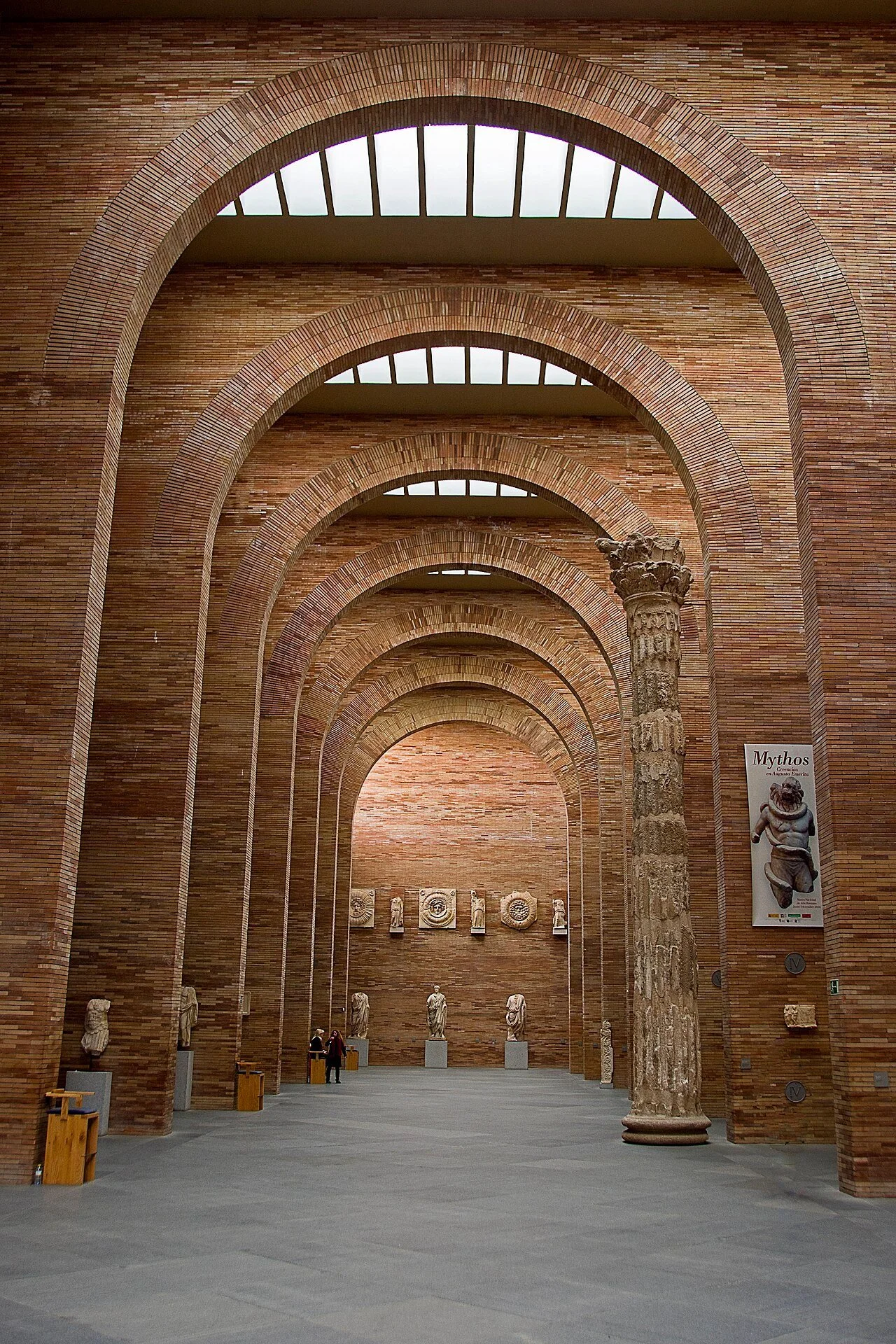
Source: Wikimedia Commons
We experienced only one disappointment. Just as we learned that there are actual Roman archaeological remains preserved beneath the museum, including traces of a Roman road and suburban buildings discovered on the site, the museum closed and we were quickly herded out like a flock of unruly sheep.
Our tickets for the play were for 10:45 pm that night and it was now only 8 pm, so after leaving the museum, we walked around the beautiful, cobblestone streets for a while.
Finally, in typical Spanish custom, we sat outside on a terrace in a plaza for drinks and people watching, then headed to another terrace for dinner, and finally strolled back to the theater-slash-ancient-ruins.
Second stop: Fedra, en los infiernos
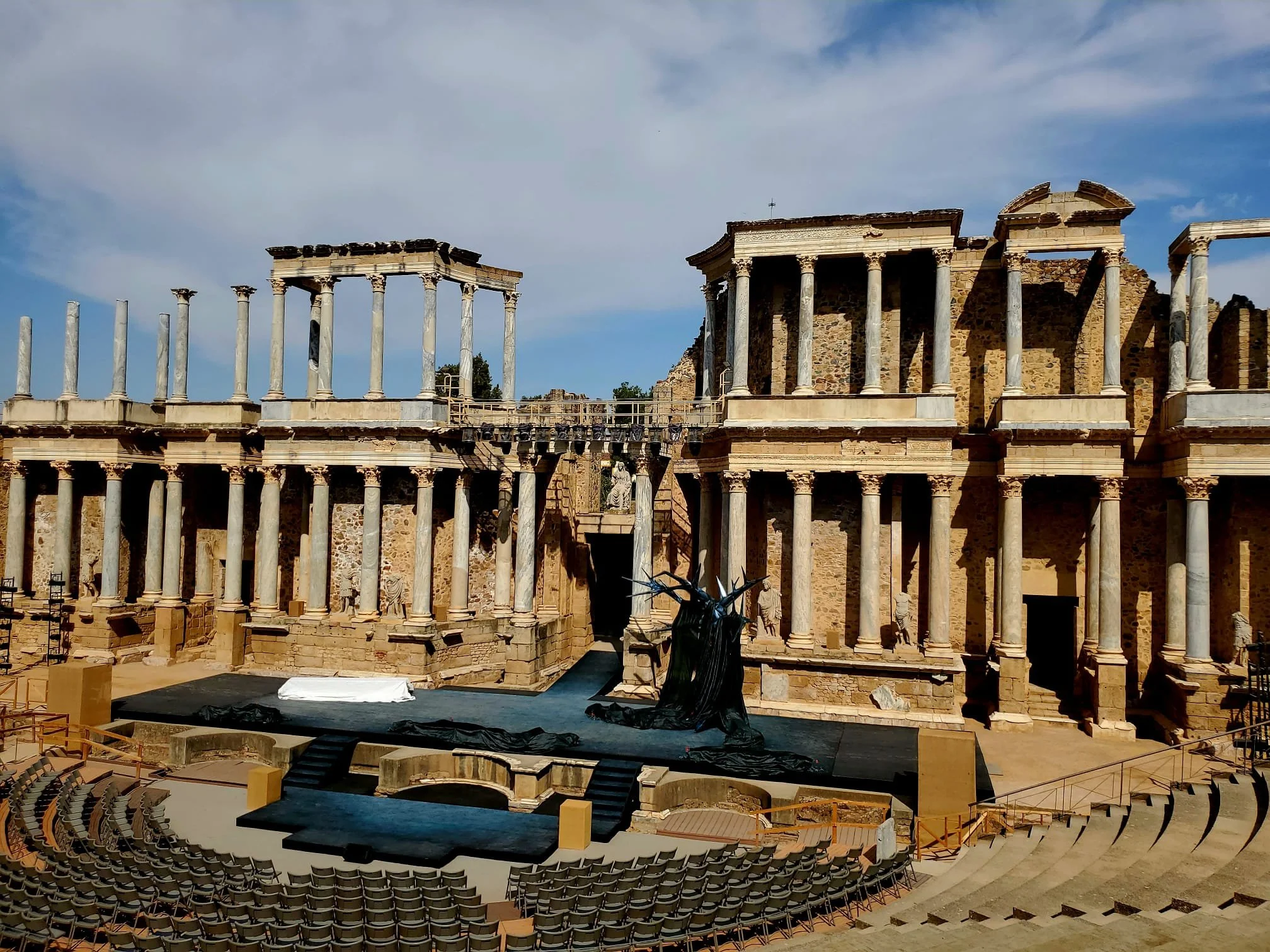
What is so fantastic about Mérida’s Roman Theatre is that it isn’t just an archaeological ruin that you admire from afar; it’s still being used as a theatre today.
The Roman Theatre hosts nine major productions, including Spartacus, Timón de Atenas, La comedia de la olla, and Fedra, en los infiernos, which is the one we saw.
It was dark by the time we made our way along the winding path to the open-air theatre.
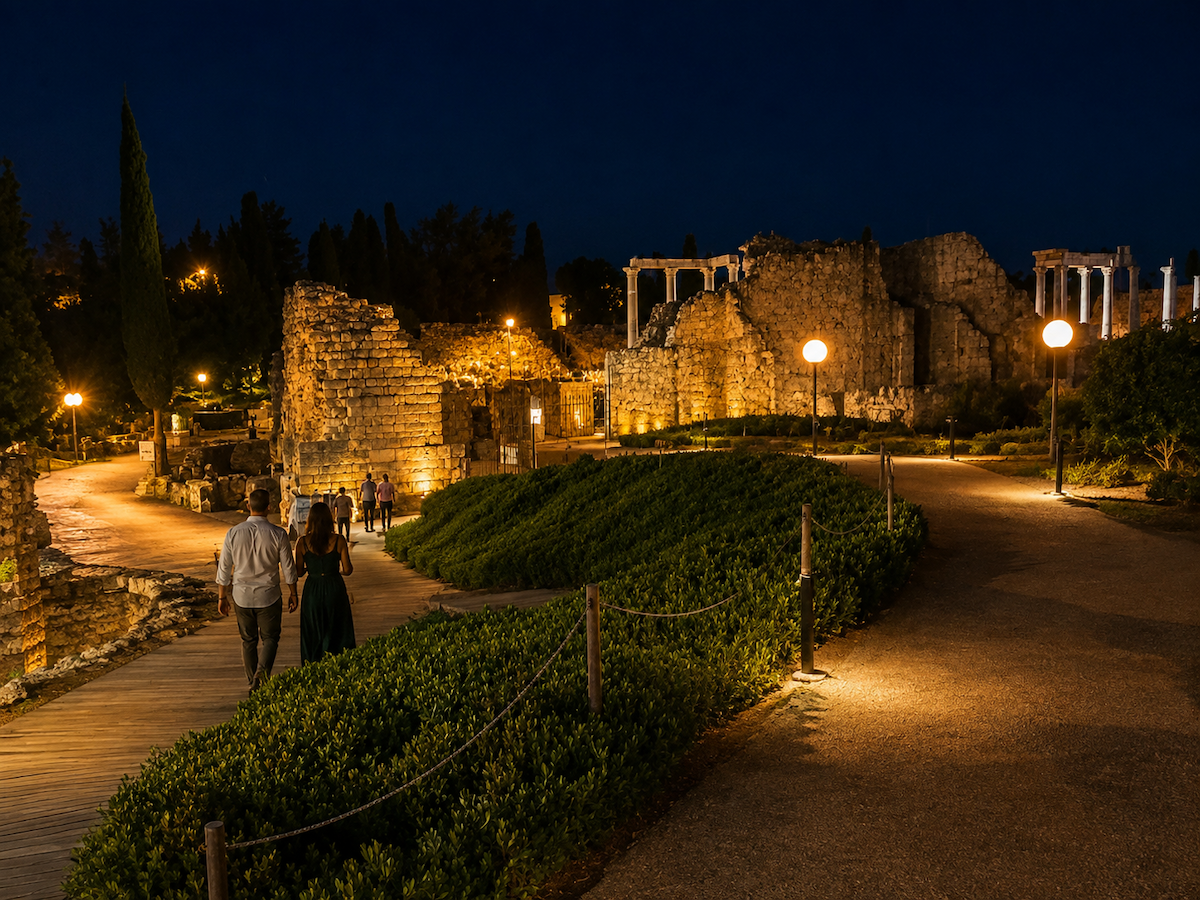
And it was quite the experience walking into it, climbing the solid stone steps, then coming out of the short tunnel into the cavea, or tiered semicircular seating area, that rises around the stage.
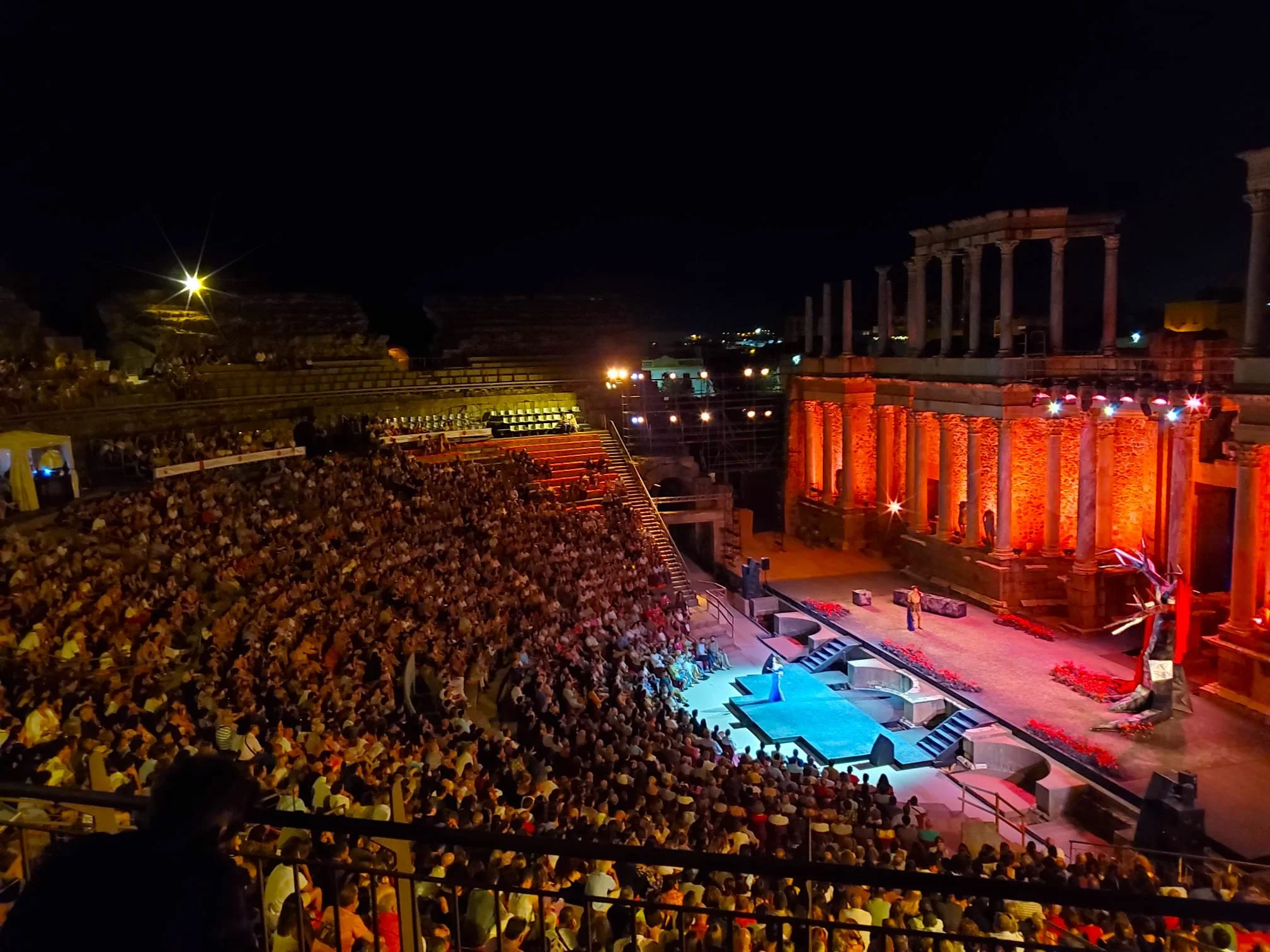
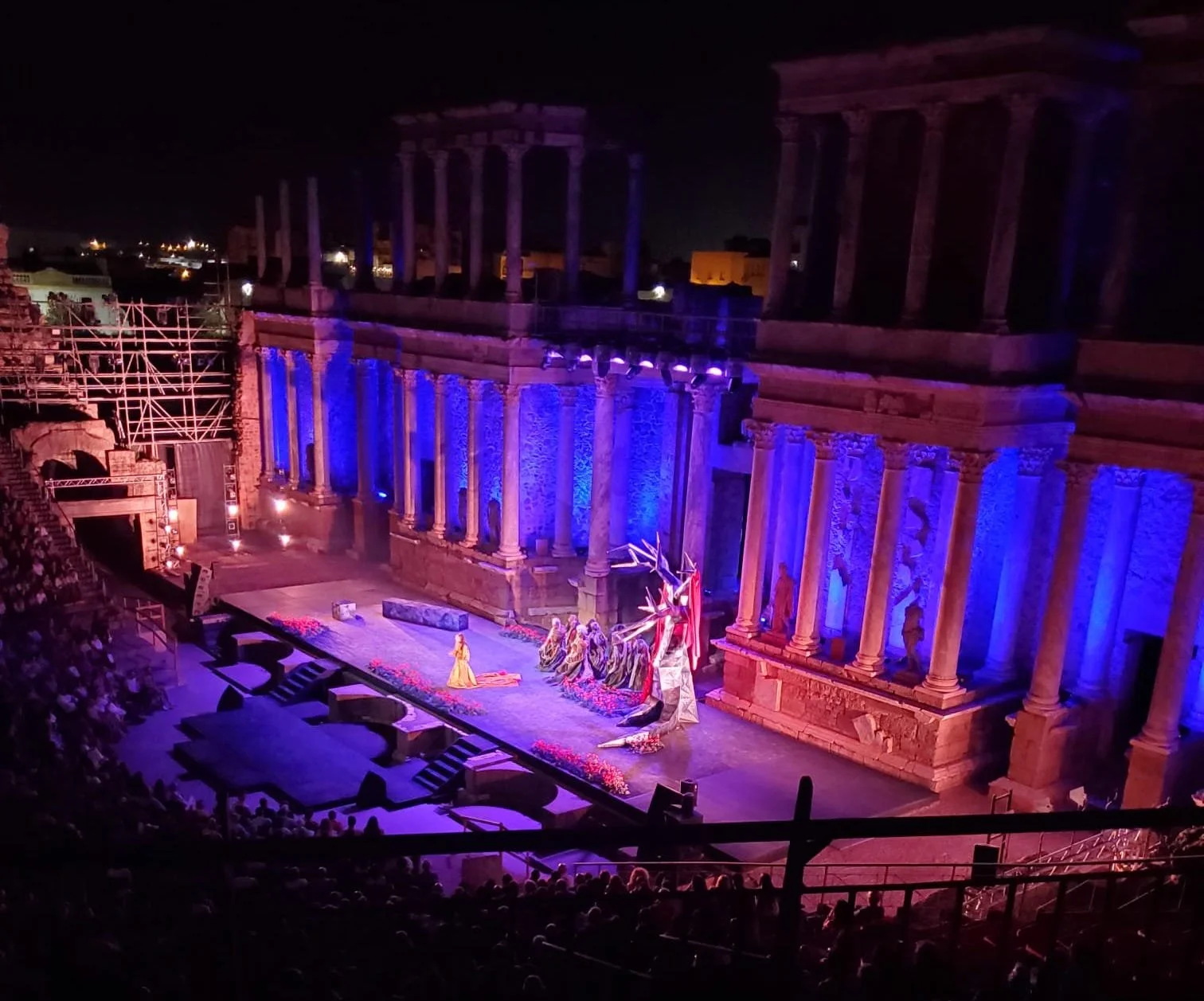
Fedra, en los infiernos (Phaedra in the Underworld) is a tragedy based on the classical Greek myth of Phaedra:
Fedra (Phaedra) is tormented by her forbidden love for her stepson, Hipólito (Hippolytus). After her death, she is in the Underworld and persuades the Moirai—the goddesses of fate—to let her return and rewrite her story. The play asks whether she can escape her passion, guilt and destiny the second time around.
On the one hand, I wish I had known this before seeing the play, because I didn’t understand much, plot-wise or language-wise. But on the other hand, it kinda didn’t matter. I couldn’t stop looking around at the details of the ruins and thinking: Two thousand years ago, some man or woman sat exactly where I’m sitting watching a performance right here. And, wow, was that an incredible feeling.
Third stop: Teatro Romano tour
The next morning after breakfast on another terrace (because, as I’ve learned, Spaniards will eat or drink at an outside table until heatstroke or hypothermia becomes a reasonable concern), we returned to the archaeological complex for a guided tour of the Roman Theatre.
The guide was knowledgeable—or so I’m told; I couldn’t understand a word of his 50 km/h Spanish. But I felt a little better when A told me that the guide was talking so fast that he was having difficulty understanding. If he paused for a moment to think about what the guide had just said, he’d lose the next three tidbits of info.
We walked along the same path as last night and this time were able to look over the waist-high wall to see behind-the-scenes details like columns and statues.
We strolled around back…
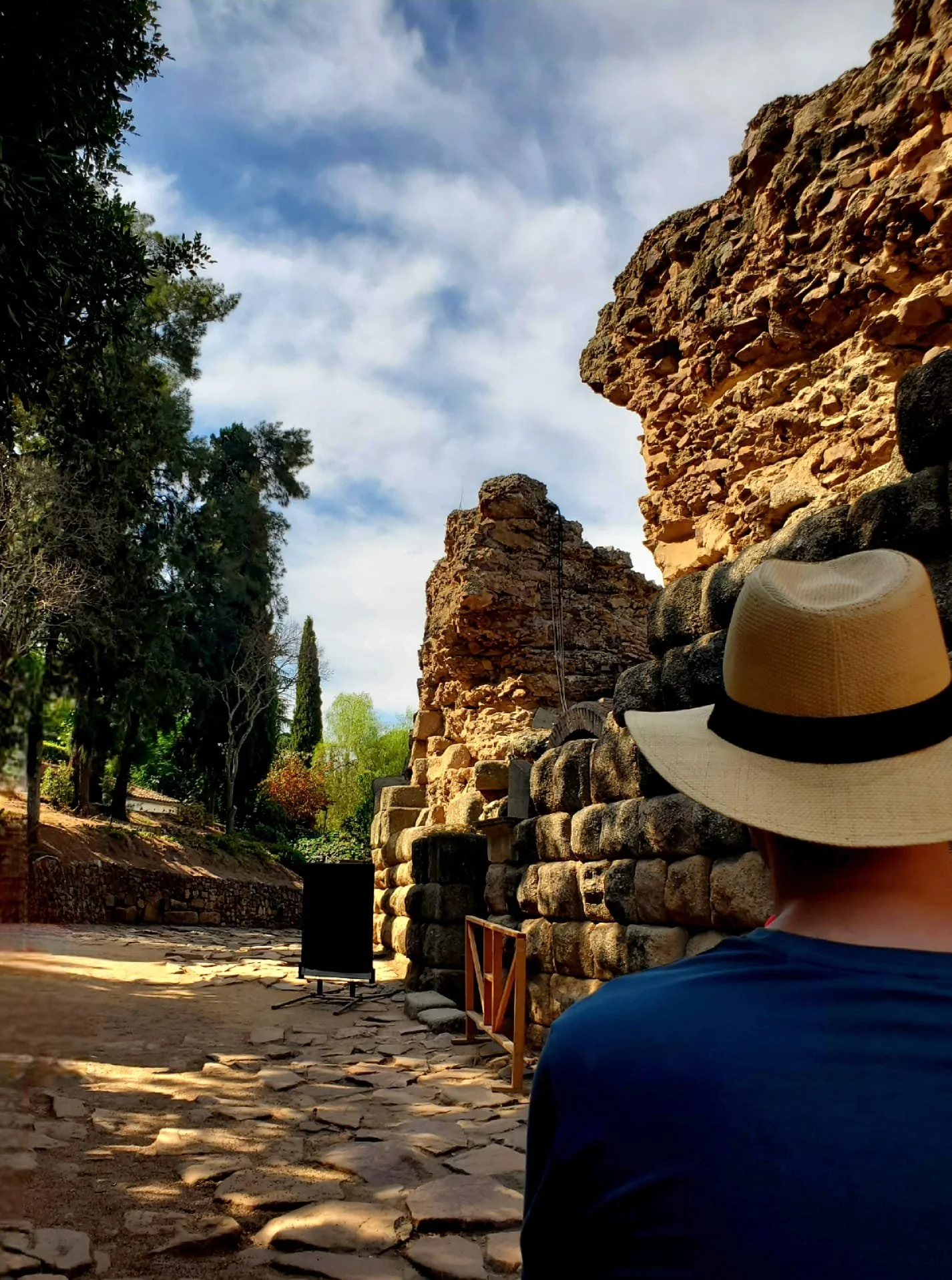
…to one of the entrances, the same one we had gone through last night. Quite a difference in feeling: last night felt like I had gone back in time; this morning I felt like I was visiting ancient Roman ruins. Both fantastic experiences, just different.
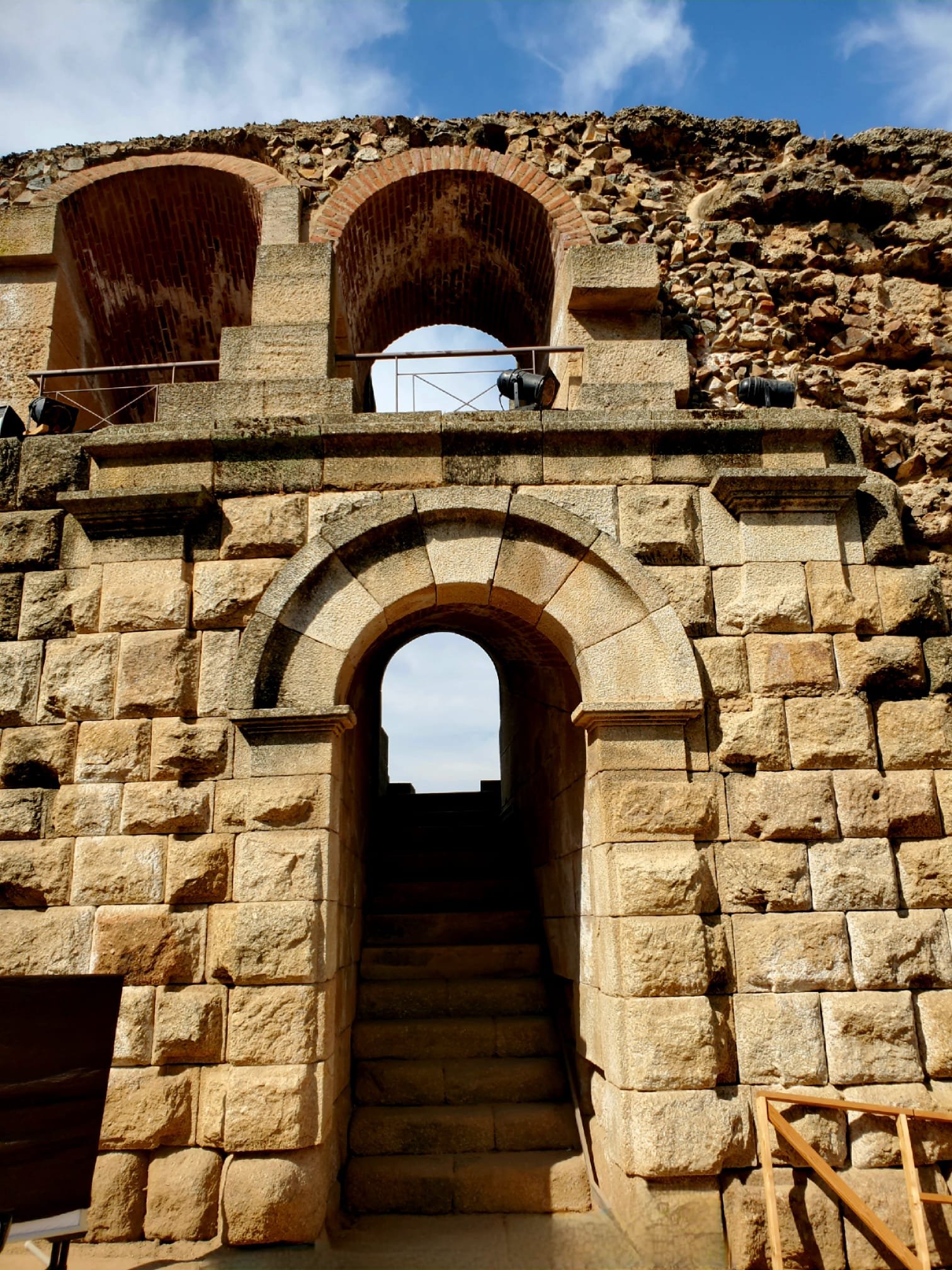
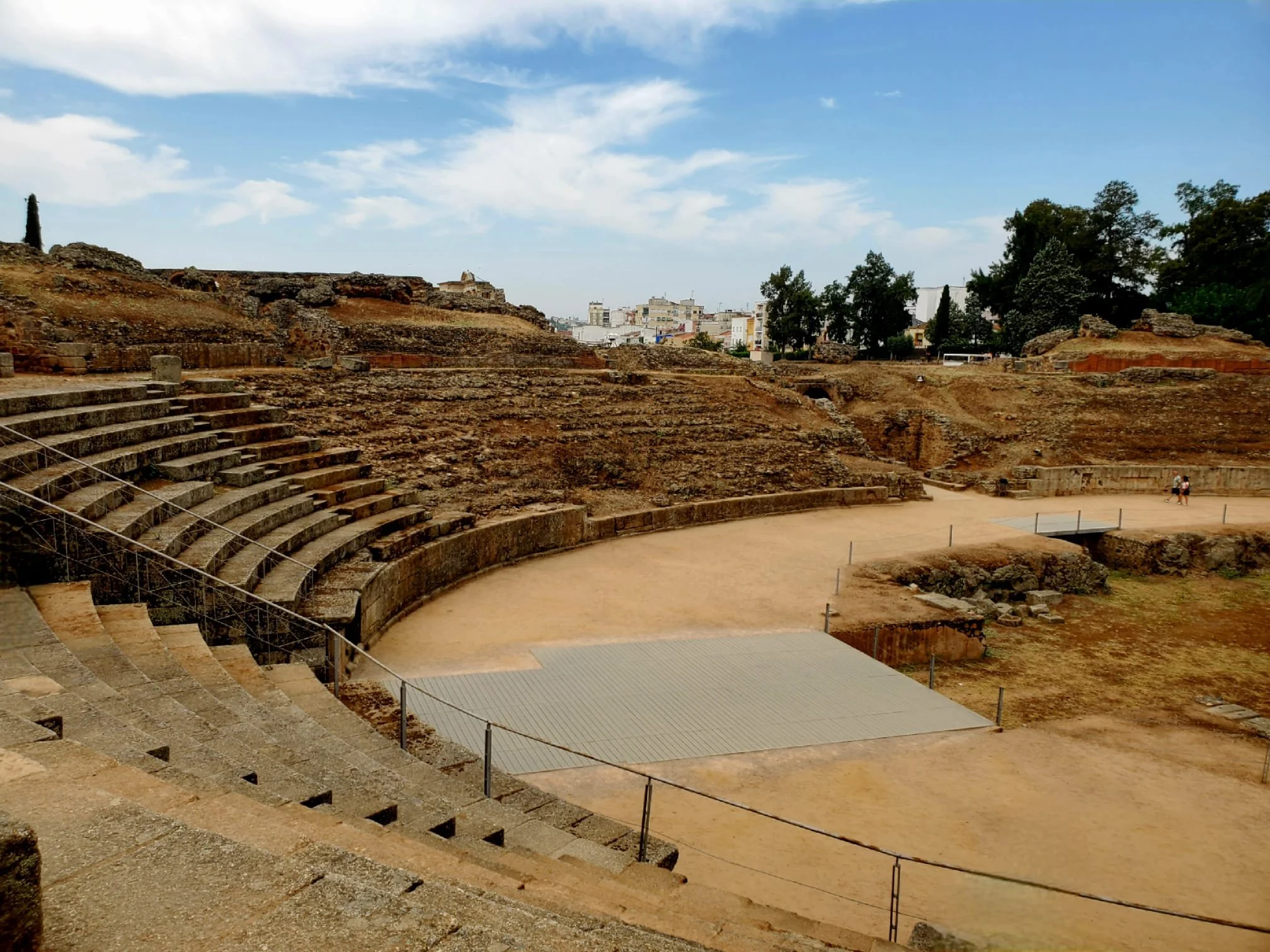
And inside the theatre we sat down as the guide discussed the history. A few details about the Roman theatre:
It was built around 16–15 BC, about a decade after Augusta Emerita was founded, under the management of Marcus Agrippa, Augustus’s son-in-law, and seats about 6,000 people.
The wall behind the stage is the scaenae frons, which was decorated with marble columns, statues of gods and images of members of the imperial family to show off Roman wealth and power.
The stage was originally a wooden platform, with machinery and theatrical equipment hidden underneath.
The acoustics were carefully considered. A wooden canopy was probably suspended from the top of the stage façade (scaenae frons) to help reflect sound toward the audience.
For centuries, most of the theatre remained buried. Only seven large portions of the upper seating stuck out of the ground, and locals called them Las Siete Sillas—“The Seven Chairs”—which is now also the name of a restaurant just outside of the theatre. Excavation of the theatre began in 1910.
Fourth stop: Anfiteatro Romano tour
From the theatre, the tour guide led us next door to the Roman amphitheatre to continue the tour.
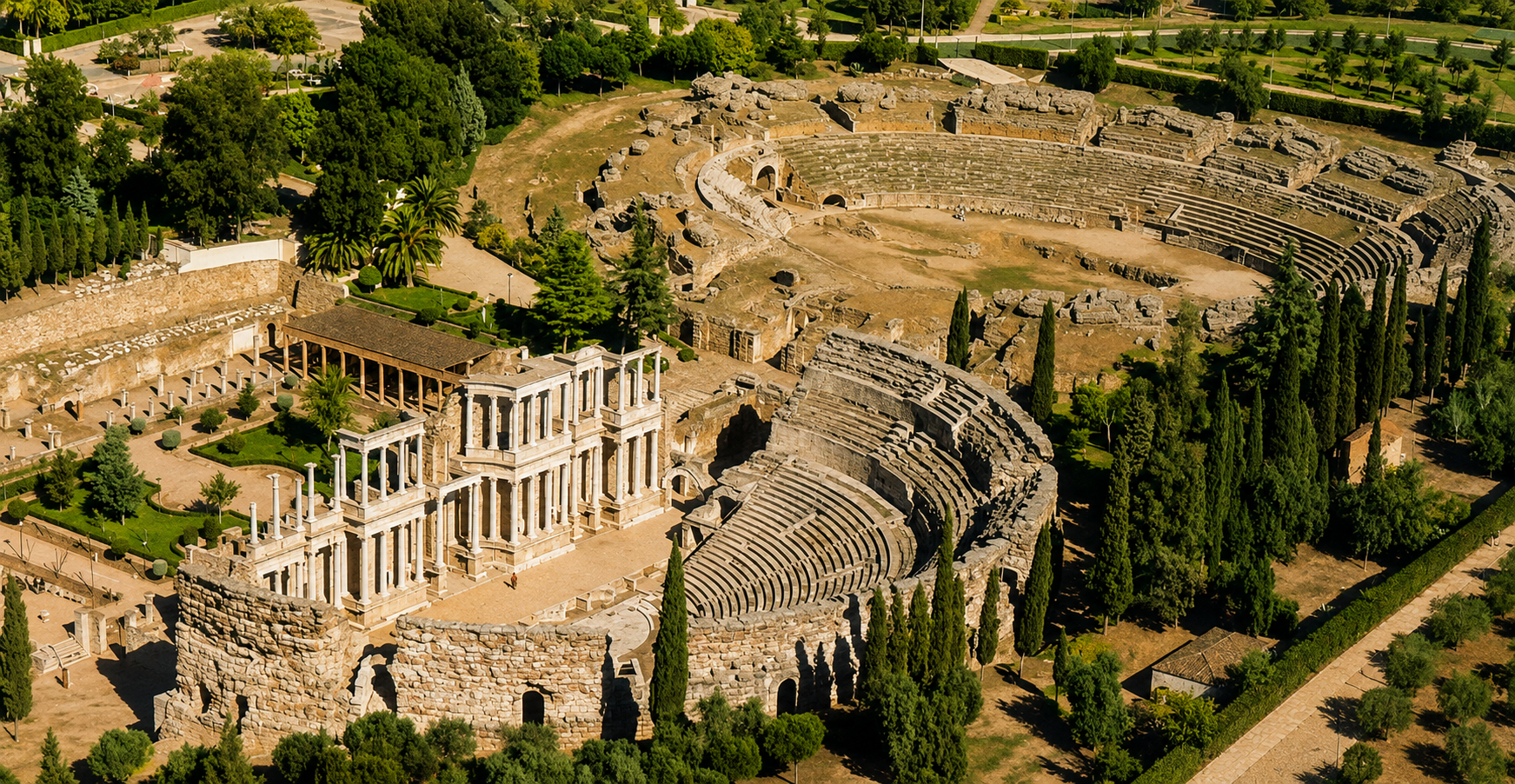
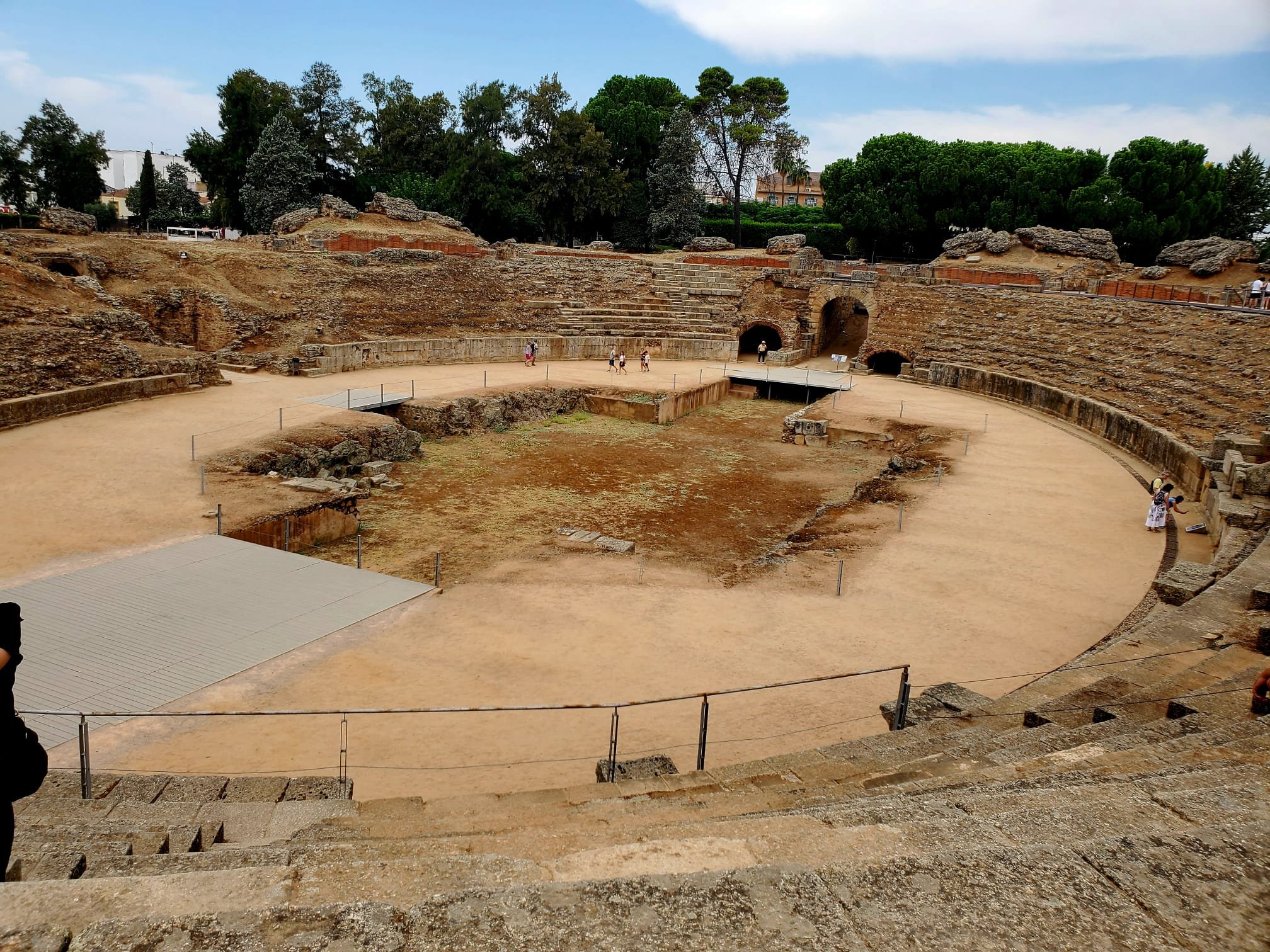
The amphitheater (like a theatre but with seating that surrounds the performance area on all sides) was built for a completely different purpose: gladiator or wild animal fights.
We entered by walking down some steps, through a tunnel/corridor…
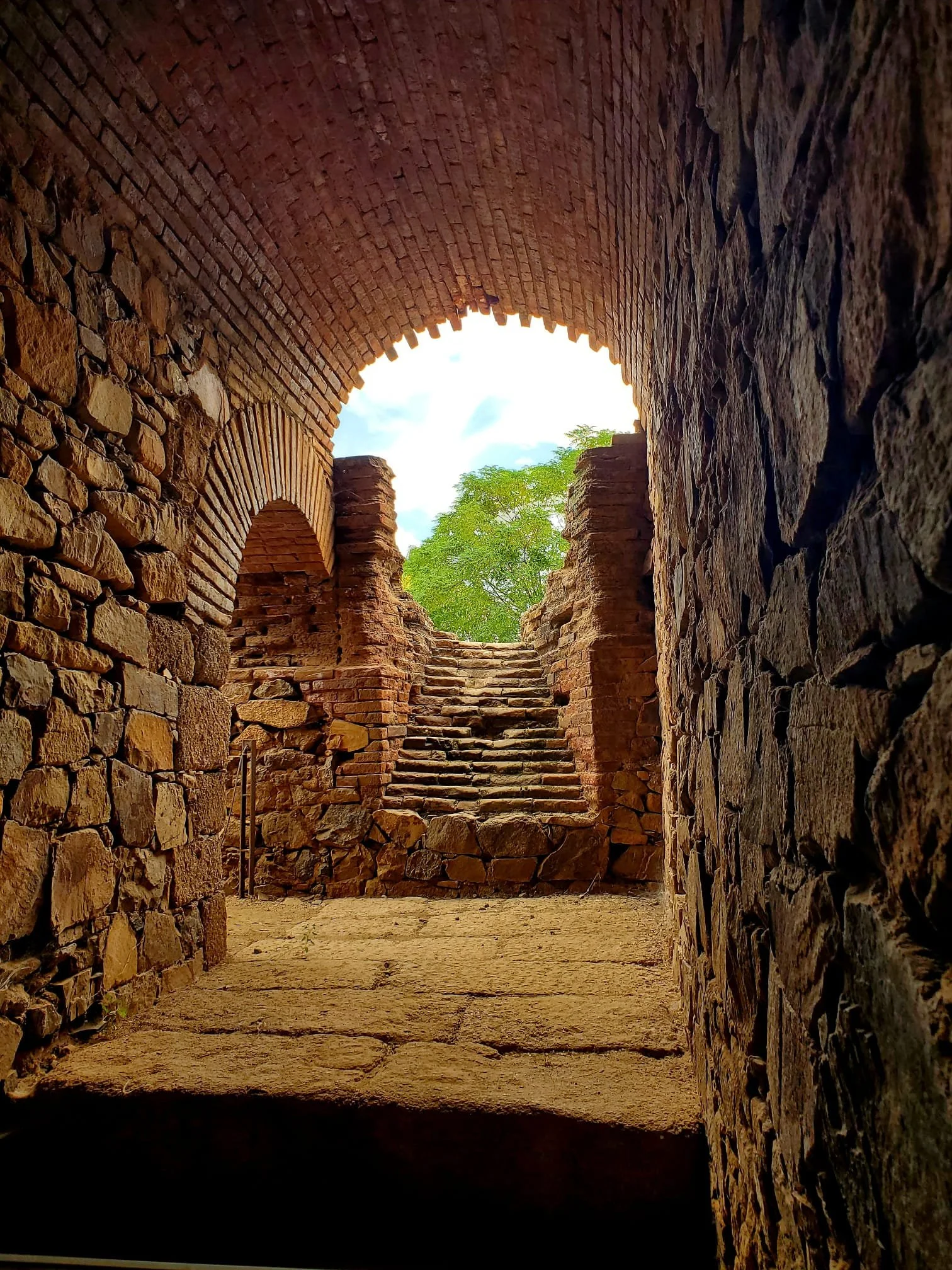
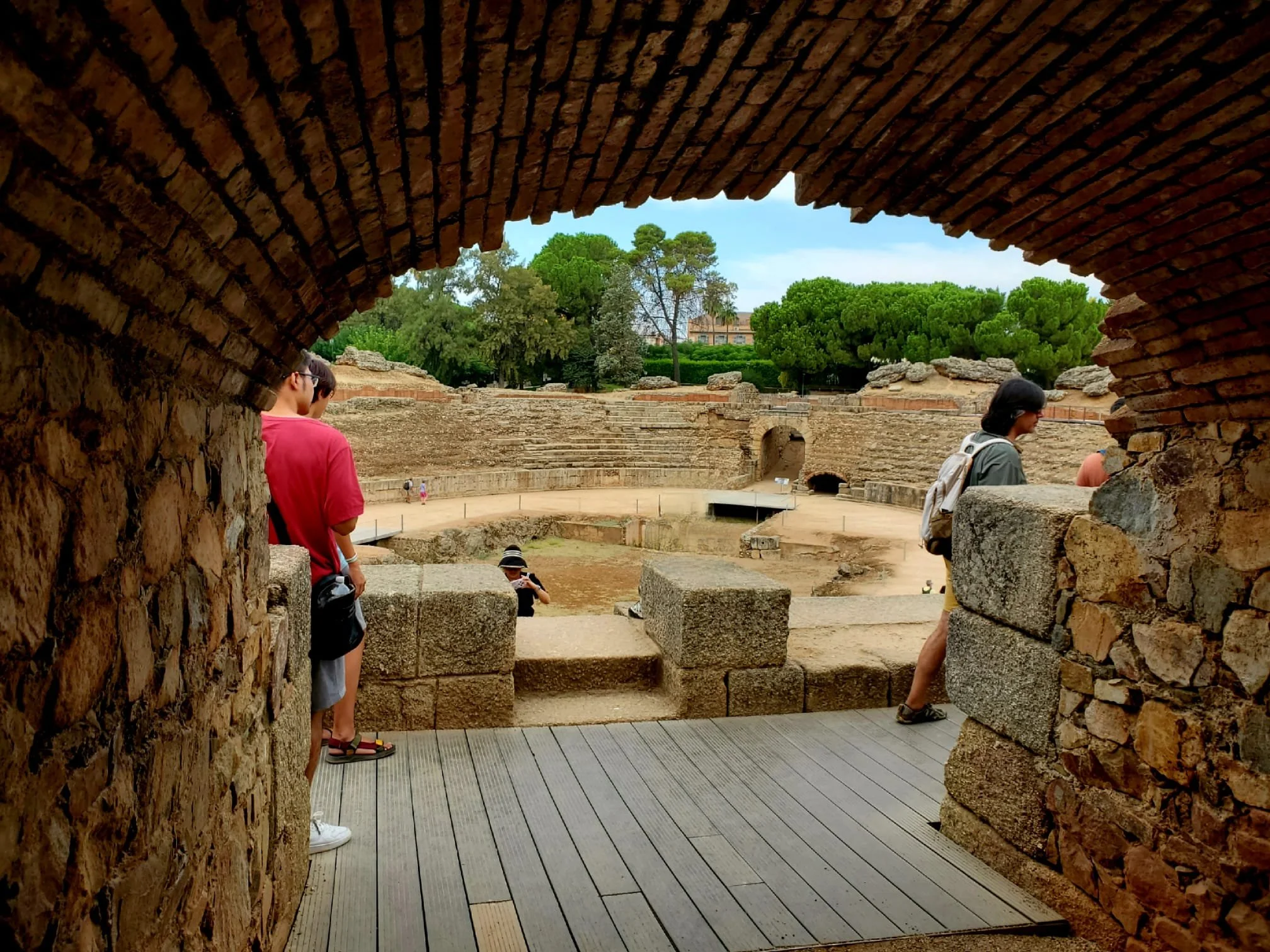
And into the seating area, with the oval “stage” right in front.
A few details about the Roman amphiteatre:
The amphitheatre opened around 8 BC, a few years after the Roman Theatre, and holds about 15,000–16,000 spectators.
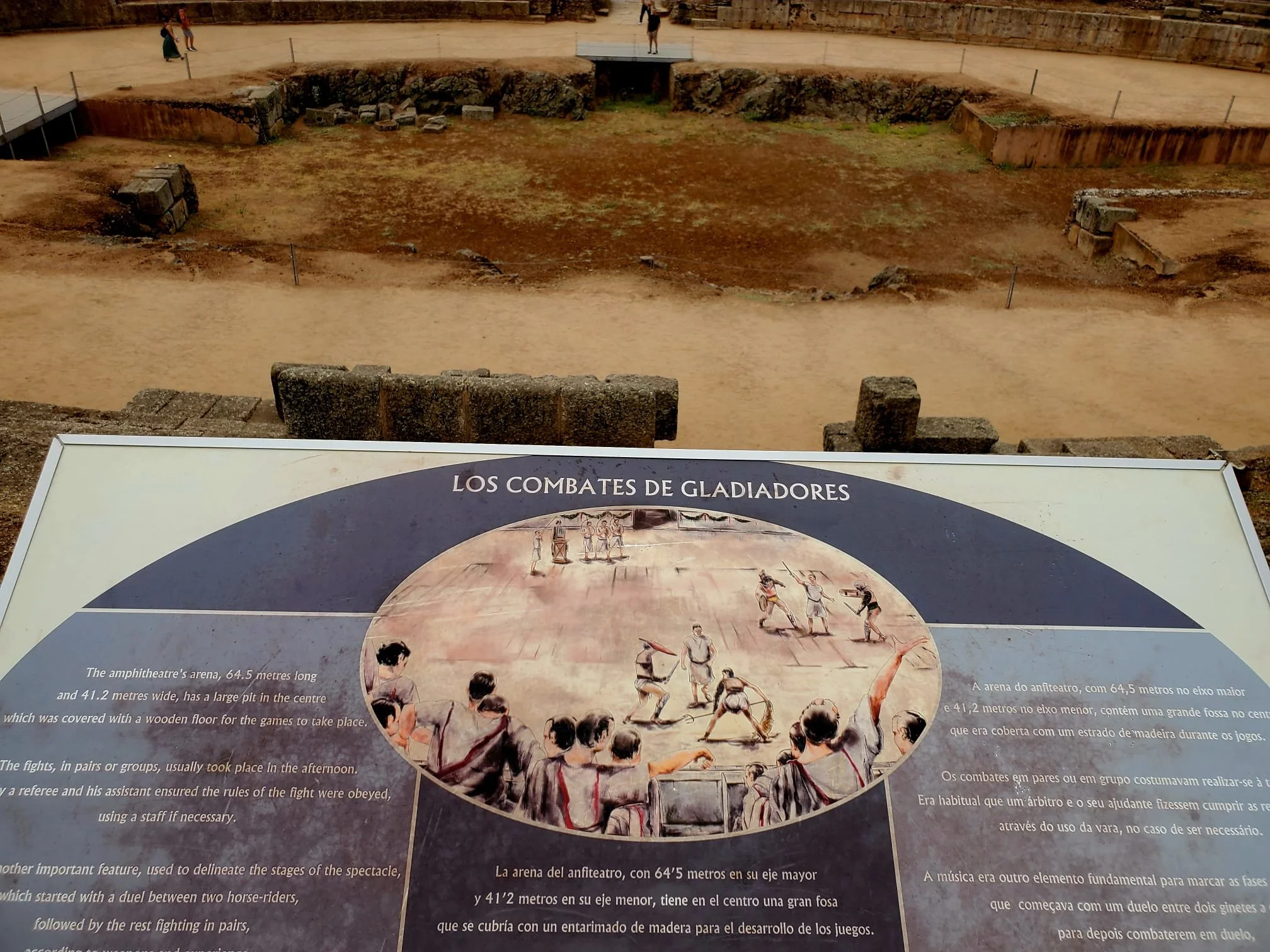
Its purpose was to hold gladiator fights, wild-animal hunts and sometimes contests between animals. The arena could decorated to look like forests, jungles, lakes or deserts.
There were two special viewing boxes: one was for officials, and the other for the wealthy person who paid for the games (to gain favor with the officials).
Admission to the games was usually free, with the wealthy sponsor footing the bill—and sometimes even food and drink.
The open pit in the center of the arena was covered by a wooden floor during performances, with the space underneath used for animal cages and stage equipment.
Two long passageways led into the arena and were used by the gladiators. Small rooms along them were also used as cages for the wild beasts or rooms where the gladiators got ready.
After two delightful but hot days experiencing ancient Roman history in Mérida, Spain, we got into the car and headed back home.
Click here to read the next post TBA
Note: All photos taken or created (using DALL-E) by Selena Templeton unless otherwise noted.
If you enjoyed reading this travel blog, check out some of my other adventures:
