Click here to read the previous post, Adjusting to Life in Spain: Los Escobazos Festival in Jarandilla de la Vera
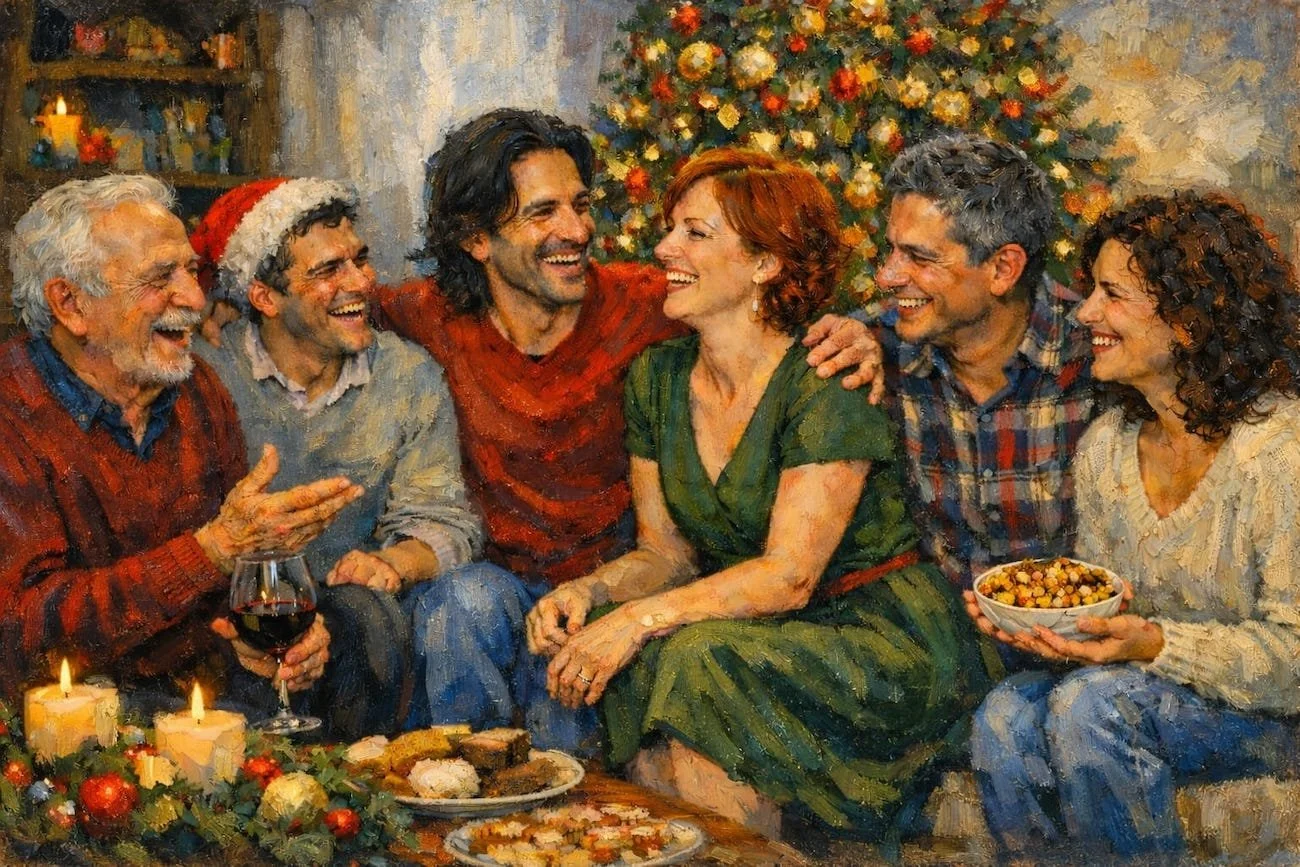
Okay, this is actually my second Christmas in Spain, but it is my first with a Spanish boyfriend and some of his Spanish family eating traditional Spanish foods. Last year I was in Spain, but I spent the holiday at home eating my favorite North American foods and watching American movies, so that doesn’t count.
Coming from Canada by way of the United States, obviously I’m used to a different way of celebrating this holiday. In Spain (and many other European countries), Christmas dinner is on the 24th and in North America Christmas dinner is on the 25th, but since my boyfriend A and I were hosting on both days, we combined traditions and made the holiday international.
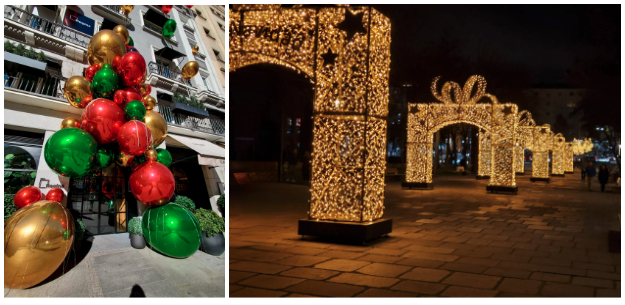
By the way, one thing all countries have in common is a knack for festive decorations across the city!
December 24—The Spanish Christmas Dinner
You may or may not be aware that when it comes to meal times, the Spanish are notorious for eating meals at times that the rest of the world considers insane. Lunch is between 2-4 pm and dinner is NO EARLIER THAN 9 pm, unless you’re some sort of weirdo, and often as late as 11 pm. The part I find hardest to digest (pun fully intended) is that they then go to bed half an hour later!
Anyway, this means that Christmas dinner is typically served anywhere between 9 pm and midnight, but with my cunning influence, I managed to suggest an 8 pm dinnertime without A or his family calling Immigration and having me deported.
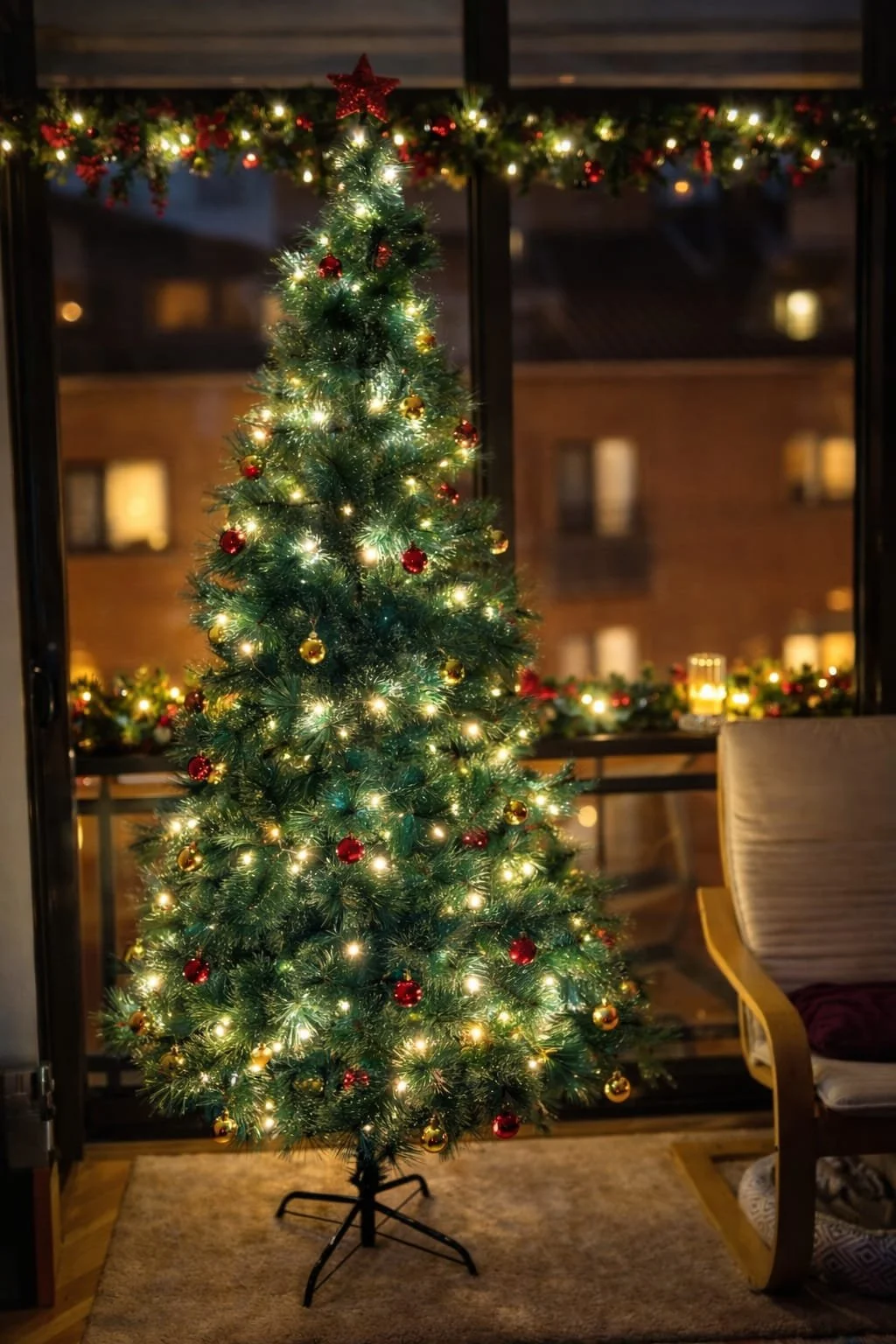
Around 7:30 pm on the 24th, our Christmas tree lit, the apartment decorated and classic Christmas music playing in the background, half of A’s family (his sister, brother-in-law, two nephews and dad) arrived and then, of course, we spent the next twenty minutes greeting each other with classic Spanish two-cheek kisses.
Including me, A and his son R, that meant we were cooking for eight people. <Cut to me downing a large glass of wine> For our Spanish Christmas dinner, A was the Master Chef and I the Humble Helper. Or, as they say in Spain, I was the “pinche (de cocina)” (if you’re Mexican, this means something completely different!).
His brother-in-law and dad relaxed in the living room, R and his cousin disappeared into R’s bedroom, and his sister and older nephew hung out in the kitchen with us to help cook, top up everyone’s wine glass and chat. I caught some of what they were saying, but was too busy trying not to set the kitchen on fire to worry too much.
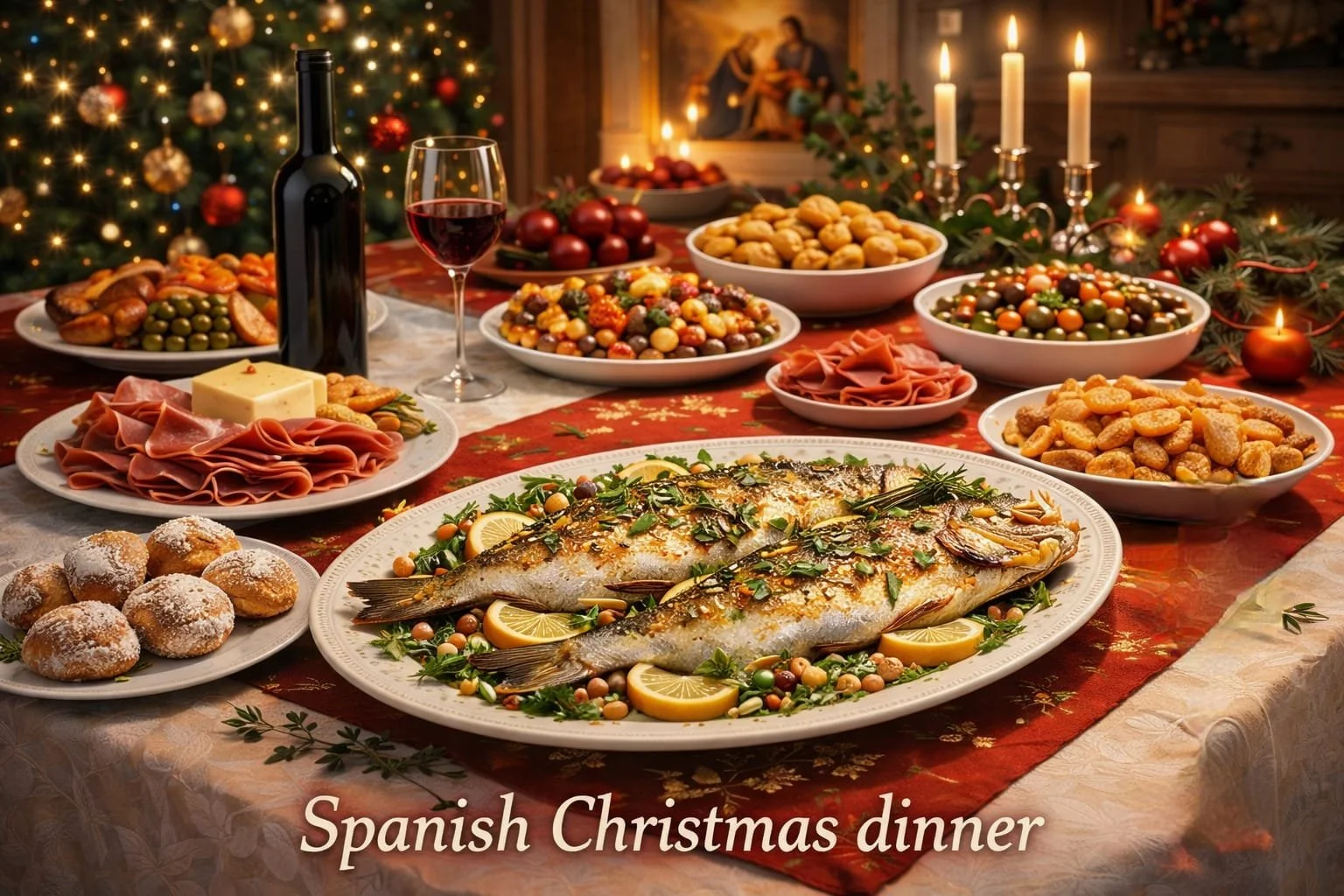
In Spain, Christmas dinner tends to focus on fish and seafood and, rather than a fully choreographed dinner meant to be served at the same time, it is eaten more tapas-style. That means setting down plates of mostly cold appetizers first, like cured meats, including salmon, a variety of cheeses with crackers and bread, olives, langostinos (prawns), pâté and nécora (Spider crab). By the way, if you’re wondering why I use the Spanish word for some things and not others, my answer is: no idea.
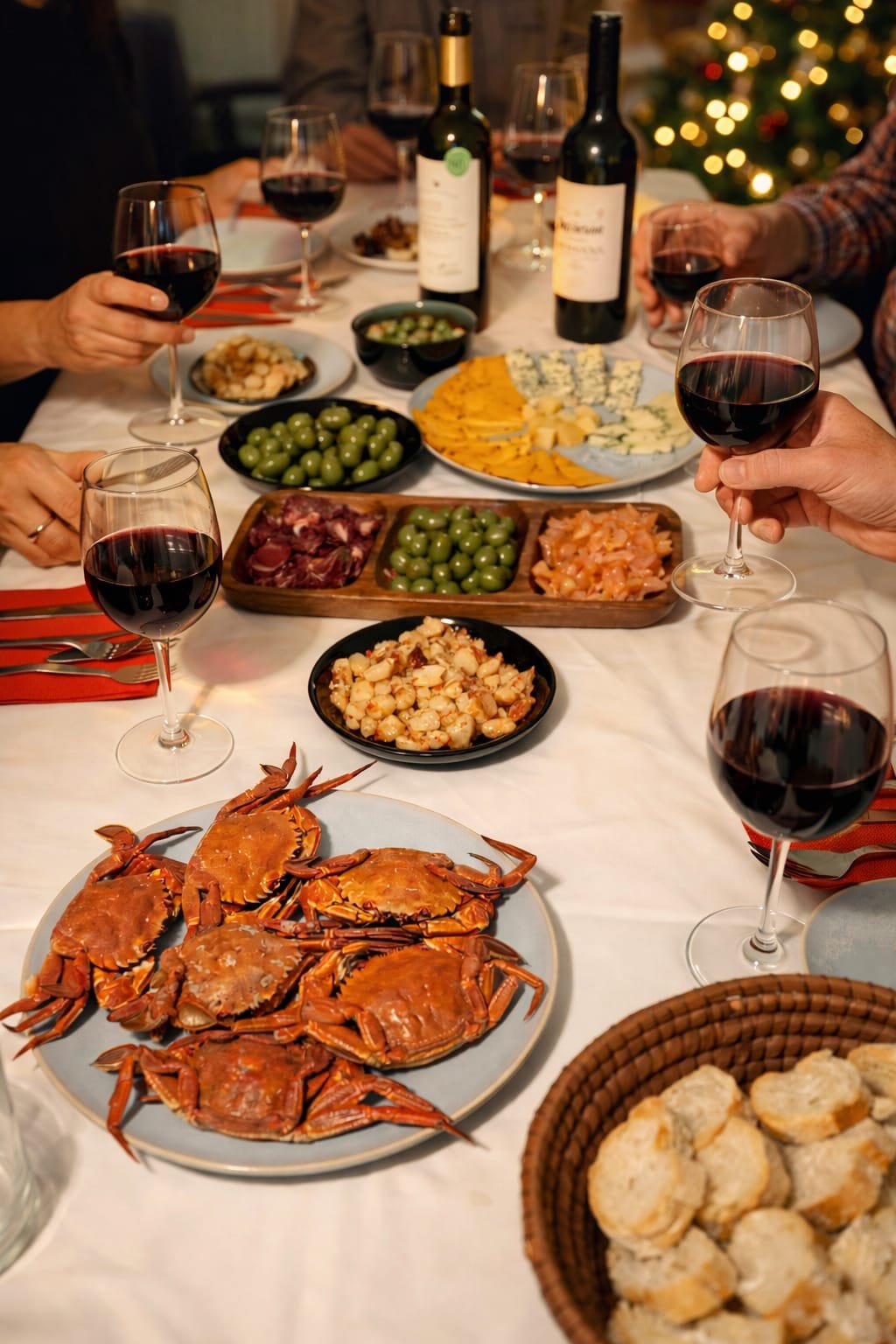
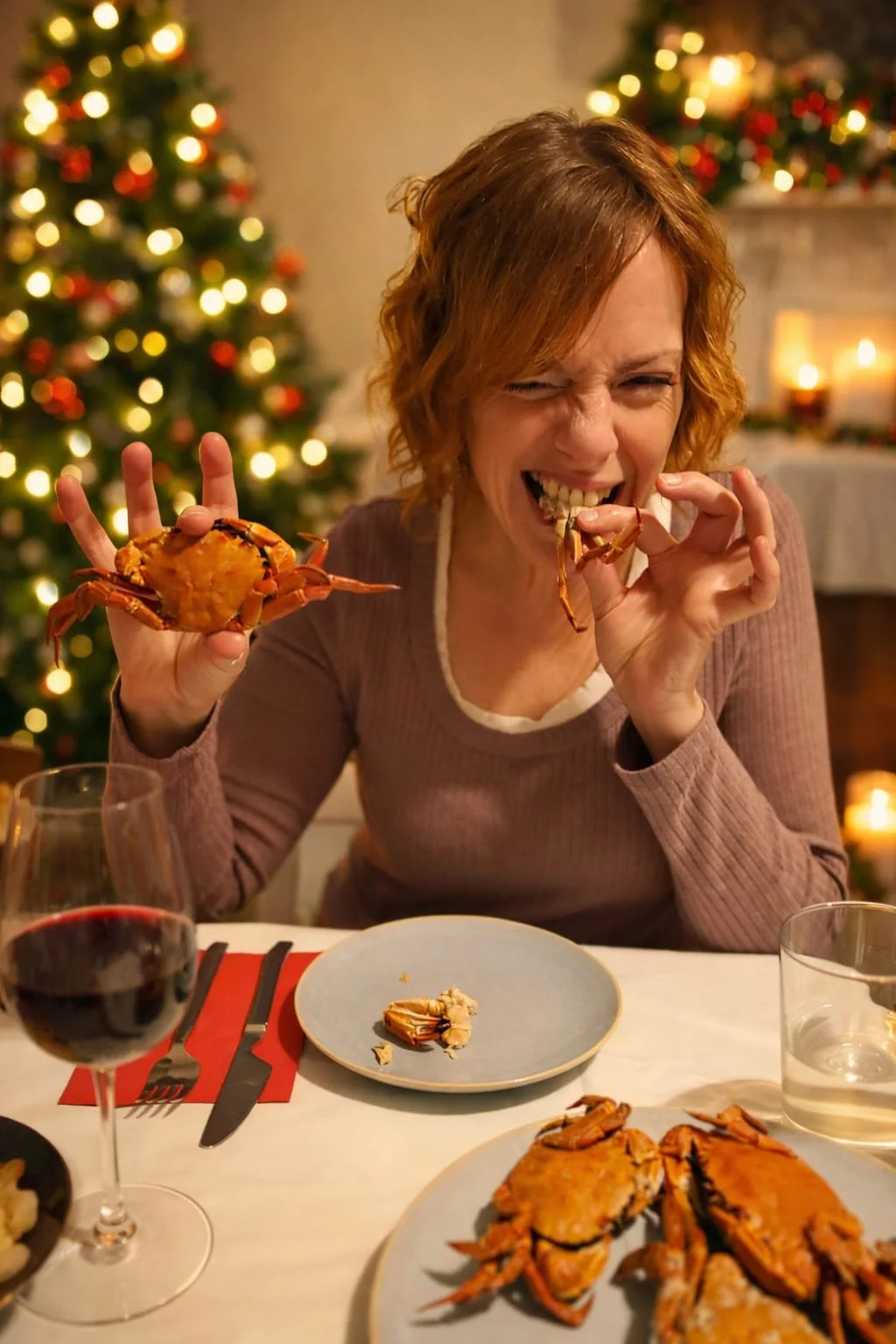
All was delicious, though nécora was a first for me; I mean, I’ve eaten crab before, but never like this:
After nibbling on all these starters, I was feeling pretty full. And then A got up from the table to bring out the main dish. Oh yeah, the main dish! I dashed into the kitchen after him (supposedly his Humble Helper), only to find A and his nephew taking the platter of two big Lubina fish out of the oven.
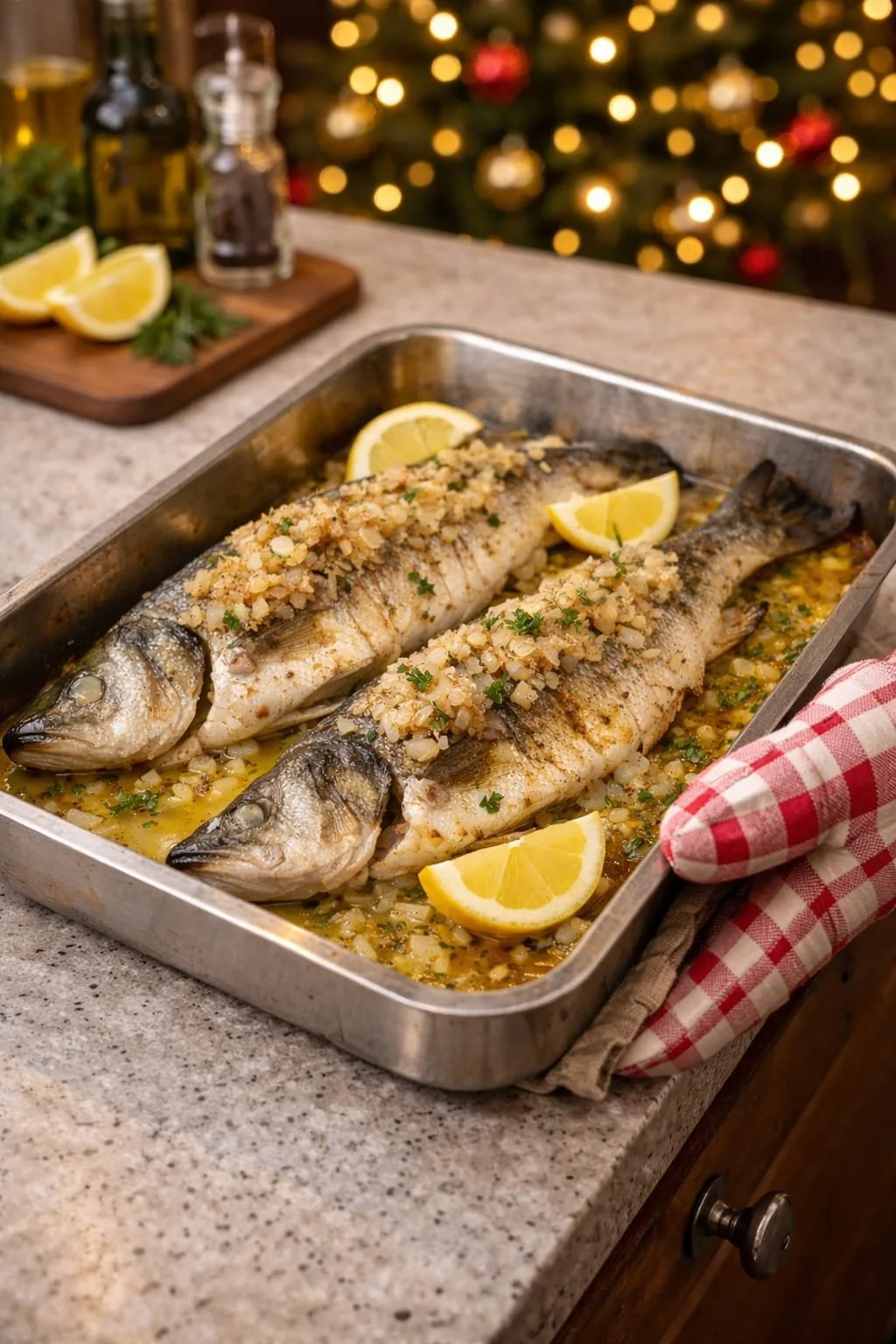
In English, this fish is called sea bass, which I had to look up since I couldn’t identify one fish from another if my life depended on it. We (okay, they) baked it whole, drenched in butter and diced onion. Other Christmas favorites in Spain are besugo (sea bream) and bacalao (cod), or sometimes cordero (roast lamb). It was tasty, though I spent the better part of the meal picking small fish bones out of my mouth.
And even though I enjoyed all the food, there was something deep inside me that felt a little off. Like trying on a pair of pants that don’t quite fit you and yet you love them anyway. Up until I left Canada at the age of 28, my Christmases had always followed the same family tradition, from the location (grandparents’ farm in the country) to the day (25th) to the food (Grandma’s delicious turkey, stuffing, mincemeat pies…) to the people (my family, on my dad’s side). Then in Los Angeles, away from my family, my Christmases were all over the place (emotionally, not geographically). And because the holidays in L.A. were so completely different from what I had grown up with, I never really missed my family tradition.
But now that I was celebrating this day with my new Spanish family in Spain on the 24th with seafood, I suddenly felt the lack of my familiar, beloved child/teen/young adulthood Christmases. Admittedly, I had a bit of a cry on A’s shoulder earlier about this (and the fact that I might spend the whole day not understanding a word that was spoken). If you’ve read my previous blog post, Los Escobazos Festival in Jarandilla de la Vera, you’ll know that it was pretty overwhelming spending four days with a lot of people I didn’t know, all speaking Spanish, and dodging fire in big crowds.
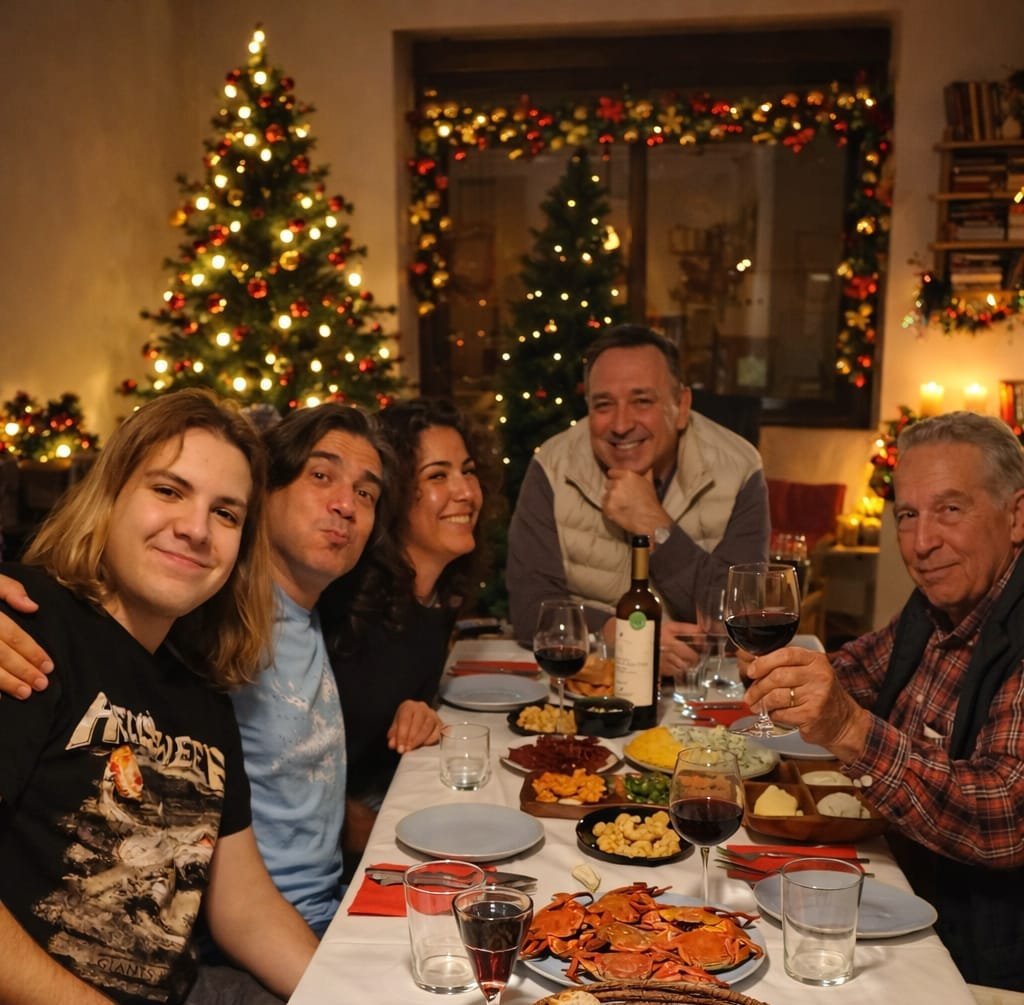
But this time, the group was smaller, no fire was involved and everyone was so patient with me, several of whom would regularly call out (in Spanish): “Slower! Selena can’t understand you.” This time, I also got to know A’s family a little more. I had the chance to talk to his sister one-on-one, I spent some time in the kitchen with one of his nephews (who was super helpful) and I participated a little more in the dinner convo.
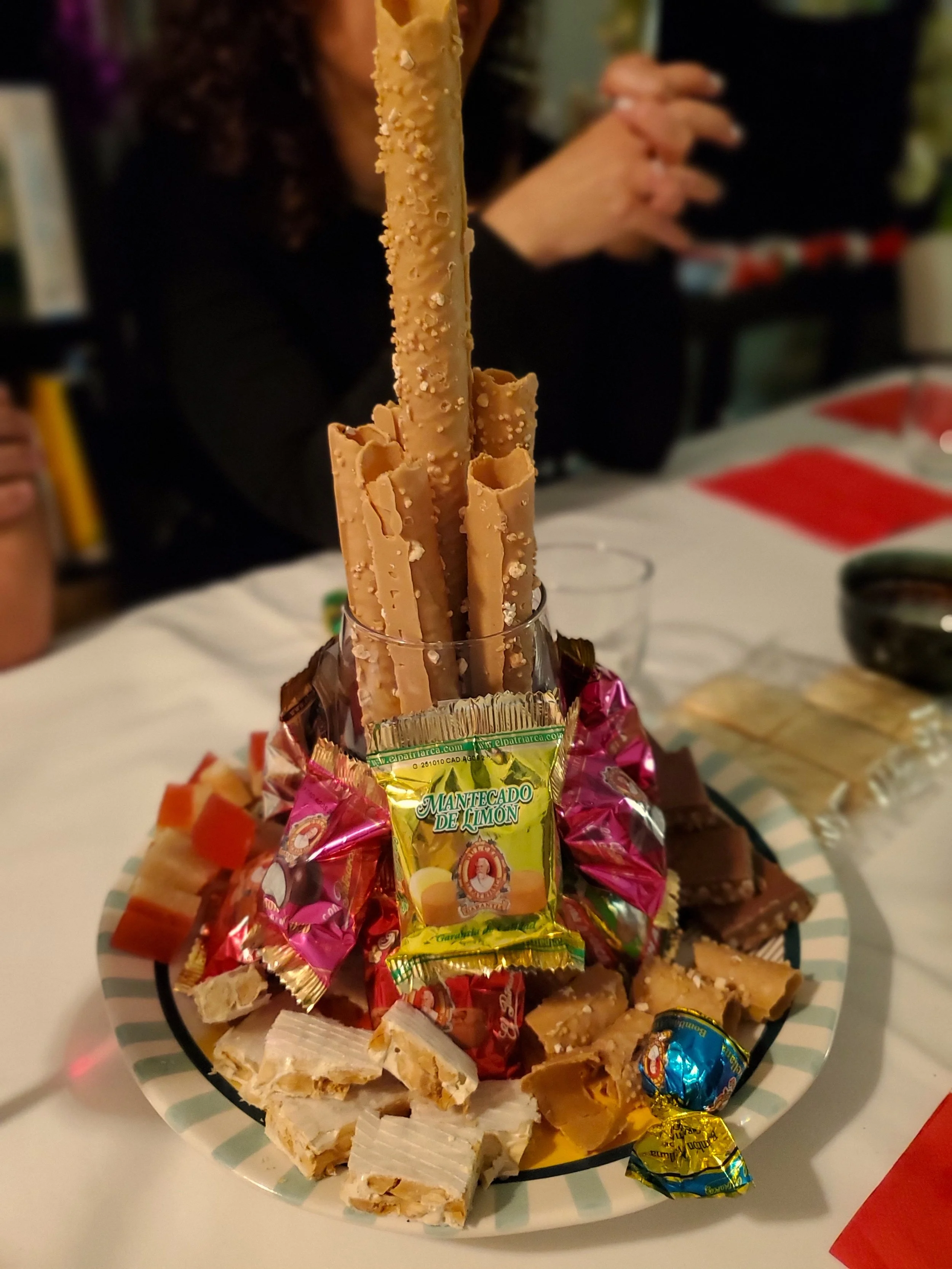
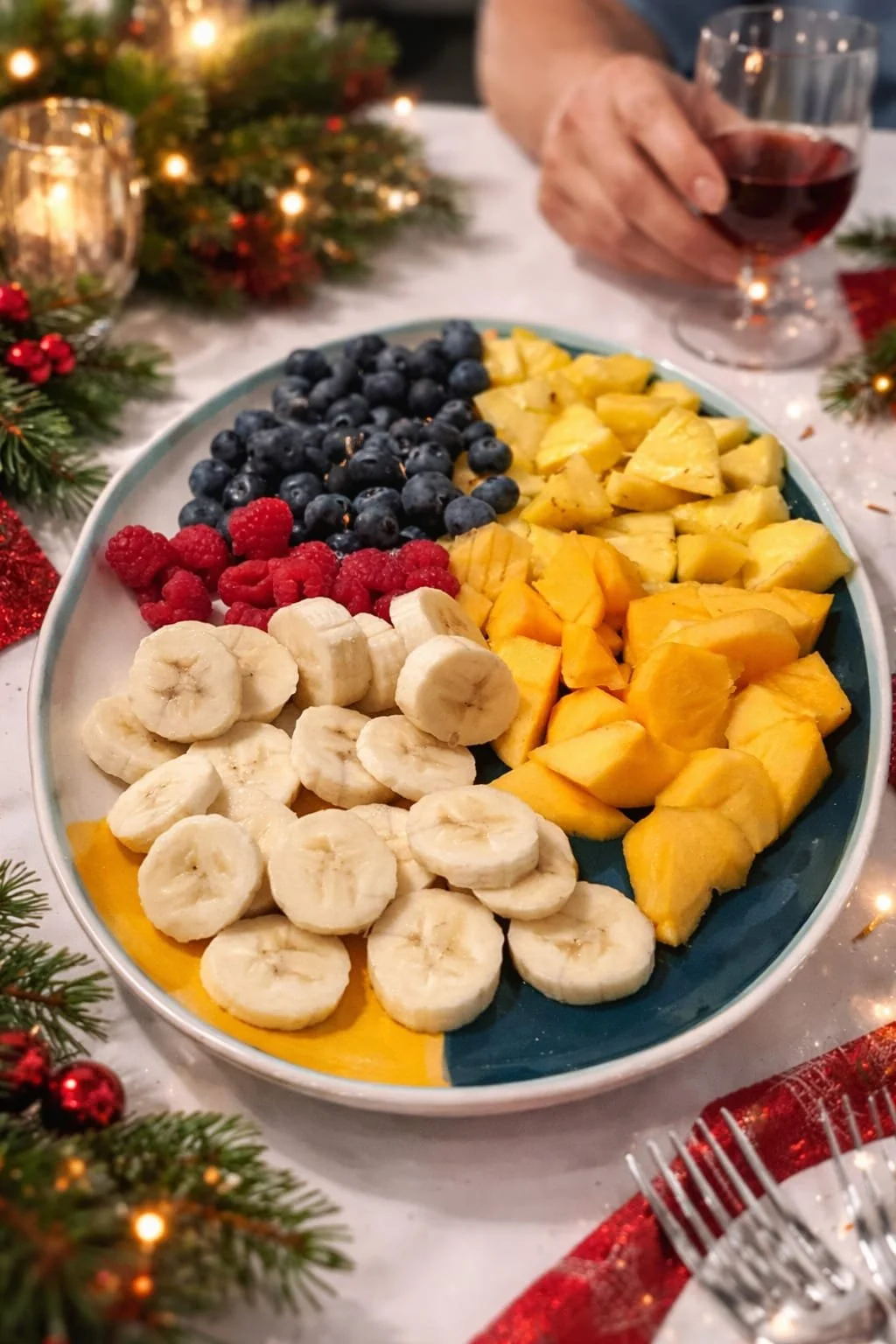
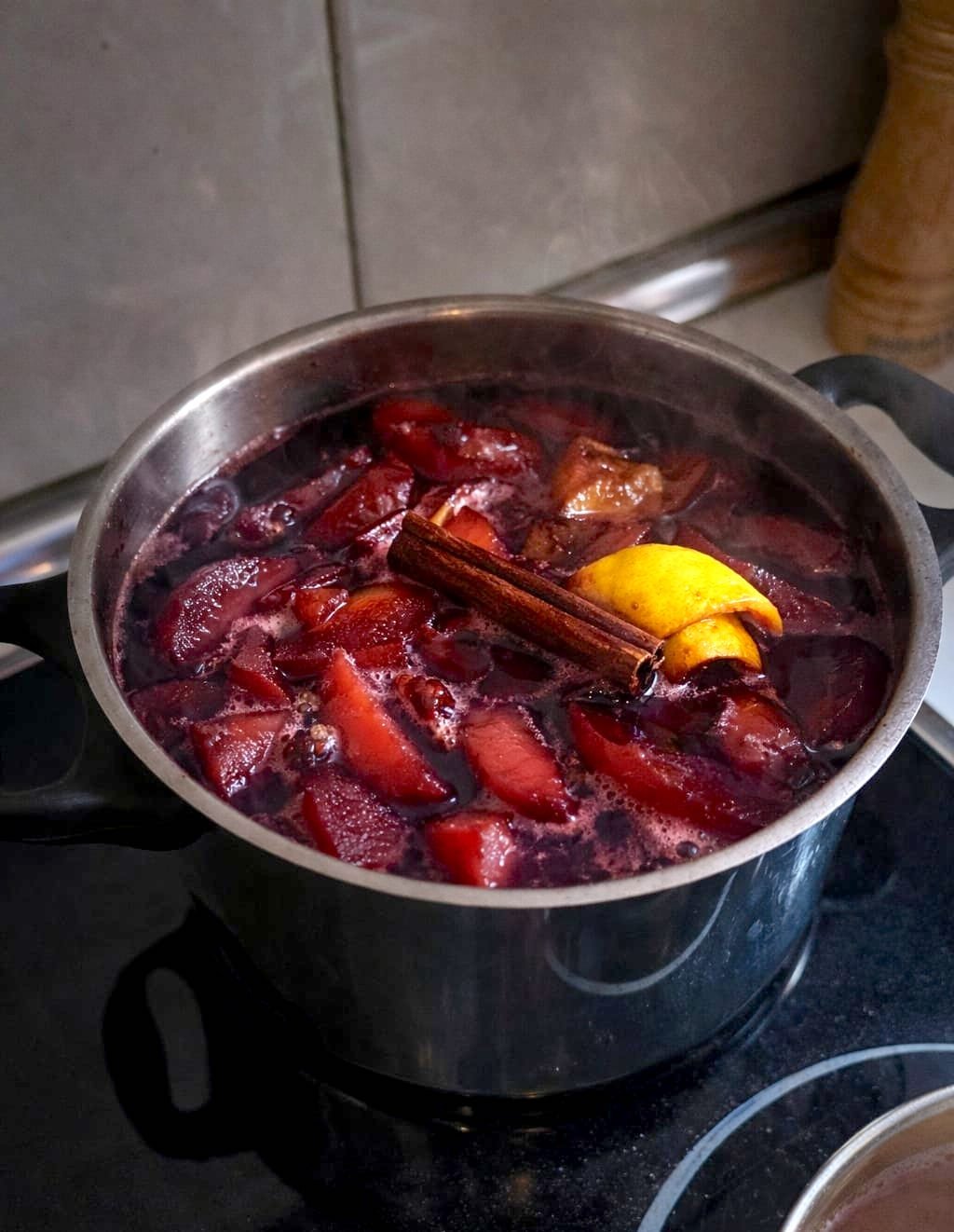
For dessert, we had a variety of Spain favorites, like turrón (nougat), polvorones (shortbread) and mazapán (marzipan) — which R turned into a beautiful dessert mountain — fresh fruit, and pears marinated in red wine, lemon and cinnamon sticks:
We ended the night drinking chupitos (shots, such as licor de hierbas, anís or pacharán—we had pacharán) and/or tea, snacking on the sweets, and chatting and laughing, which I felt so much a part of.
When everyone finally left around one in the morning, not only was I not depleted (as I often am in situations like this), but I was looking forward to seeing them again the next day! When I told them I was making a traditional American/Canadian Christmas dinner with roast turkey and the works the following day, A’s sister asked me, “Like in the movies?”
December 25—Christmas Presents and Stocking Stuffers
One of the Christmas traditions that I brought over from the New World is the stocking hung on the mantle (or entertainment center shelf, in our case) for Santa to fill with treats and small gifts. A’s 14-year-old son R, naturally, was all for incorporating this new international activity.
The night before, A and I hung them up and I stuffed them with a mix of chocolates, Licorice Allsorts and a small gift for both A and R.
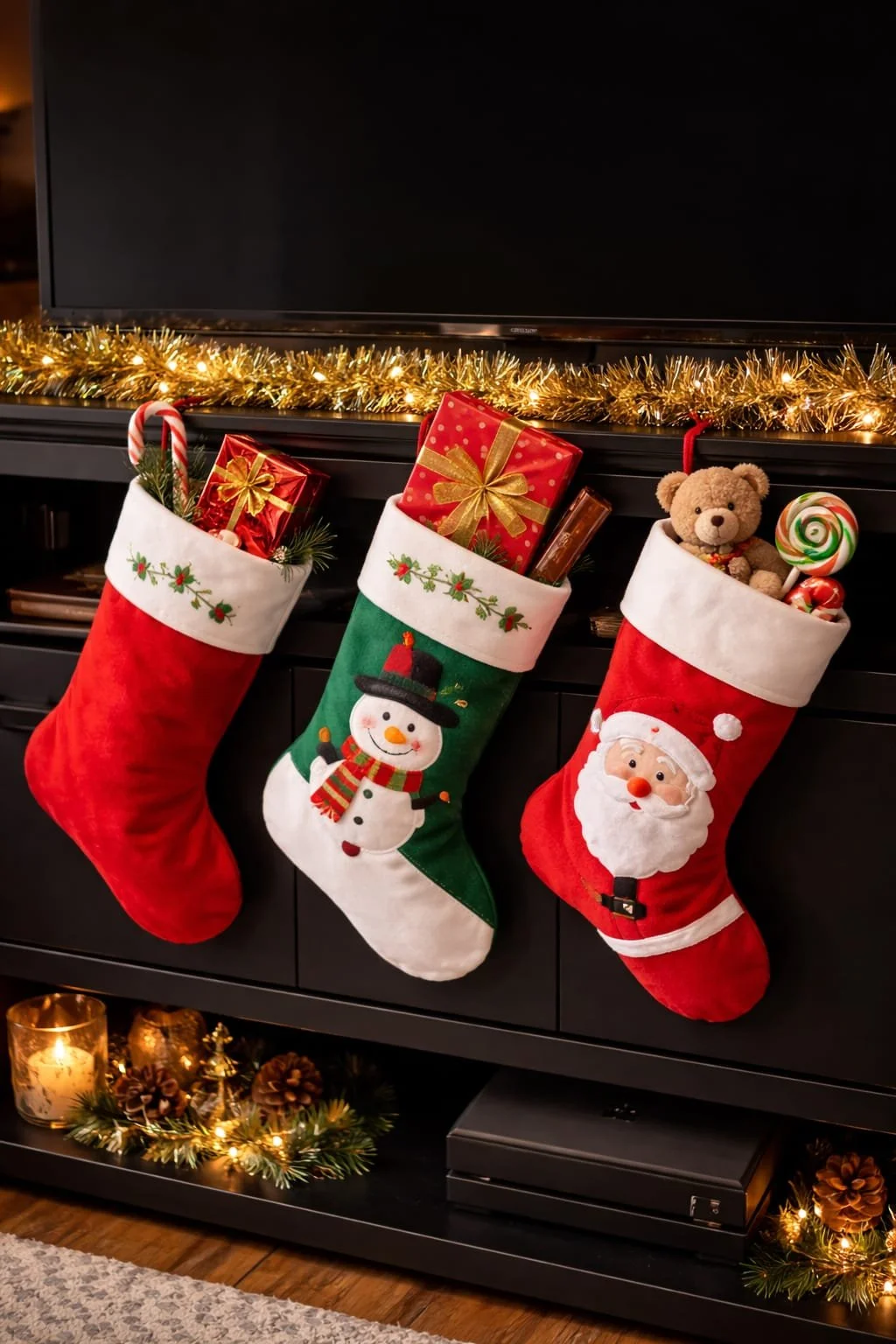
I didn’t put a gift into my own stocking and, because I’m so mature, didn’t even care. I honestly felt the anticipation of joy upon seeing A and R open their stockings. And then lo and behold, A stuck a gift into my stocking on behalf of Santa.
The next morning when A and I woke up and went into the living room, there was R sitting on the sofa scrolling on his phone. The minute he saw us, he leapt up and yelled “¡Regalos! ¡Regalos!” (“Presents! Presents!”) I watched the two of them open their gifts and read the cards with a big smile and a full heart.
And then, it was time to get to work….
December 25—The North American Christmas Dinner
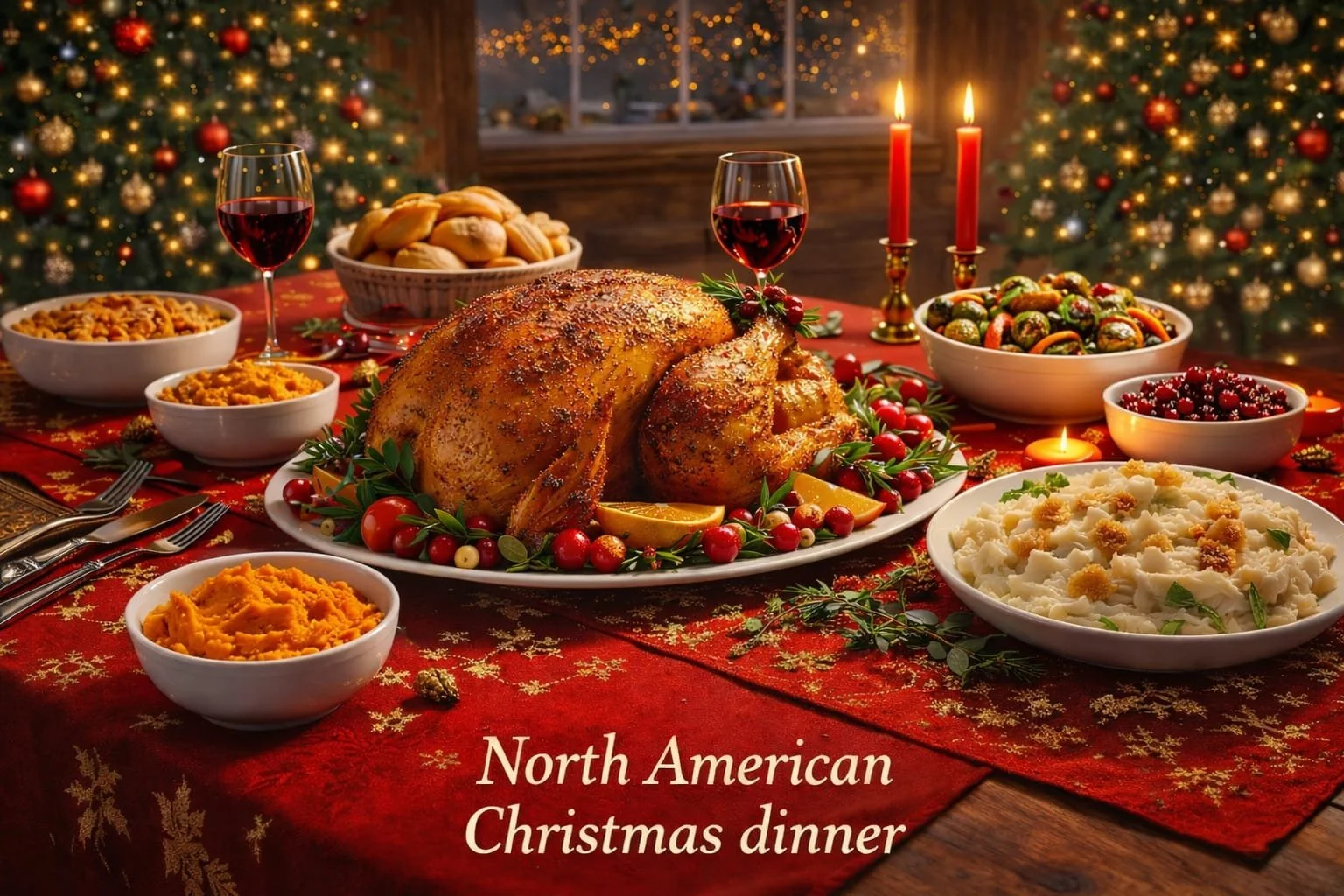
Today I was Master Chef, and the scary part was that this was the first time ever I had A) roasted a turkey, B) made a meal for eight people and C) done all (well, most of) this in Spanish.
But I rolled up my sleeves and got to work, with my Humble Helper A dutifully at my side asking “¿Cómo puedo ayudárte?” (“How can I help you?”) The turkey was in the oven for 3.5 hours and we took it out every 45 minutes to re-baste it, with A stepping up to do that task when I was busy with other elements.
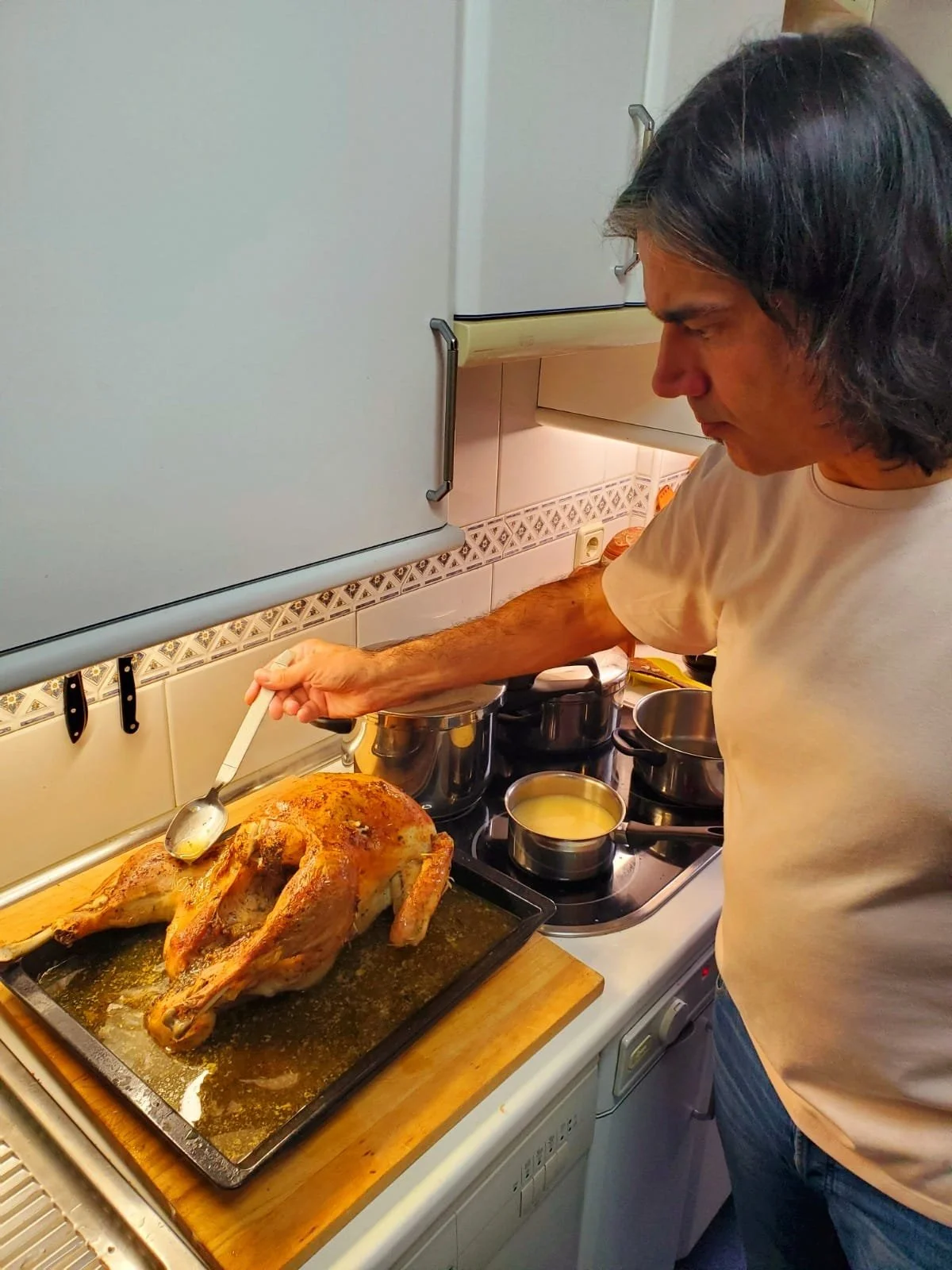
When the family arrived around 2:30 pm, they immediately commented on the delicious scent of roast turkey throughout the apartment. I showed A’s sister to the oven and pointed at the lit-up bird through the glass door. She gleefully remarked that it did, indeed, look like something from an American movie. So far, so good!
Soon after they arrived, dinner was ready and I called them all to the table.
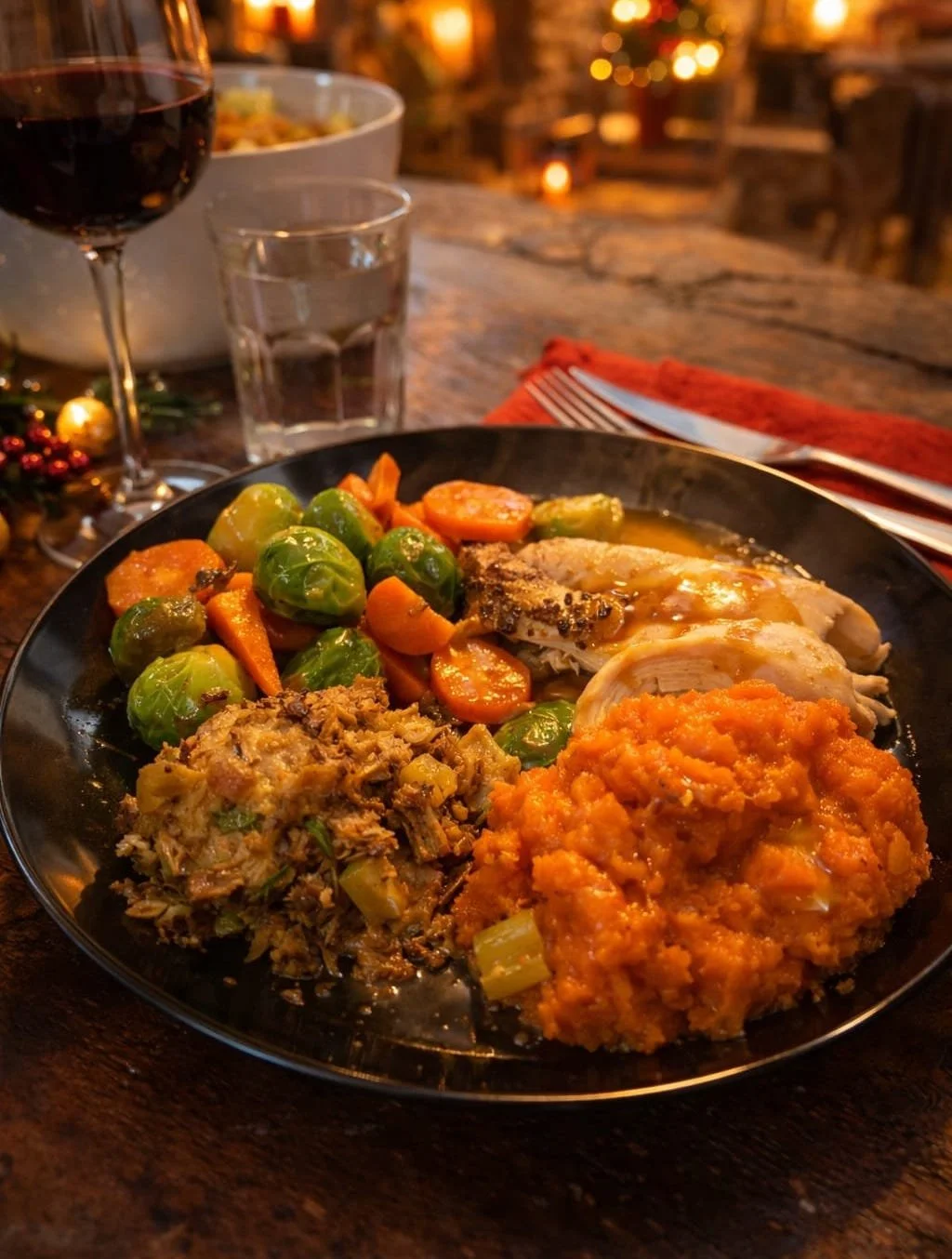
In addition to the turkey, which I carved…
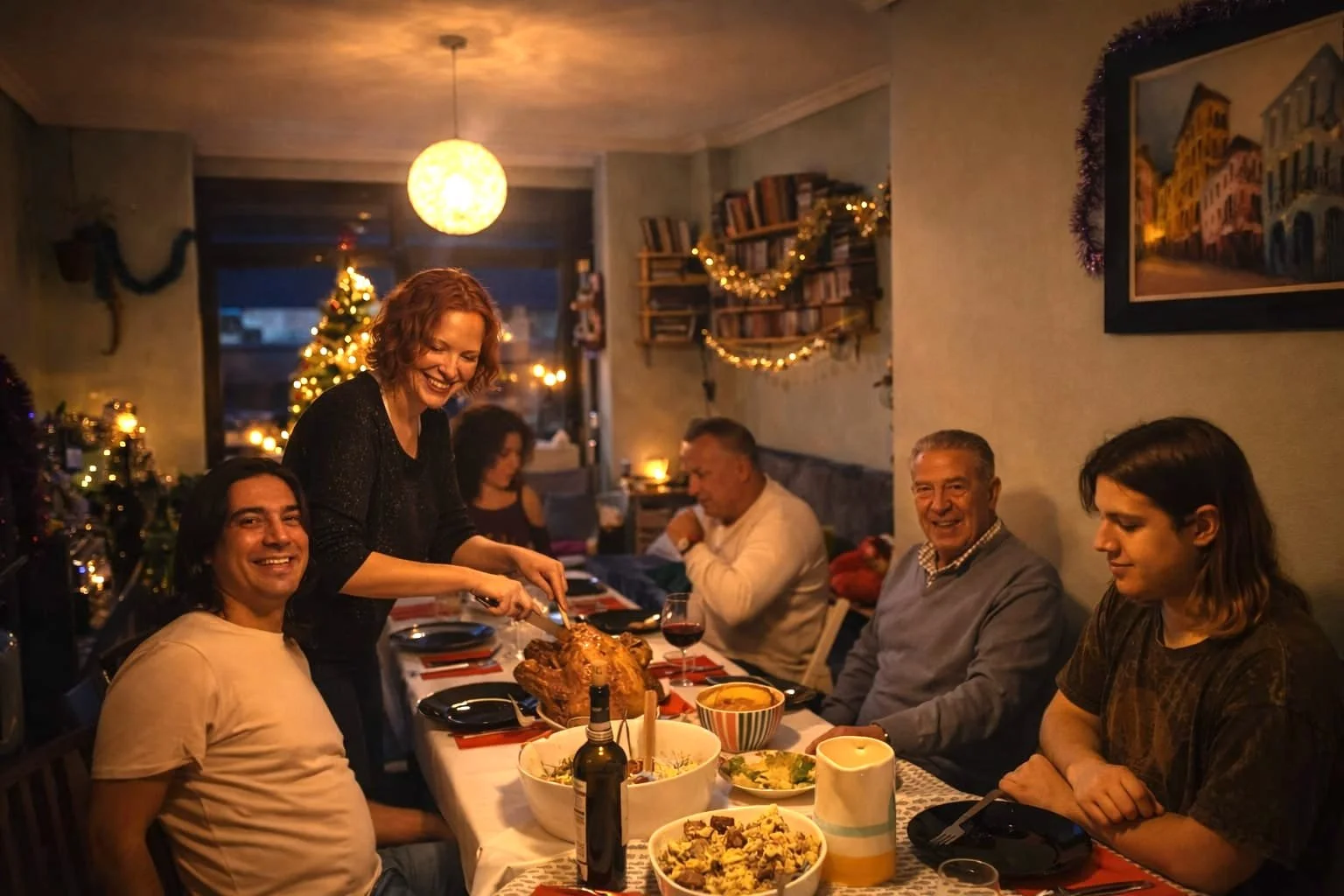
I also made homemade gravy (not shown), homemade stuffing…
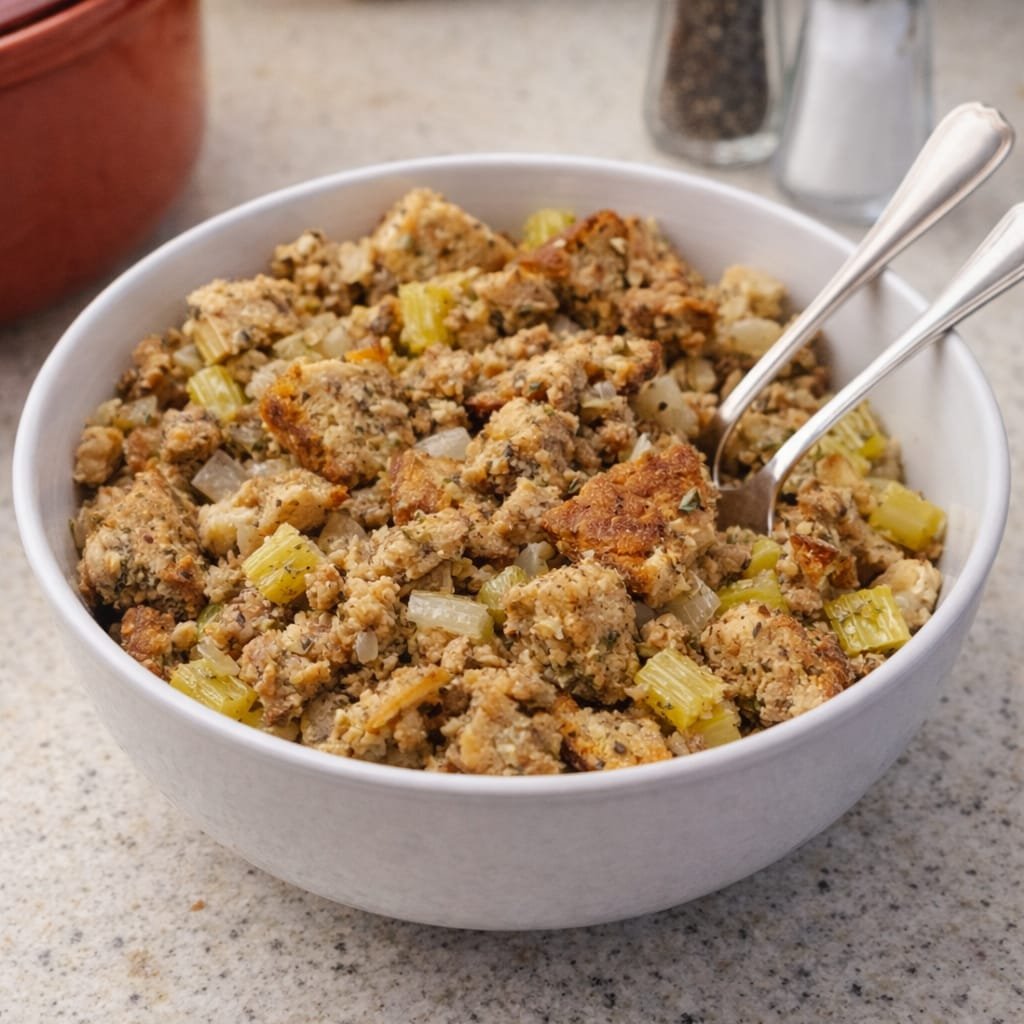
Mashed sweet potatoes, and steamed Brussel sprouts and carrots…
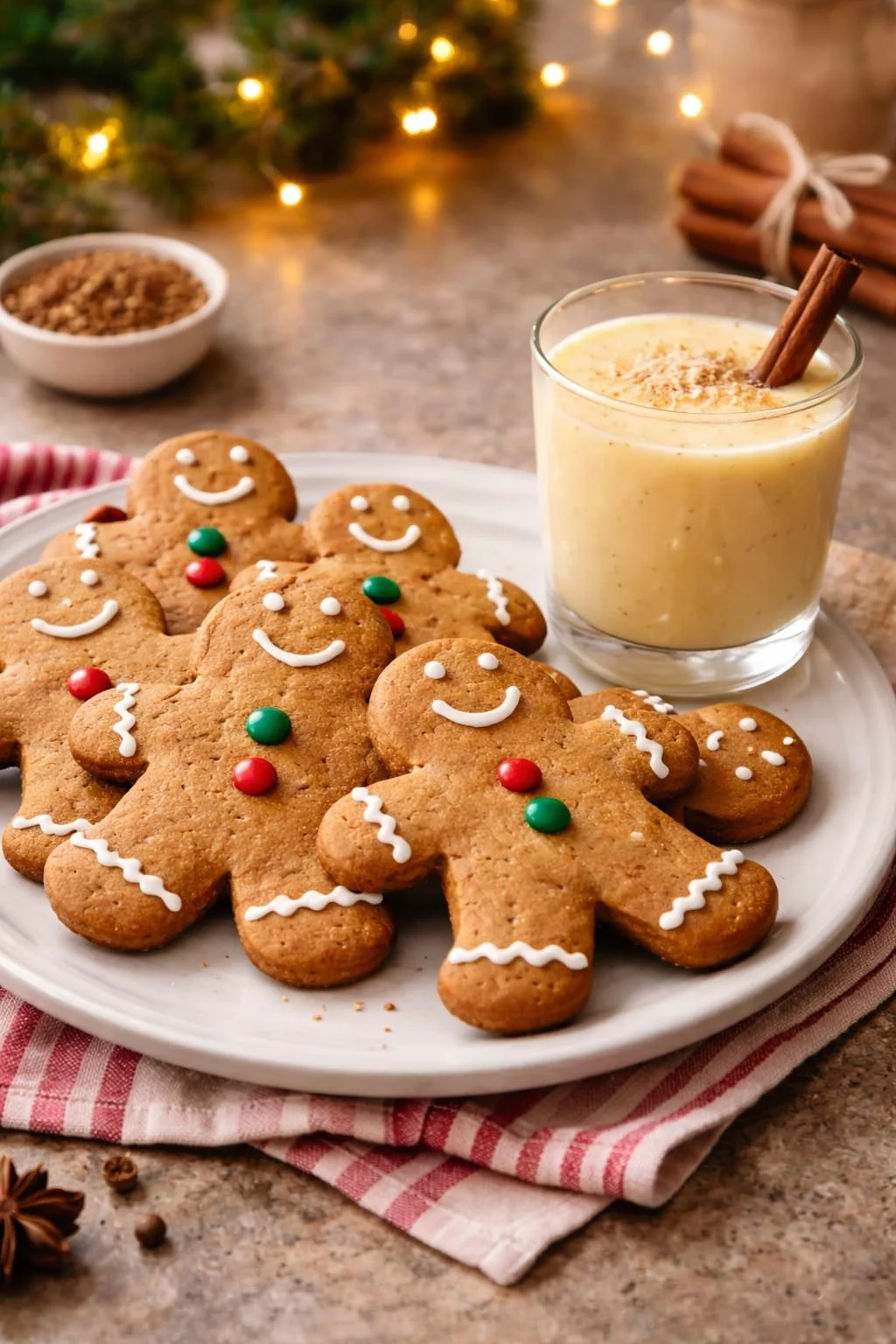
For dessert we had homemade gingerbread cookies (unless you live in the south of Spain, most Spaniards seem to be unfamiliar with molasses, which is called “miel de caña” (cane honey) here) and homemade eggnog. They were all unfamiliar with this drink, except A’s brother-in-law who said it tasted like “ponche de huevo” which means “egg punch” which is the closest you get to saying “eggnog”; what he had might have been thinking of was “natilla,” a popular custard that tastes similar.
We ended this evening playing a fun game in Spanish (I think it was the online version of The Chameleon), which I thoroughly enjoyed, even though I did have to look up many words to understand what was going on.
I felt even more comfortable with A’s family, which may have allowed me to understand the language a bit easier, and felt very much a part of the conversation (although A still had to translate for me). Also, I was super delighted when A’s brother-in-law asked if they could take some of the (abundant) American Christmas dinner home. You bet!
All in all, a fantastic Spanish and North American Christmas!
Christmas Traditions
By the way, when you try to explain your country’s traditions to someone of a different culture, you start to really examine what the hell your own customs even mean. So let me go over the main differences between Christmas in Spain and the US/Canada.
Christmas in Spain
The Christmas season is long and peaks on January 6.
Key dates & events:
Dec 22: Lotería de Navidad (El Gordo) — The famous national Christmas lottery; people watch the drawing like it’s a cultural event.
Dec 24: Nochebuena (Christmas Eve) — Big family night in many homes: long dinner, sobremesa, sometimes gift opening (this has become more popular in recent years).
Dec 25: Navidad (Christmas Day) — Quieter, family time, leftovers for lunch (or a full-on Canadian Christmas dinner if I’m in the family!), visiting relatives; also sometimes gift opening (also more recent).
Dec 28: Día de los Santos Inocentes — Prank day (Spain’s version of April Fools’ Day).
Dec 31: Nochevieja — 12 grapes at midnight (“las uvas”) for luck.
Jan 5: Cabalgata de Reyes — Three Kings/Wise Men parades in towns and cities (very kid-focused, candy is tossed).
Jan 6: Día de Reyes (Epiphany) — Traditional main gift-giving day for many families.
Iconic customs:
Belén / nacimiento (nativity scenes) are huge; some towns do elaborate displays.
Christmas markets, not unlike those in London, pop up in many plazas around town.
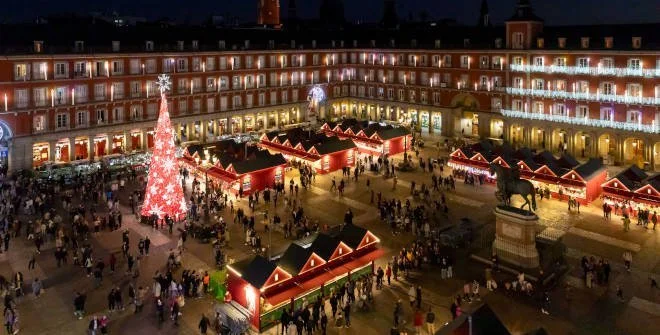
Source: EsMadrid
Villancicos (traditional Christmas songs, church traditions, and (for some) Misa del Gallo (midnight mass).
Sweets everywhere: Turrón, polvorones, mazapán, plus roscón de Reyes on/around Jan 6 (with the hidden figurine/bean tradition).
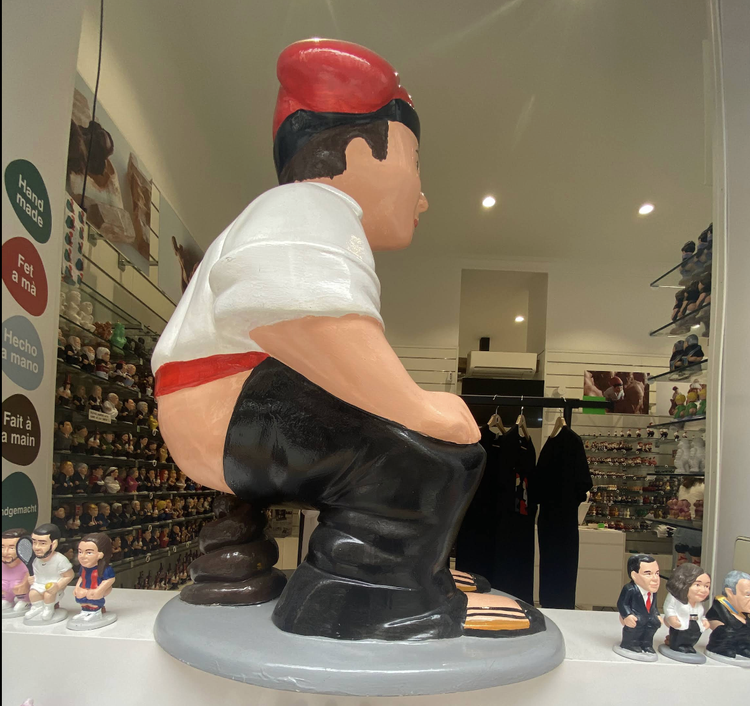
In Catalonia: Caga Tió (“pooping log”) – something you definitely see outside of Catalonia, too; they have a whole store of these figurines! What is the connection between pooping and Christmas? No friggin’ idea!!!
Common Christmas foods:
Fish and seafood, like besugo (sea bream) or bacalao (cod), sometimes cordero (roast lamb)
Cold appetizers like cured meats, cheeses, olives, pâtés
Sweets/drinks like turrón, polvorones/mantecados, mazapán and of course plenty of good Spanish wine
Christmas in the U.S.
The Christmas season is shorter and peaks on December 25.
Key dates & rhythm:
Nov 25: Thanksgiving — This isn’t officially a part of Christmas, but the general holiday season basically starts on this date.
Dec 24: Christmas Eve — Family time, sometimes gifts are opened, hanging up the stockings and putting out cookies and milk for Santa Claus.
Dec 25: Christmas — Main day: Santa + stockings + gift opening and the big Christmas dinner with family.
Dec 31: New Year’s Eve — Midnight countdown, champagne cheers, a NYE kiss if you’re lucky.
Iconic customs:
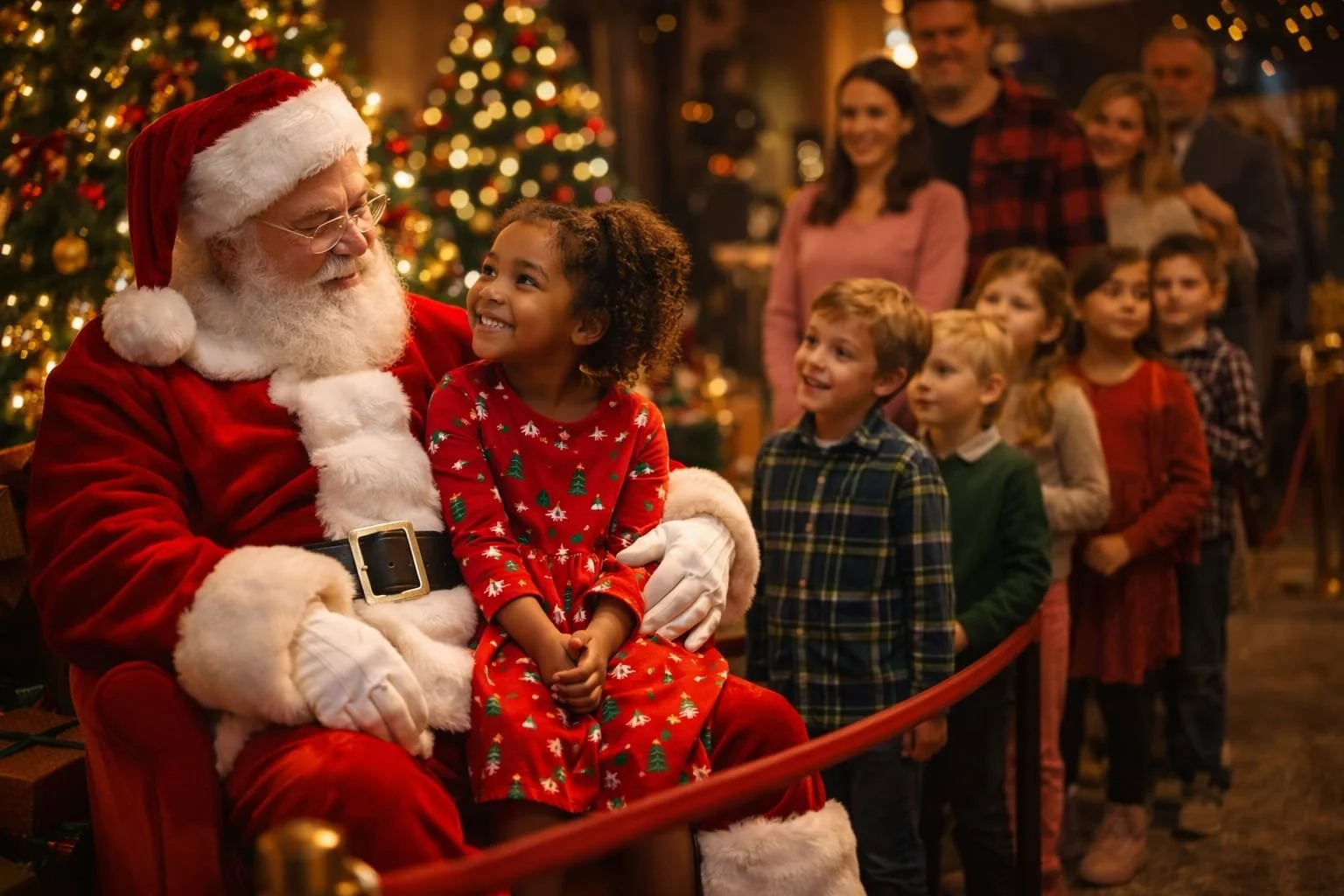
Santa Claus is central: kids visit Santa, sit on his lap to tell him what they want for Christmas, and write him letters.
Stockings hung by the fireplace (or wherever you can manage).
Trees + lights are a major feature (often very elaborate outdoor displays on houses).
Christmas carols played on the radio and in stores, etc., as well as caroling.
Cookies and milk left out for Santa (sometimes carrots for reindeer).
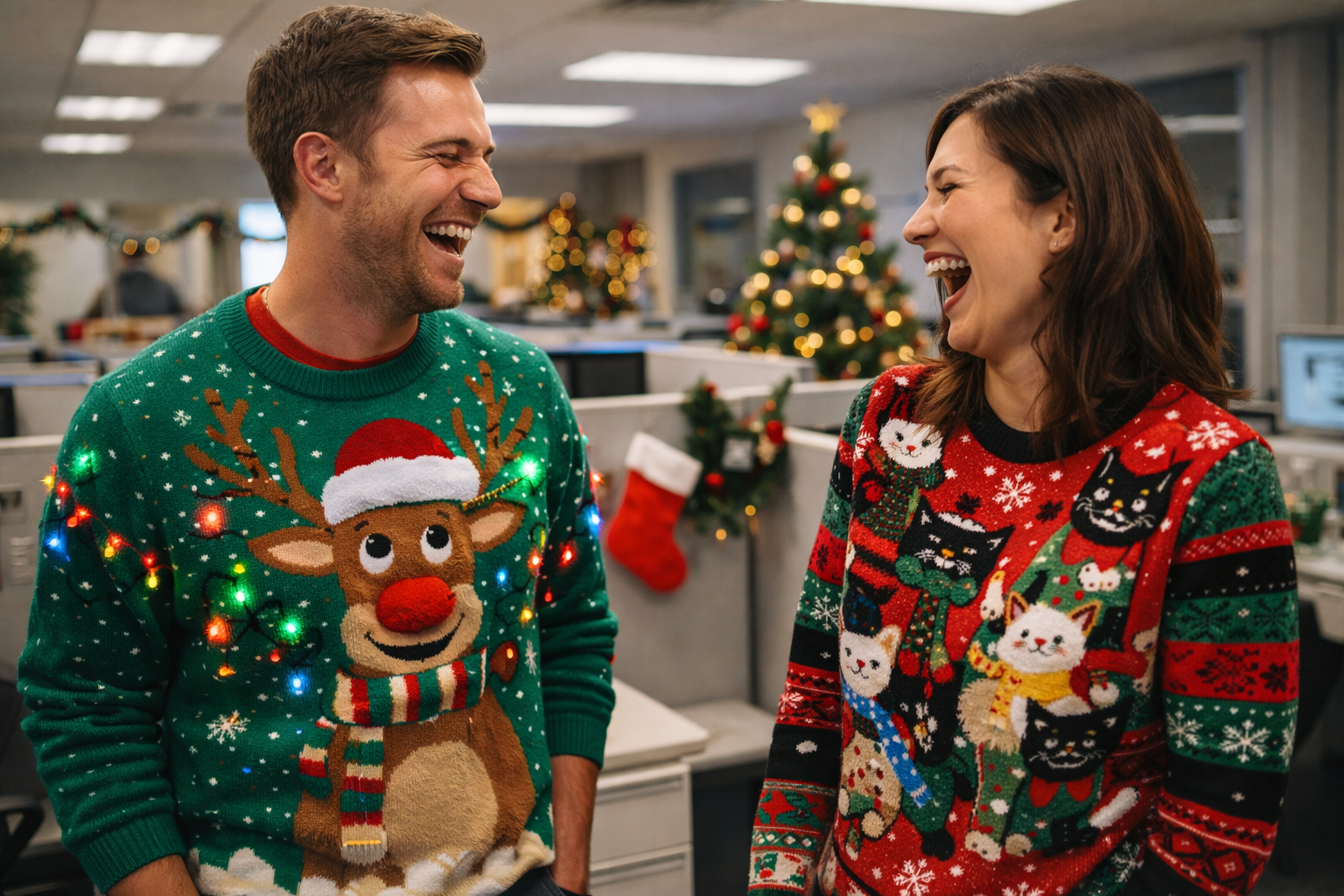
A lot of social traditions: holiday parties, ugly sweaters, gift exchanges (Secret Santa/White Elephant).
Common Christmas foods:
Turkey or ham, stuffing, cranberries, mashed potatoes, gravy
Sweets/drinks like eggnog, gingerbread, sugar cookies, candy canes
Christmas in Canada
Very similar to the US, with a few standout differences; the Christmas season peaks on December 26.
Key differences:
Canadian Thanksgiving is in October, and therefore is not connected with the Christmas holiday
Dec 26: Boxing Day — a statutory holiday in most provinces, and a quieter day with family eating leftover Christmas foods. (This holiday started in the 1700s in which the wealthy gave gifts to servants or tradespeople, usually a “Christmas box” of leftover Christmas dinner, often fancier fare than the recipient was used to.)
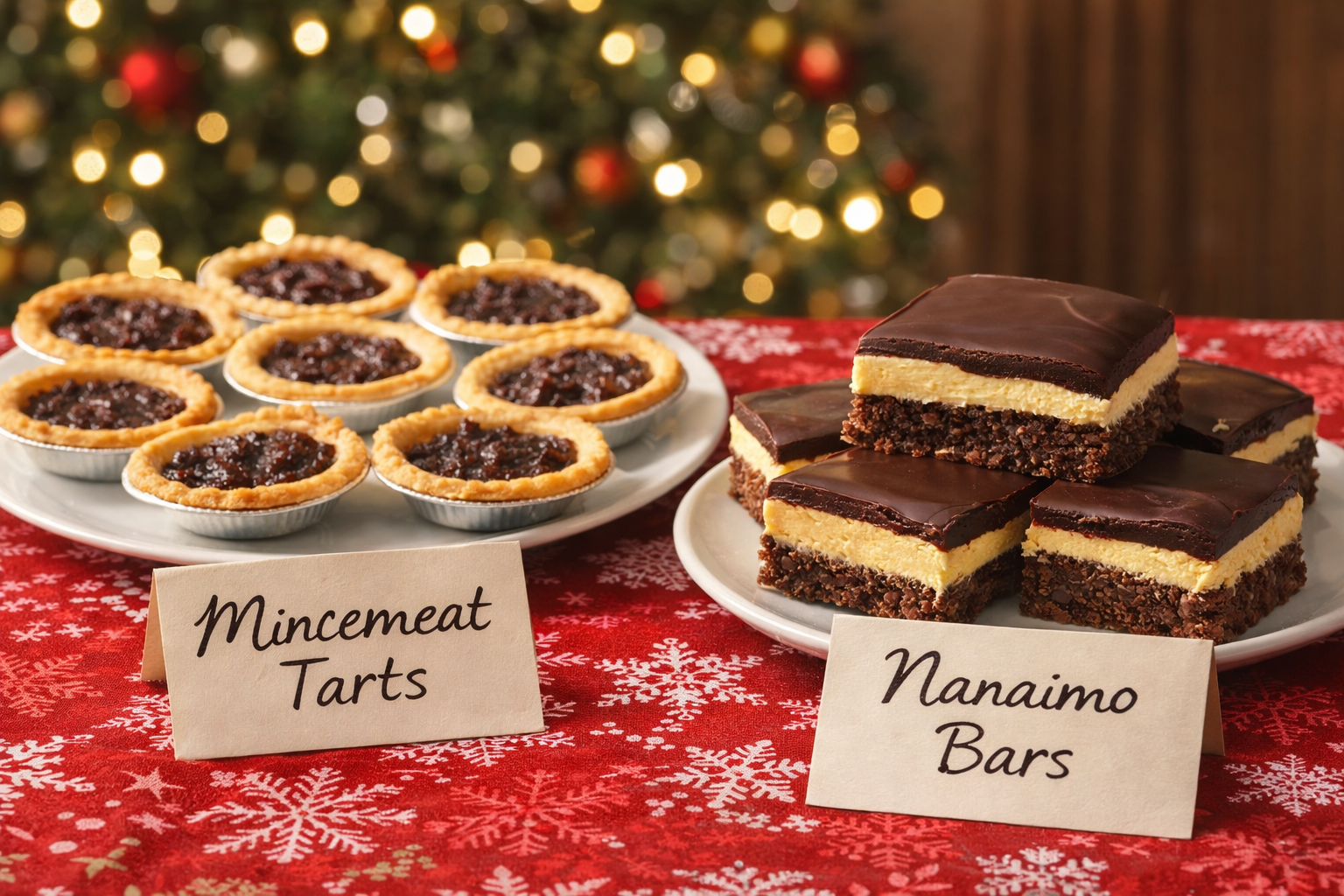
Baked goods: Classic Canadian holiday goodies like butter tarts, mincemeat pies, Nanaimo bars, shortbread, etc.
Click here to read the next post, Adjusting to Life in Spain: [TBA]
Note: All photos taken or created (using DALL-E) by Selena Templeton, unless otherwise noted.
If you enjoyed reading this travel blog, check out some of my other adventures:
Adjusting to Life in Spain: Dating in My Non-Native Language
Adjusting to Life in Spain: Using the Spanish Healthcare System
Adjusting to Life in Spain: Damn, I Can’t Find My Favorite Products Here!
From Fiesta Invites to Flamenco Nights: My Adventure in Spain
My Road Trip to the Four Corners: Utah, Colorado, New Mexico, Arizona
