Click here to read the previous post Adjusting to Life in Spain: Road Trip Through Spain & Portugal (pt. 2)
Our road trip through Spain and Portugal continues!
Day 5
Jarandilla
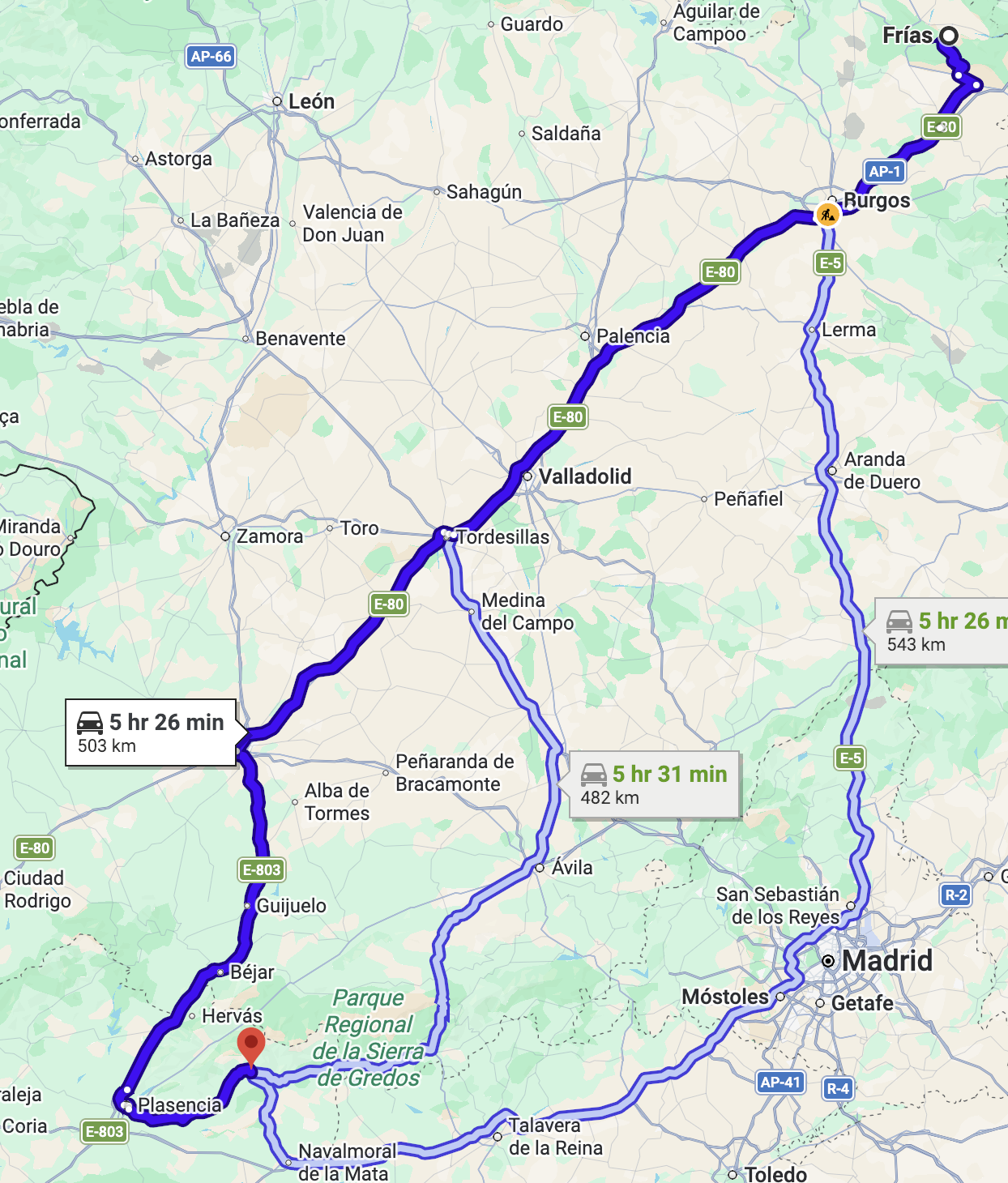
After visiting the medieval Frías Castle (Castillo de Frías), a castle built into the rock, in Burgos, we spent the night in Jarandilla, a pueblo we’ve been to many times before.
It’s a small town in Cáceres province, Extremadura, with a population of about 2,845. Every December it holds a spectacular (read: what the actual hell?!?) festival called Los Escobazos in which villagers gather in the plaza with flaming brooms and “playfully” whack each other. You know, for fun.
Fortunately, we were nowhere near December.
So instead of maneuvering our way through dark, smoky streets, we ambled through sunny, clear streets, crossing through the plaza (the very same one that had the WWII-like smoky air and blazing fires 4-5 months ago), stopping in to admire the Parroquia Santa María de La Torre (Parish of Saint Mary of the Tower), and finally going for lunch at La Jardinera.
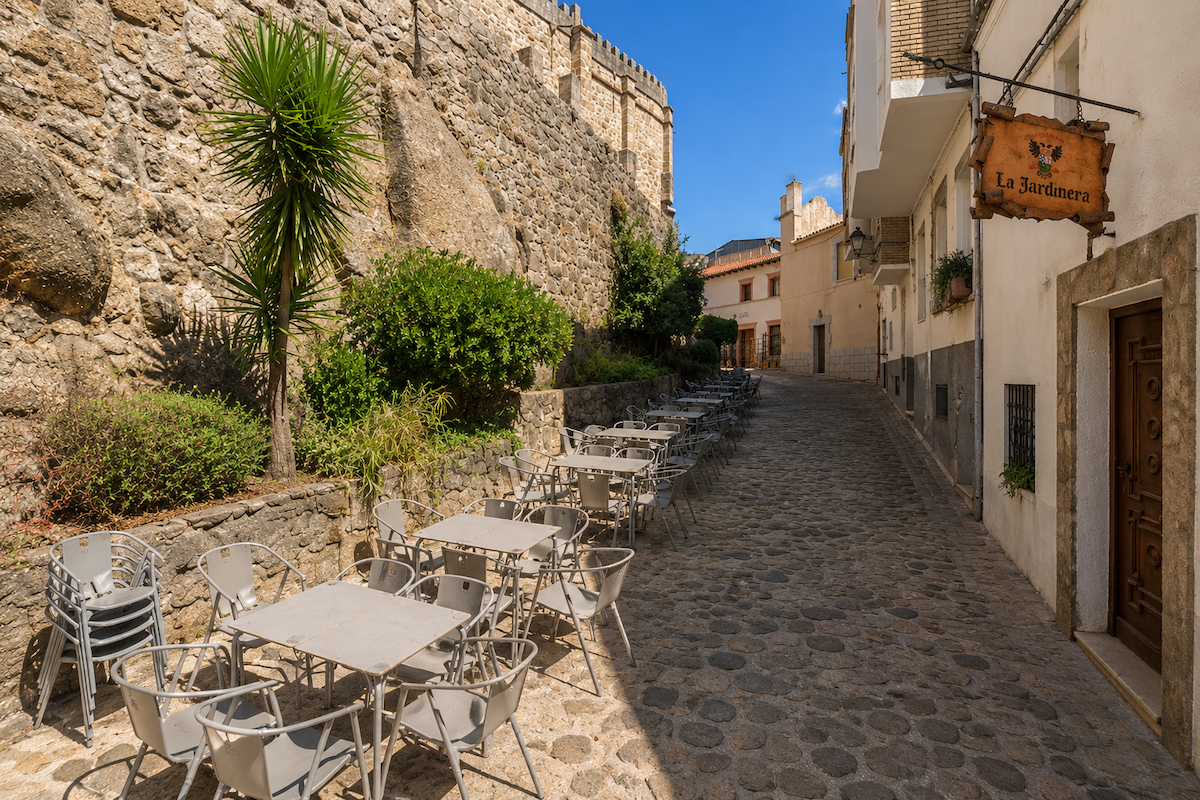
We sat at an outside table in the crisp spring air, with a view of the Tower, which you can just see in the center, top of this photo, and planned the next leg of our trip. (By the way, we ate, among other foods, a great salad – which, if you know anything about Spain, you know how rare that is. Good going, La Jardinera!)
This is what I love love love about road trips: You plan as you go. For me, that adds to the sense of adventure. We had a basic idea that we wanted to hit Porto, Portugal next, but we now did a little research to figure out which route we wanted to take to get there.
Once we figured out the most interesting way, we meandered back home, played Scrabble (or, as they call it in Spanish, “The Alphabet Game”), and hit the sack.
Day 6
Valle del Jerte
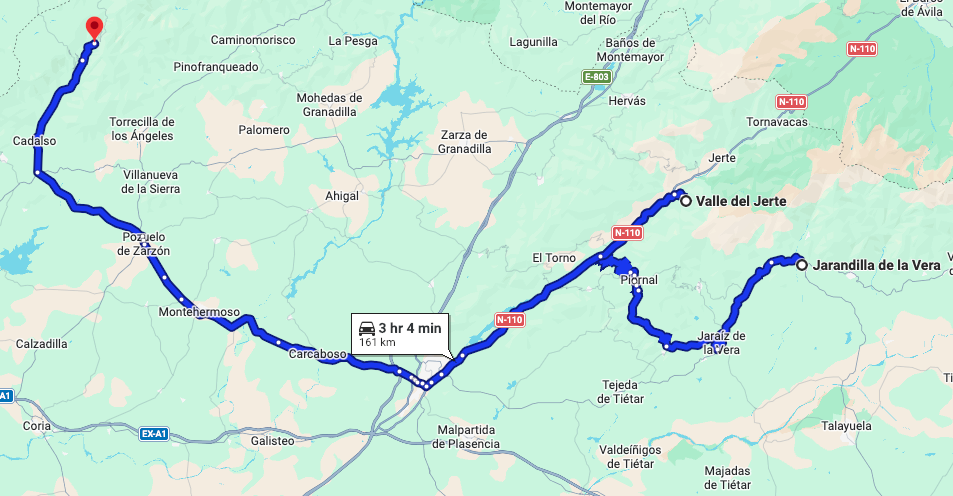
After breakfasting on the terrace of A’s house in Jarandilla, we hit the road, heading northwest for an hour and a half through the Valle del Jerte (Jerte Valley) to see the cherry blossoms.
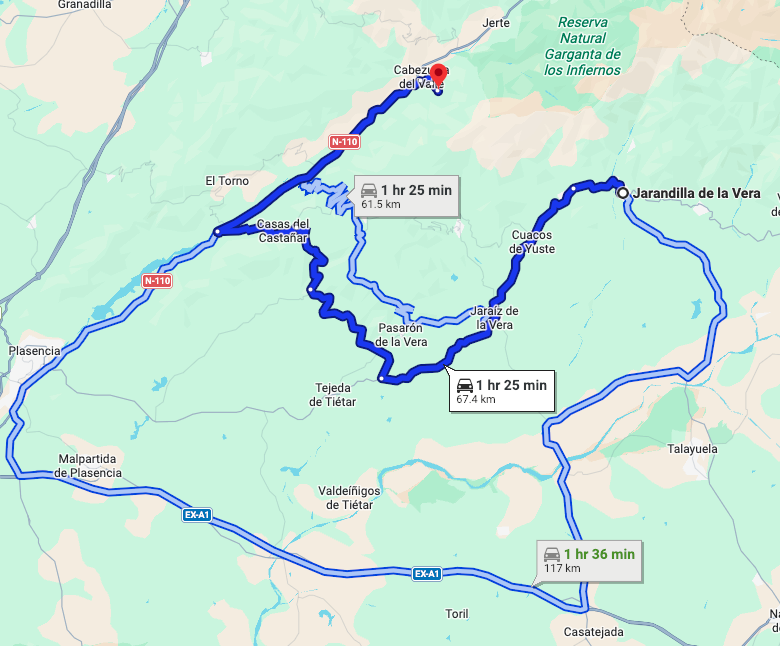
Every spring, the valley and surrounding mountains bloom and the 1.5 million cherry trees turn into an ocean of white blossoms, but it only lasts two weeks and, alas, they were not yet in bloom when we drove through. This is a small sampling of what it would’ve looked like, though:
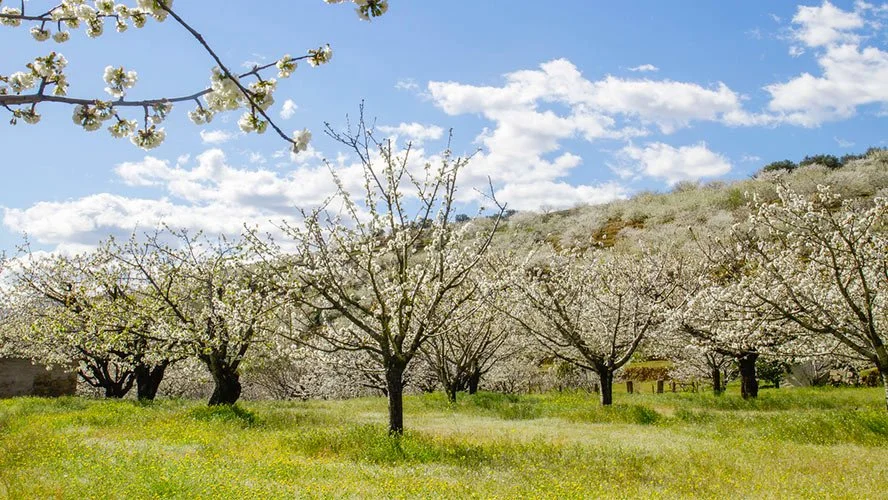
Source: Barcelo
Robledillo de Gata
After not seeing the cherry blossoms, we kept going northwest for a couple more hours to Robledillo de Gata, Spain. It was only 100km/62 miles, but most of the trip was on narrow, windy, mountainous roads. We chose to stop here for lunch because from what we read, it was an “interesting” town, and not to be missed.
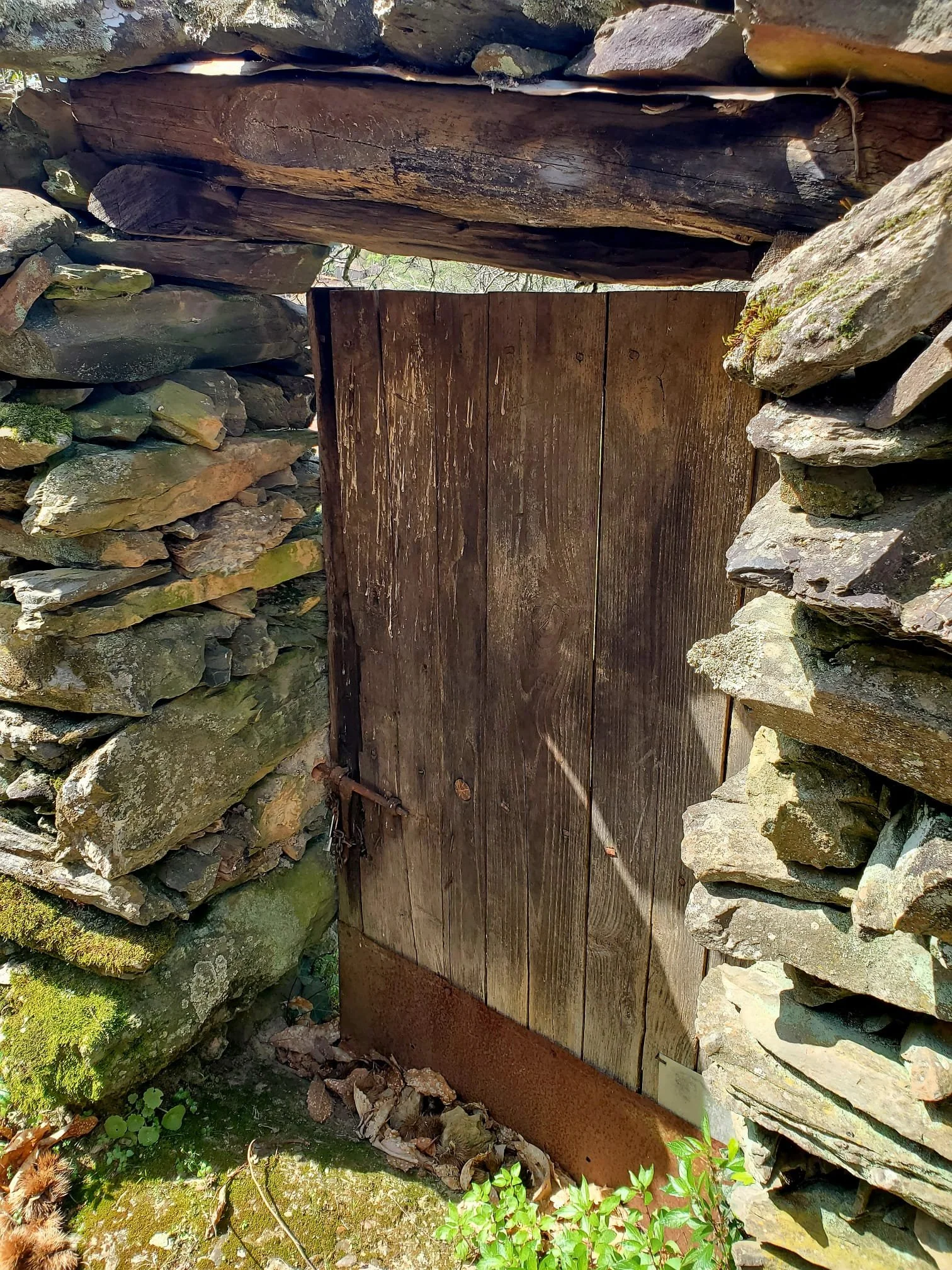
Upon arriving, my first thought was: Really? Not to be missed? It’s an odd little aldea (village) in the mountains in Cáceres, Extremadura, tucked into the Sierra de Gata near the border of Portugal. With only 89 inhabitants (and decreasing each census year), it actually looked abandoned at first. We parked just outside of the town near a river and then walked into the cluster of what I can only describe as homemade houses, some more shack-like, some more stone hut-like.
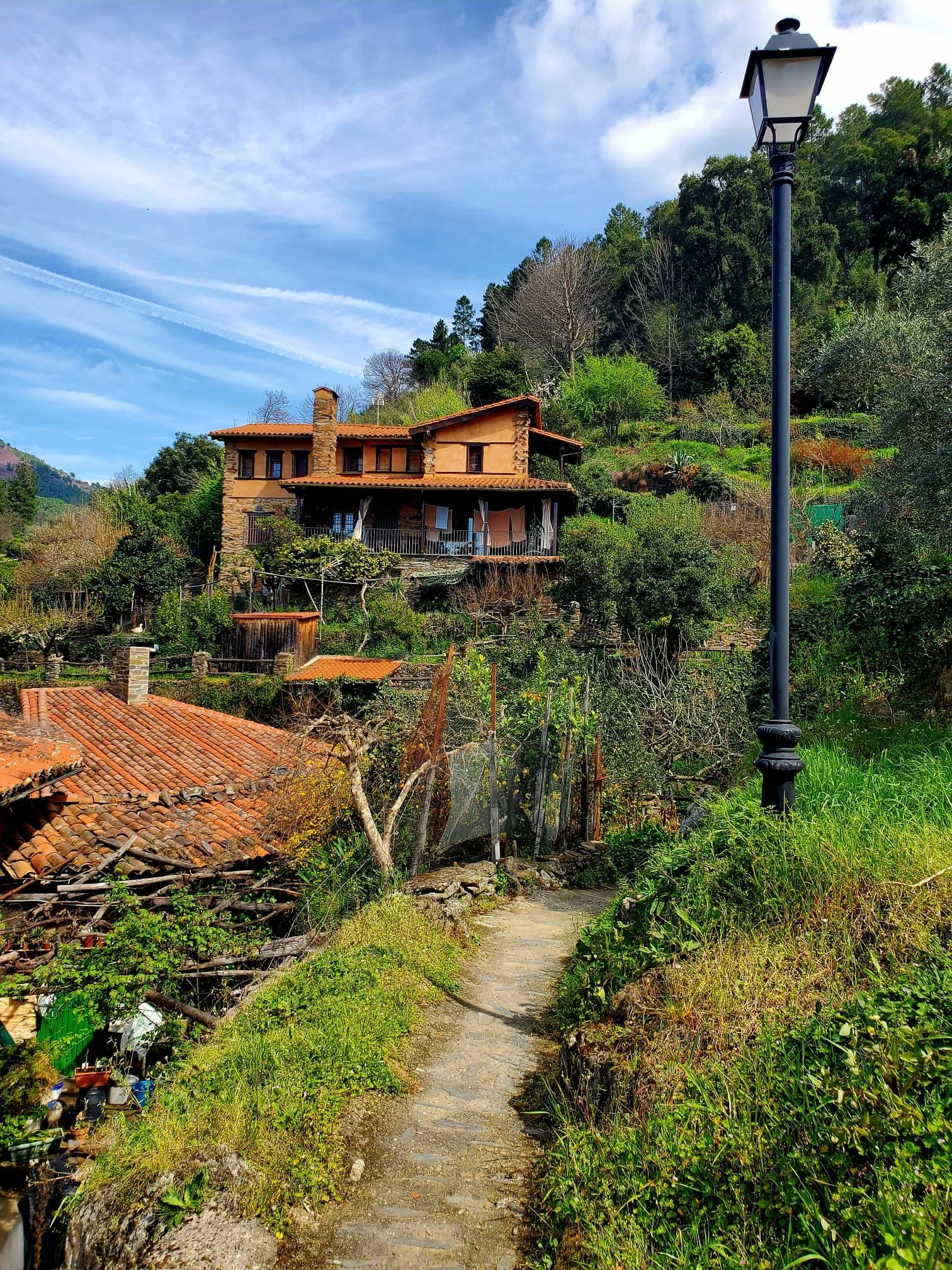
We approached the village from a path slightly above it on a dirt trail surrounded by tons of lush greenery – with an old-fashioned streetlight in the middle of it.
As we went down the path and into the village proper, we walked past slate-and-stone houses, through narrow lanes and across little bridges over the small river. And still we saw no one (the man in the photo below is A and the dog just showed up and followed us around the whole time we were here).
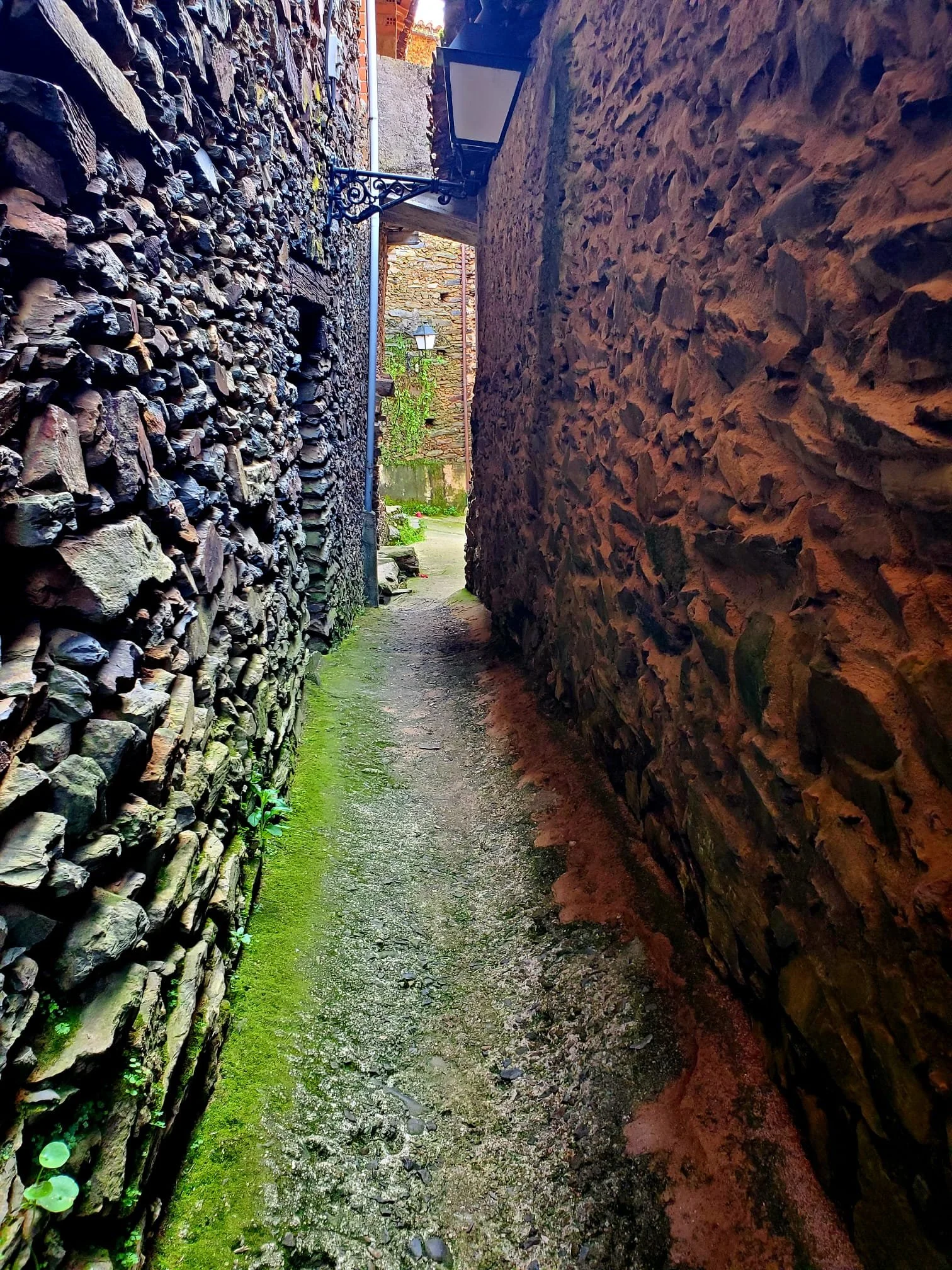
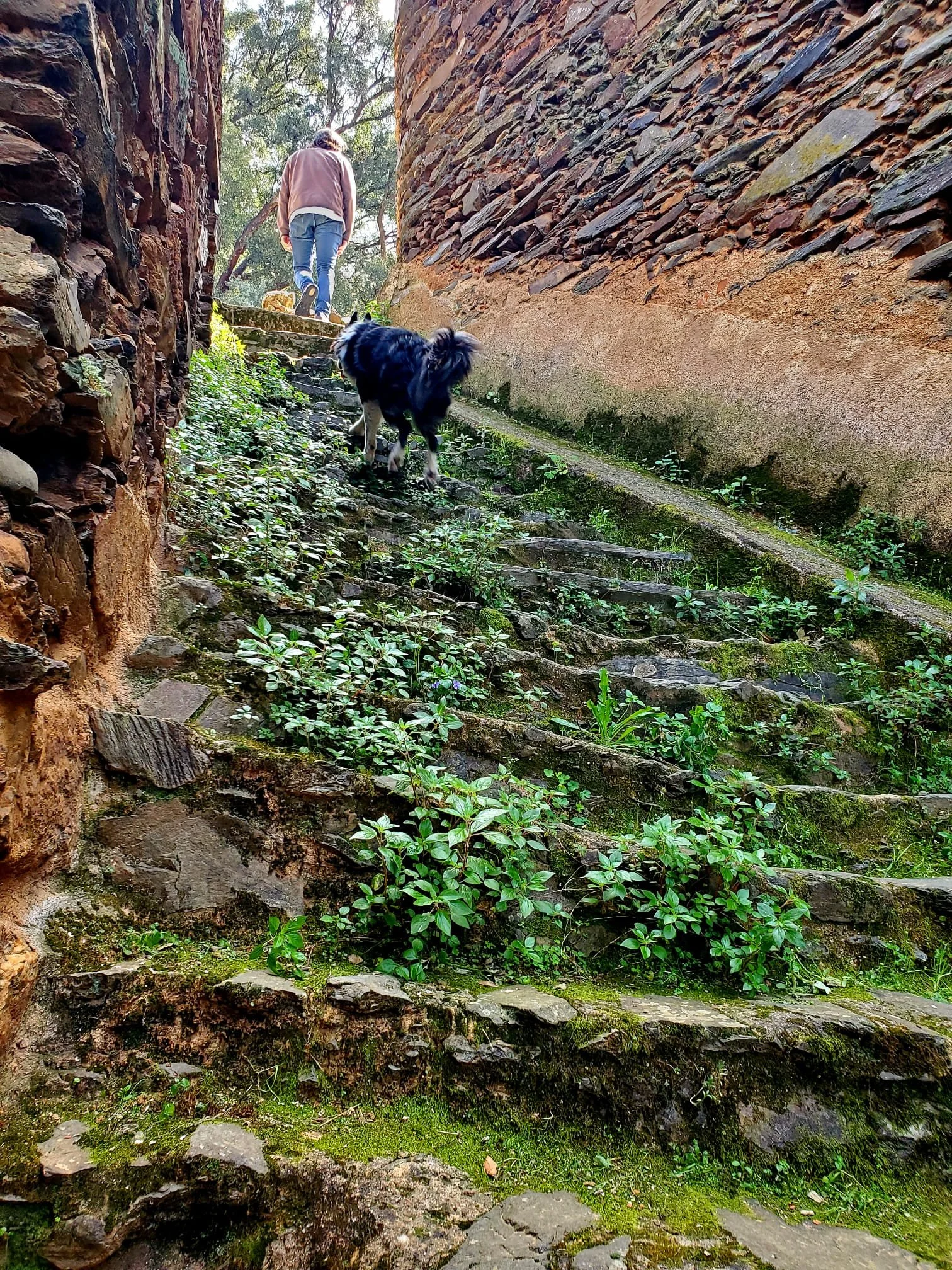
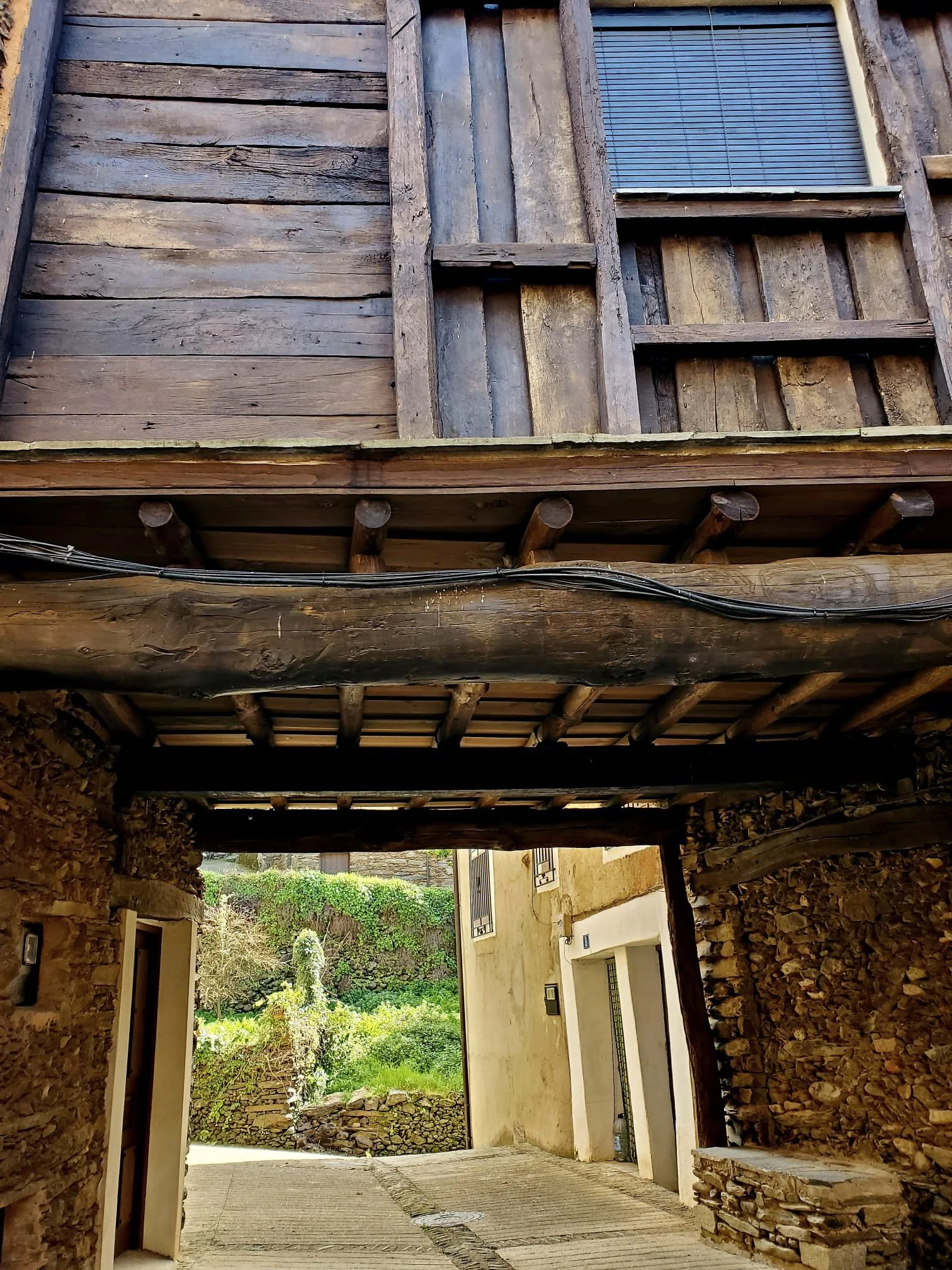
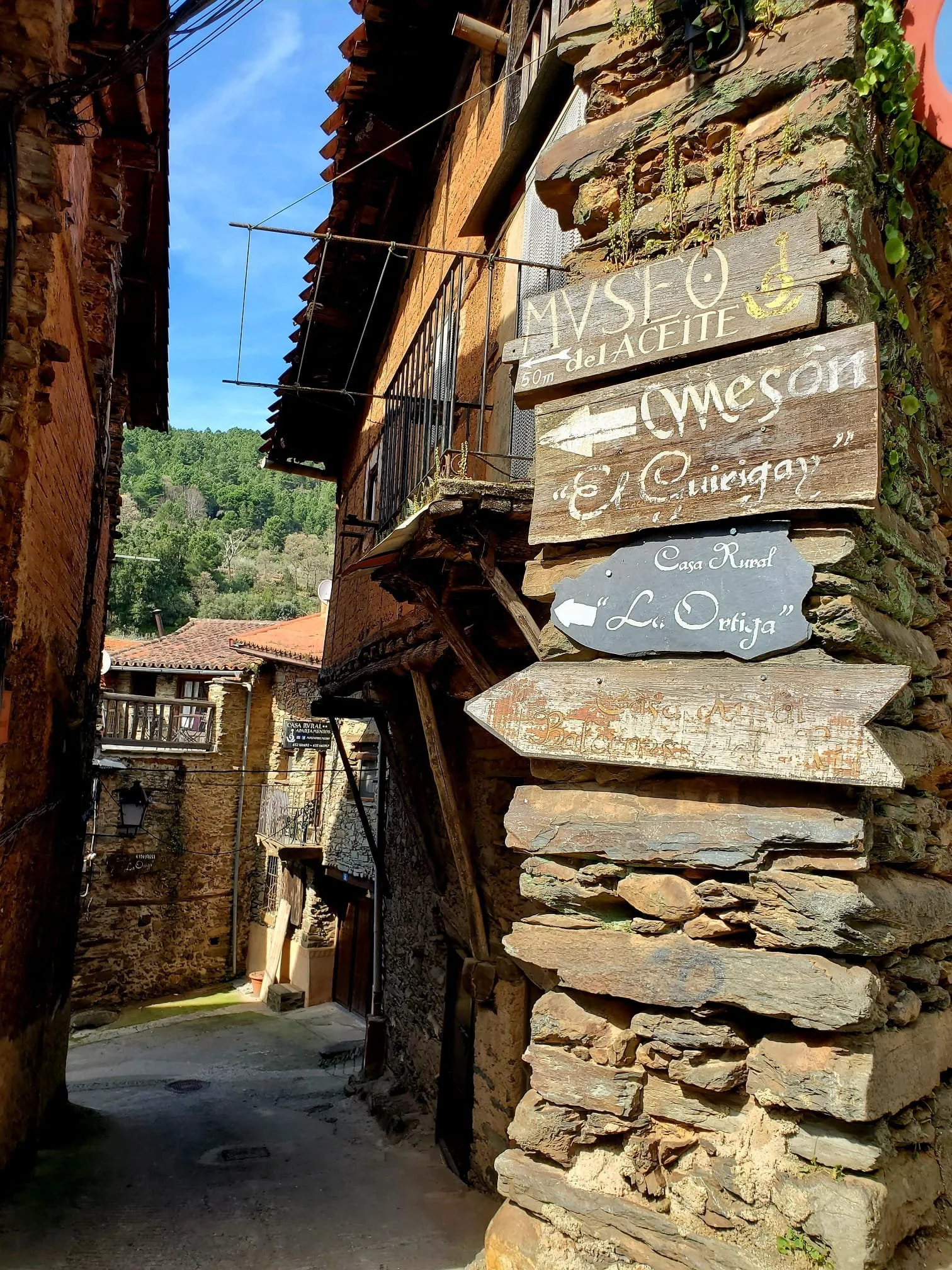
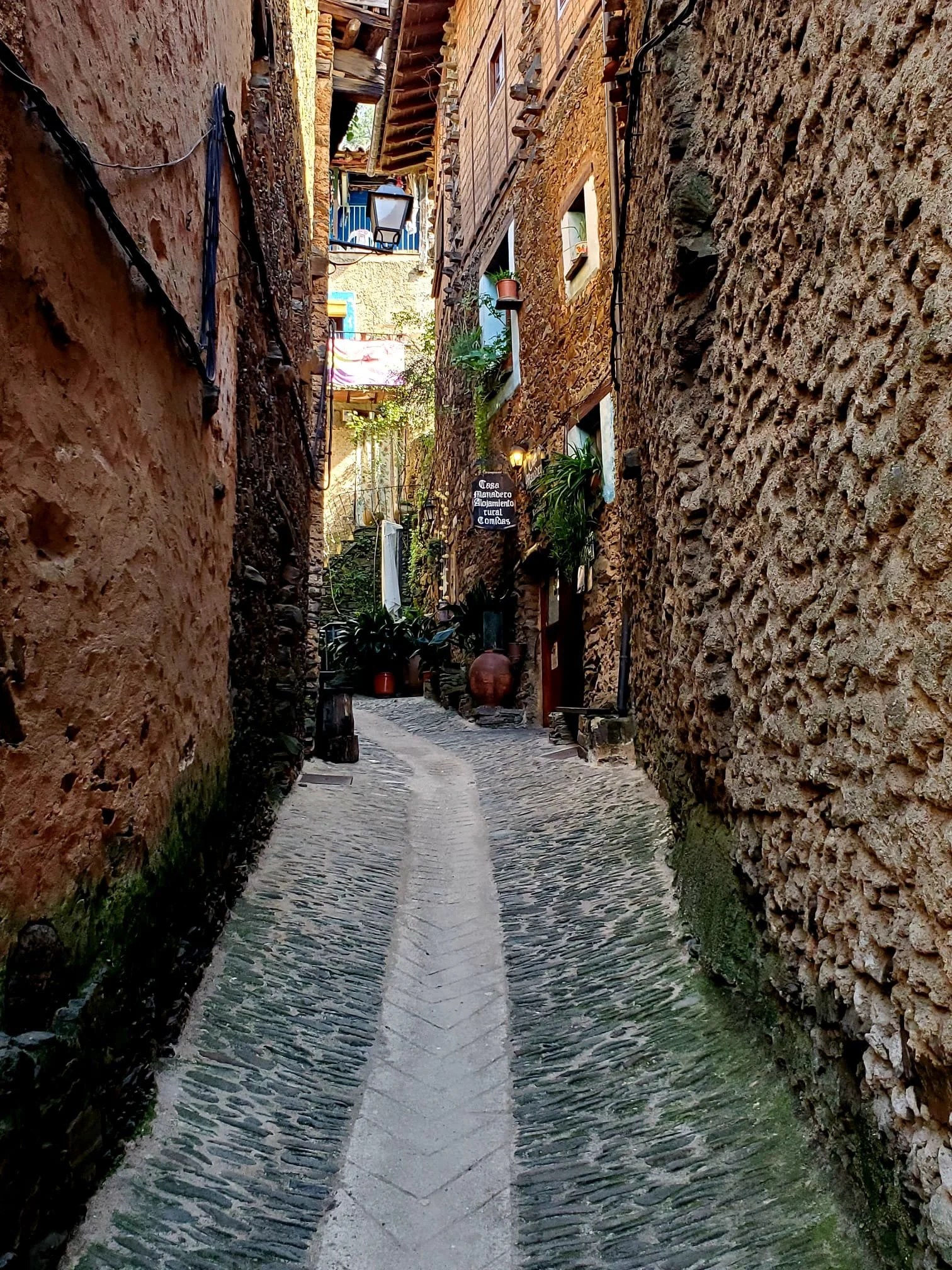
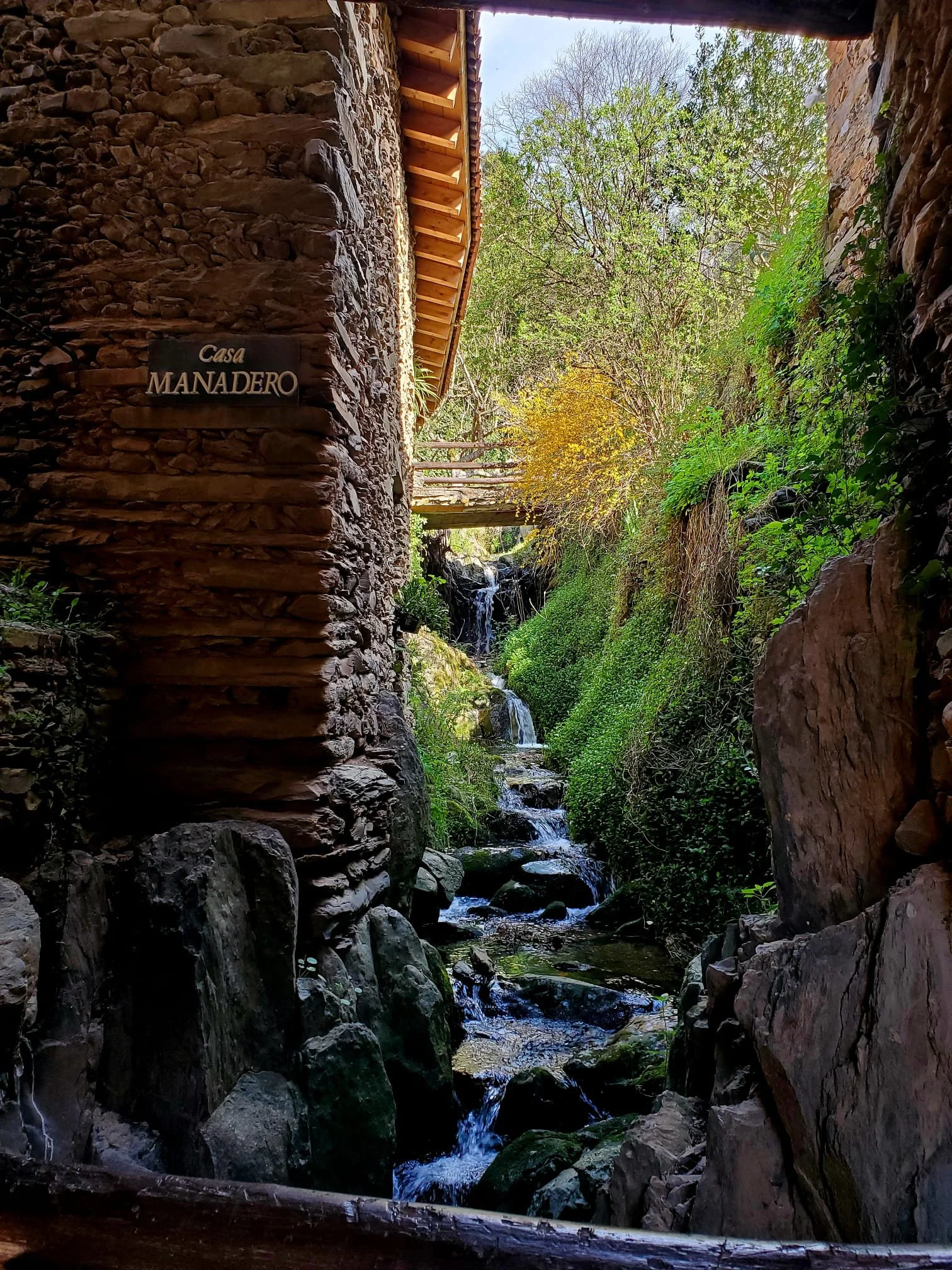
Some of the houses looked very poor and others looked like solid 500-year-old stone buildings, and the whole thing was oddly fairy tale-like, or maybe more Don’t Look Now-like.
When we reached the other side of the small village, we hadn’t seen any restaurants or bars, so we were thinking of moving on and stopping for lunch elsewhere. But then on our way back, we saw the one open place, Mesón Barrero. Or, we thought it was open. We asked the young man sitting at one of the three outdoor tables having a drink, and he looked surprised, said yes!, jumped up, and went inside.
Turns out this guy was the waiter (and son of the proprietors). He was very friendly and very talkative, and we wondered if he was bored (with only 88 other residents: 53 male, 36 female, and only 7 between the ages 10-29), but we soon learned that he was keeping himself plenty busy by learning both German and Mandarin.
With the dog as our new buddy, we sat outside and had lunch, and I have to say, it was surprisingly delicious. And not only that, but this was the best salad I’ve had in Spain! When we asked the kid (because, really, that’s what he looked liked) for wine recommendations, he casually mentioned that they (the family restaurant) make their own, and would we like to try it? We did and, again, were delightfully surprised. Since the family can’t sell it, aside from by the glass, it has no label, no name.
After a thoroughly satisfying lunch, we took a different way out of the village, returning to our car along the river, with the backs of the buildings to us.
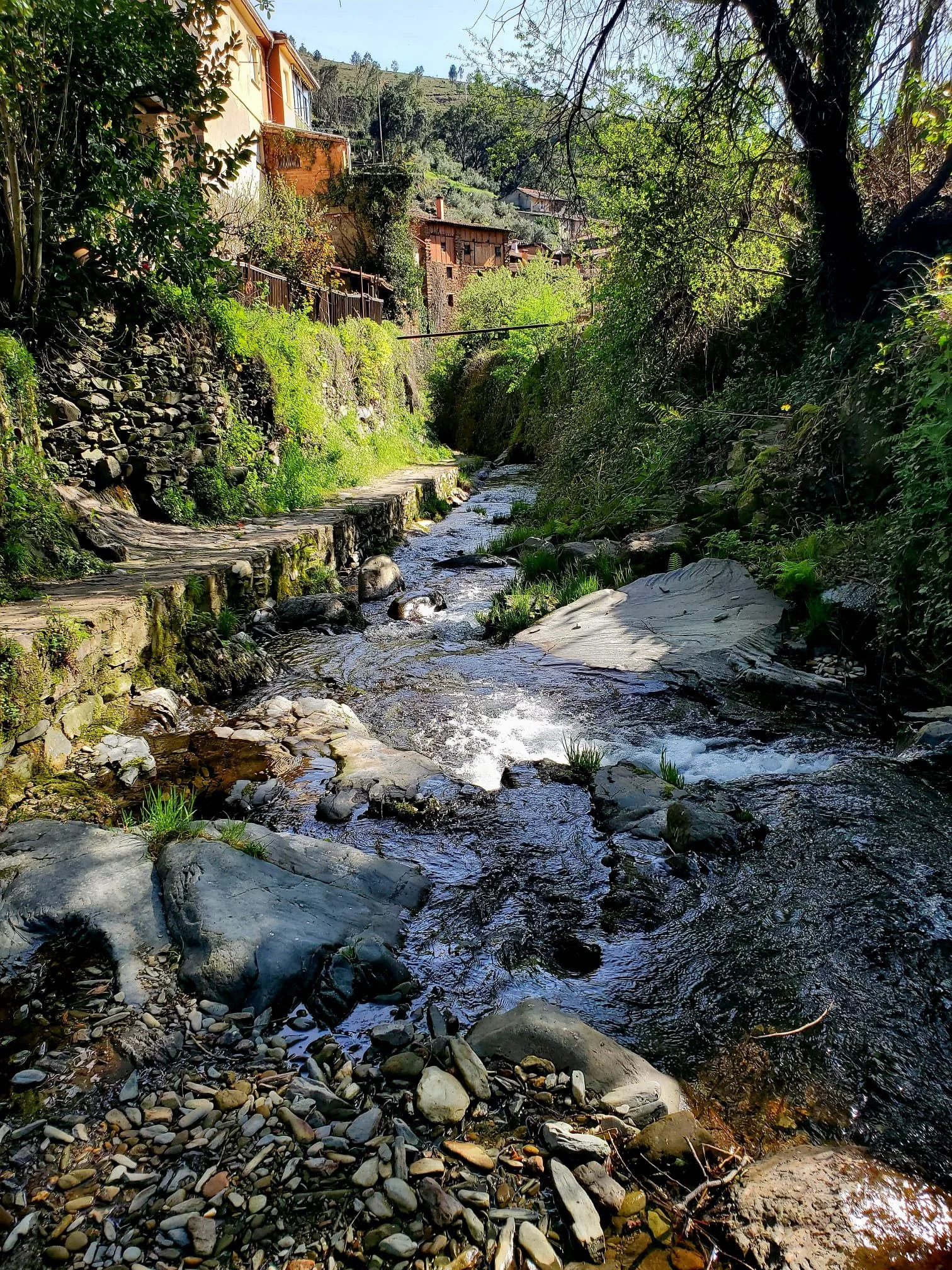
In summary, I’d say that it was, indeed, an interesting village. Friendly people (when we finally came across a couple), great food (at the one open restaurant), overall an odd but wonderful little aldea.
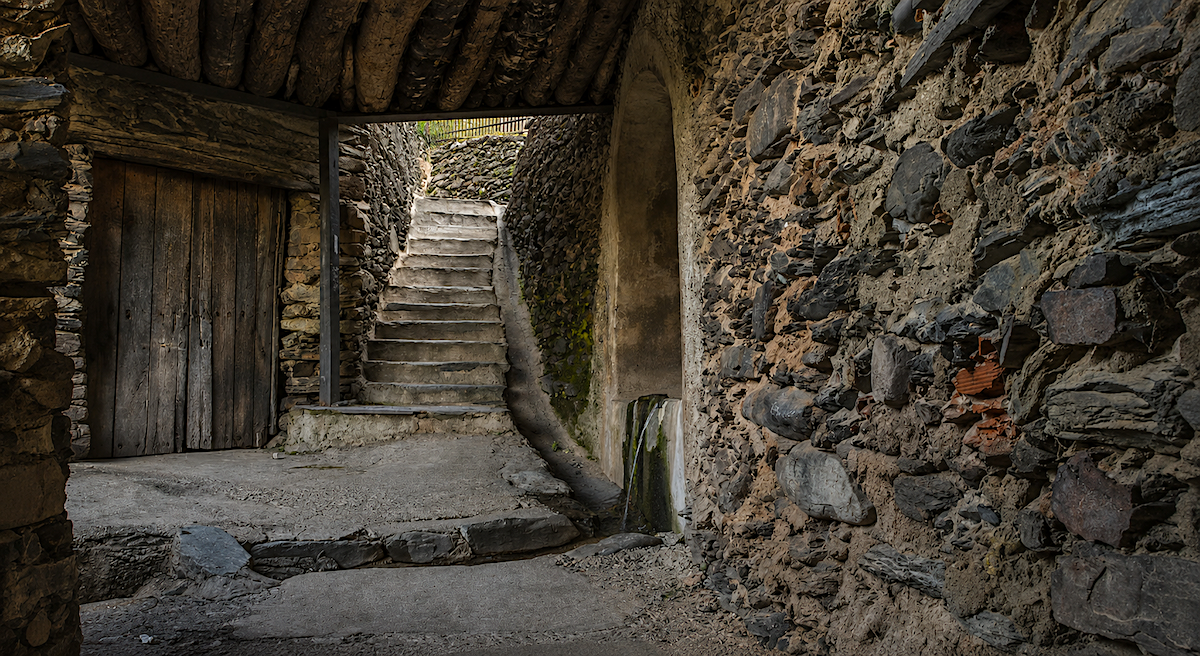
In fact, as I found out later, its old quarter has been designated Bien de Interés Cultural (Asset of Cultural Interest) because of its traditional mountain village architecture and unusual village layout, including a stream running through it, a farmhouse built into the slopes of the hill, and underground walkways:
Ciudad Rodrigo
We headed north from Robledillo de Gata with the intention of going until we reached Porto, Portugal, but when we got to Ciudad de Rodrigo an hour later (where we needed to transfer to a west-bound highway), we decided to make a quick little stop.
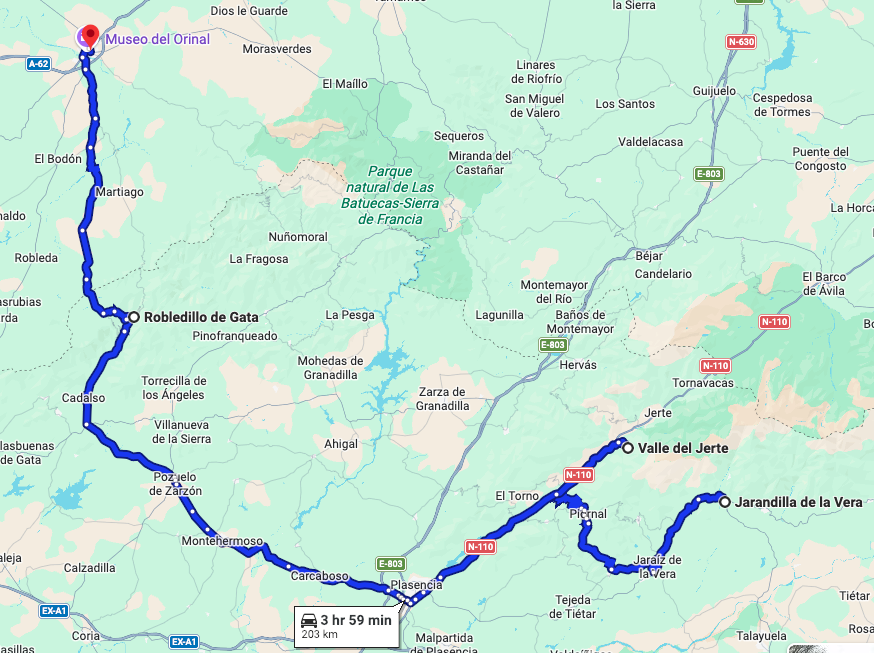
Ciudad Rodrigo is a small city (population just under 12,000) near Spain's border with Portugal. It’s a fortified historic town in the province of Salamanca, Castilla y León, and though it’s much bigger than Robledillo de Gata, it still has that old-stone, medieval look.
Part of that has to do with its Old Town from the 12th century, which is totally walled in, complete with medieval gates, lookout points, bastions and a castle overlooking the Águeda River. The reason for this was strategic: it was a defensive wall. Inside the walls is the Cathedral de Santa María, Castillo de Enrique II de Trastámara (Ciudad Rodrigo Castle), Palacio de Los Águila, Palacio de Montarco and, of course, plenty of shops and bars.
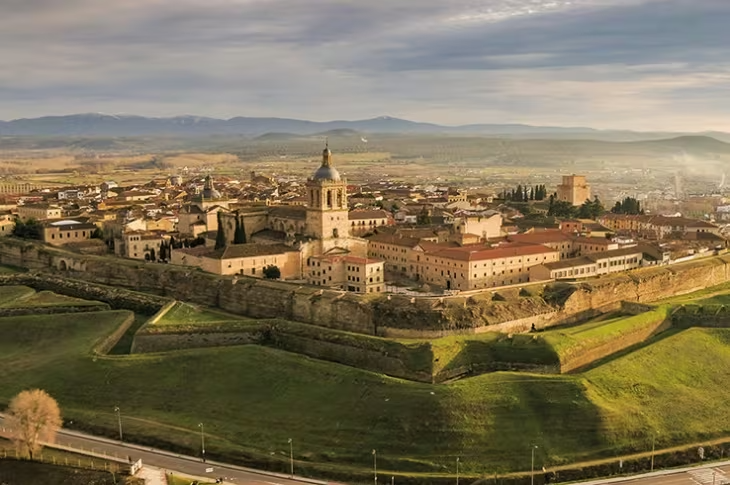
Source: Spain
We walked along this medieval wall for a while, then got down and as we crossed through Old Town we passed the church that they were preparing for Semana Santa (Holy Week, which in Spain is a week-long celebration of the Passion of Jesus Christ from Palm Sunday through Easter Sunday). One of the workers came over to tell us about the church, and even invited us inside, which was closed to the public, the whole time completely ignoring me and talking only to A.
Porto, Portugal
Three hours after Ciudad Rodrigo, we approached Porto as the sun was setting, leaving streaks of red and pink and orange in the sky. During this leg of the trip, we started listening to an audio book in Spanish – to entertain A and to allow me to practice my listening comprehension.
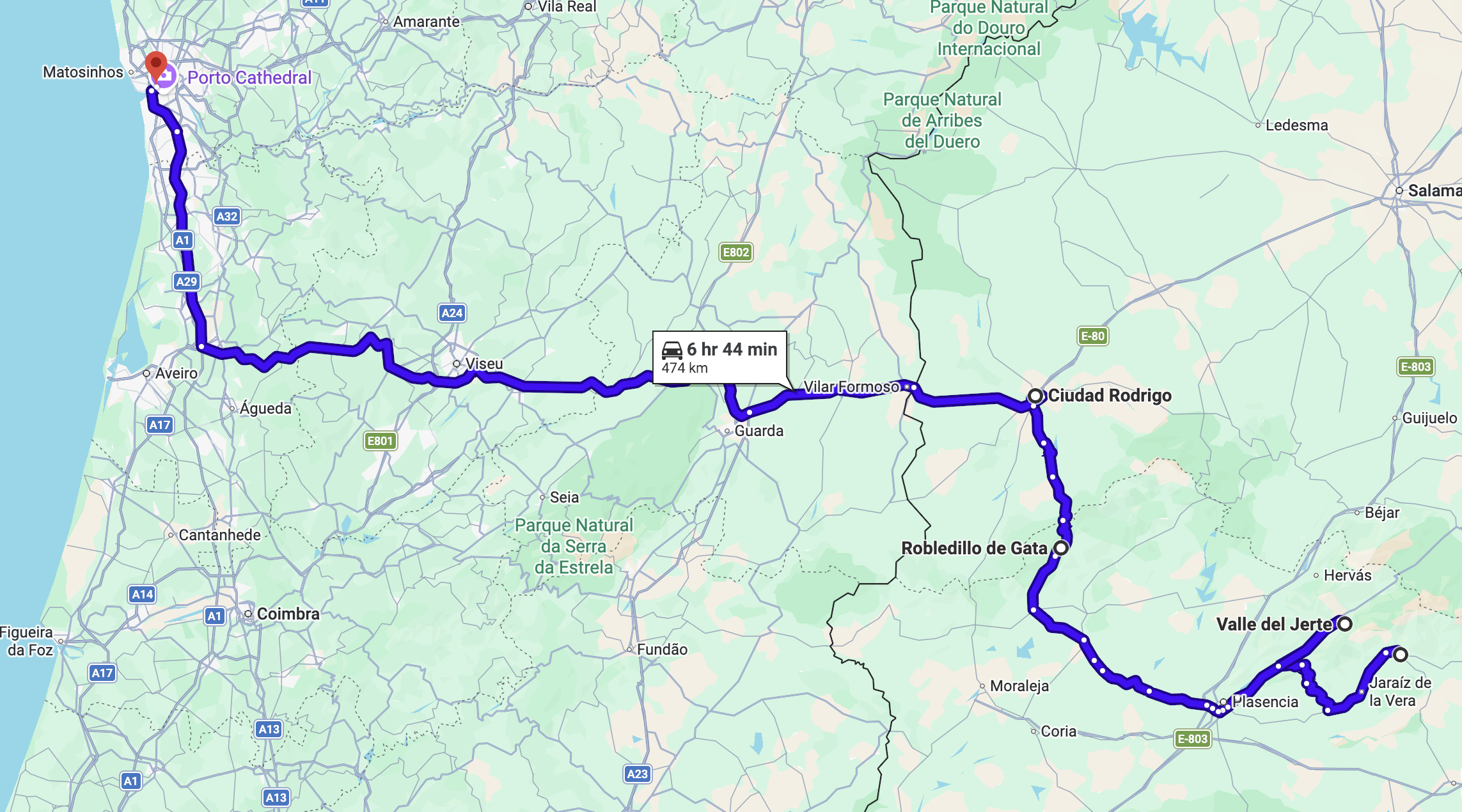
We arrived at our hotel around 8pm – booked on the road only two hours prior – and it turned out to be a fantastic choice. Located in the Cedofeita neighborhood, a pleasant, walkable, less touristy area that’s still close to downtown without being in the noisiest riverfront streets, The Rex Hotel is a beautiful, luxurious-looking building, but for a very decent price, great room, and a full breakfast.
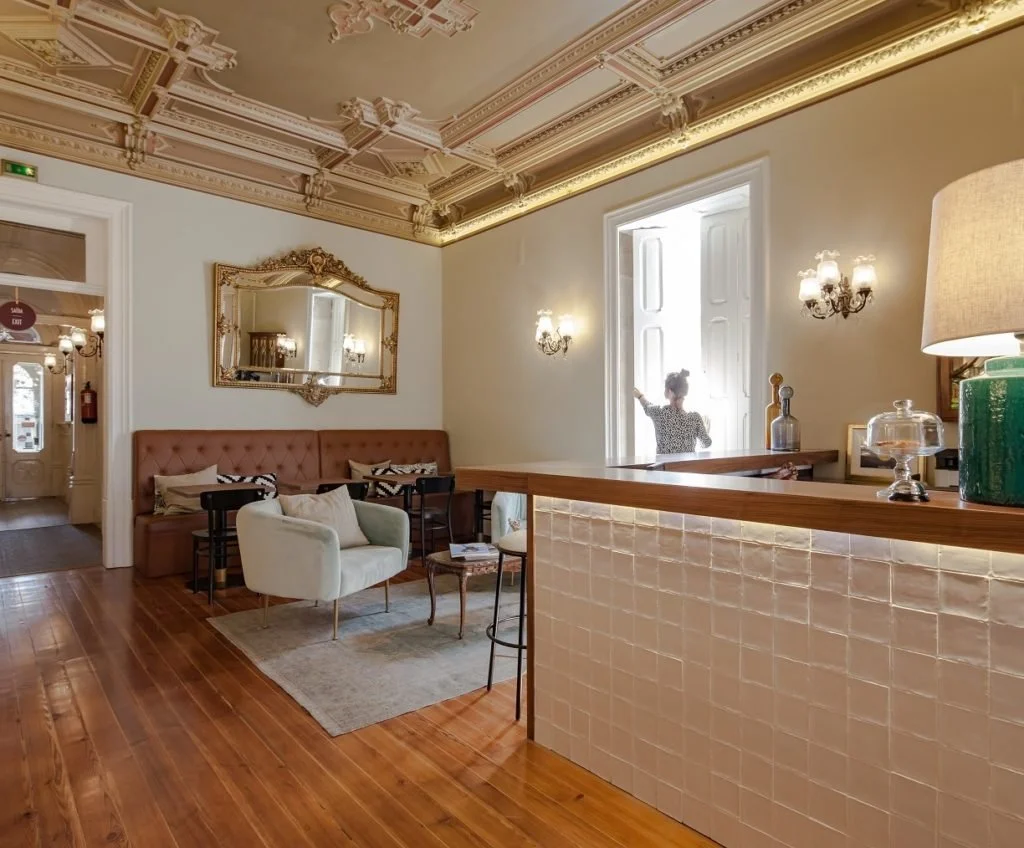
Source: The Rex Hotel
After checking in and getting some recommendations from the front desk guy, we strolled down Rua dos Mártires da Liberdade.
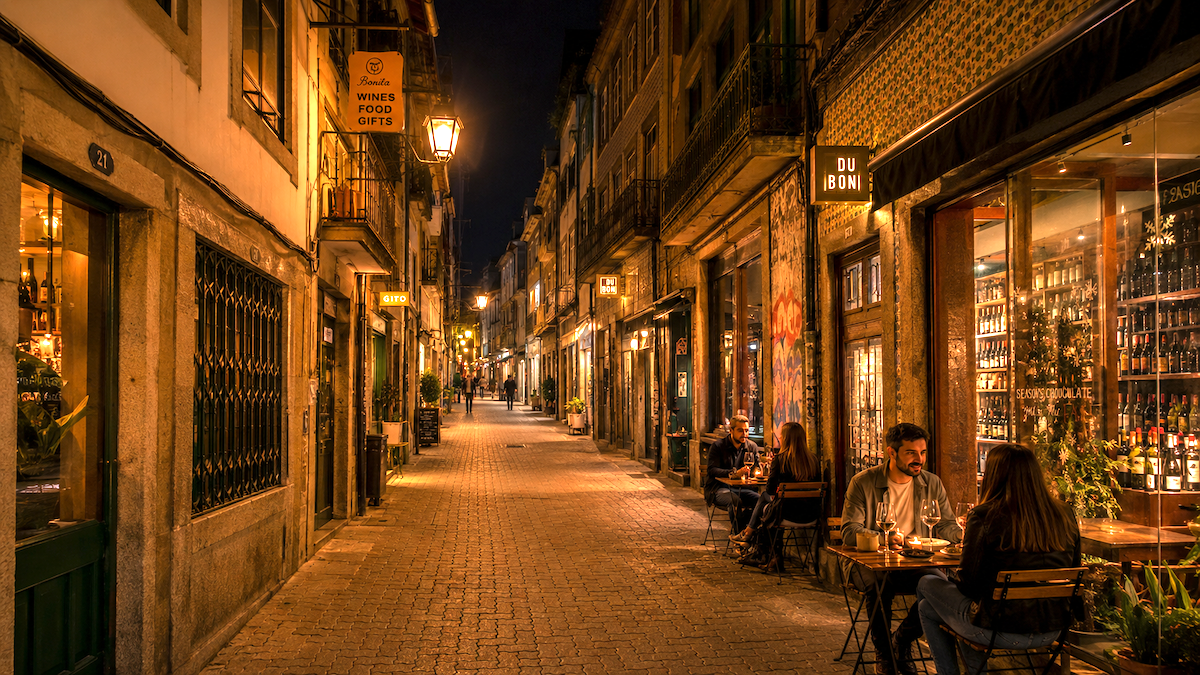
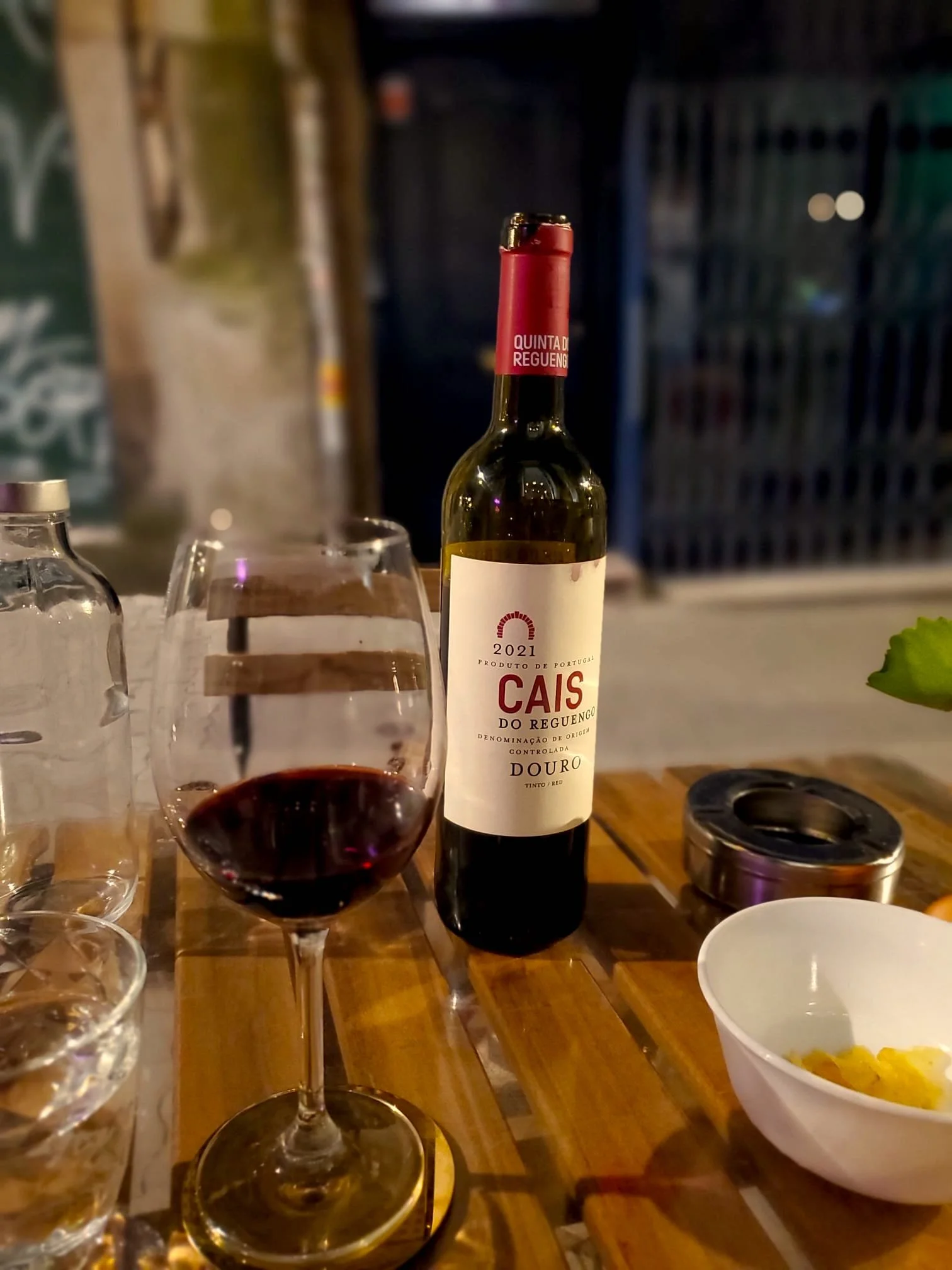
We stopped at Bonita Wine Bar and sat outside for Portuguese wine and tapas. The waiter was a very friendly and helpful fellow to whom I wound up speaking in English, which he knew better than Spanish (an oddity, I thought, since so many tourists here are Spanish). He recommended a couple red wines based on what we said we liked, and then brought us a taste of each one. The one we wound up drinking, Cais do Reguengo 2021 from the Douro Valley, was delicious: fruity, ever so slightly spicy, barrel-aged – so full-bodied but smooth. Yum!
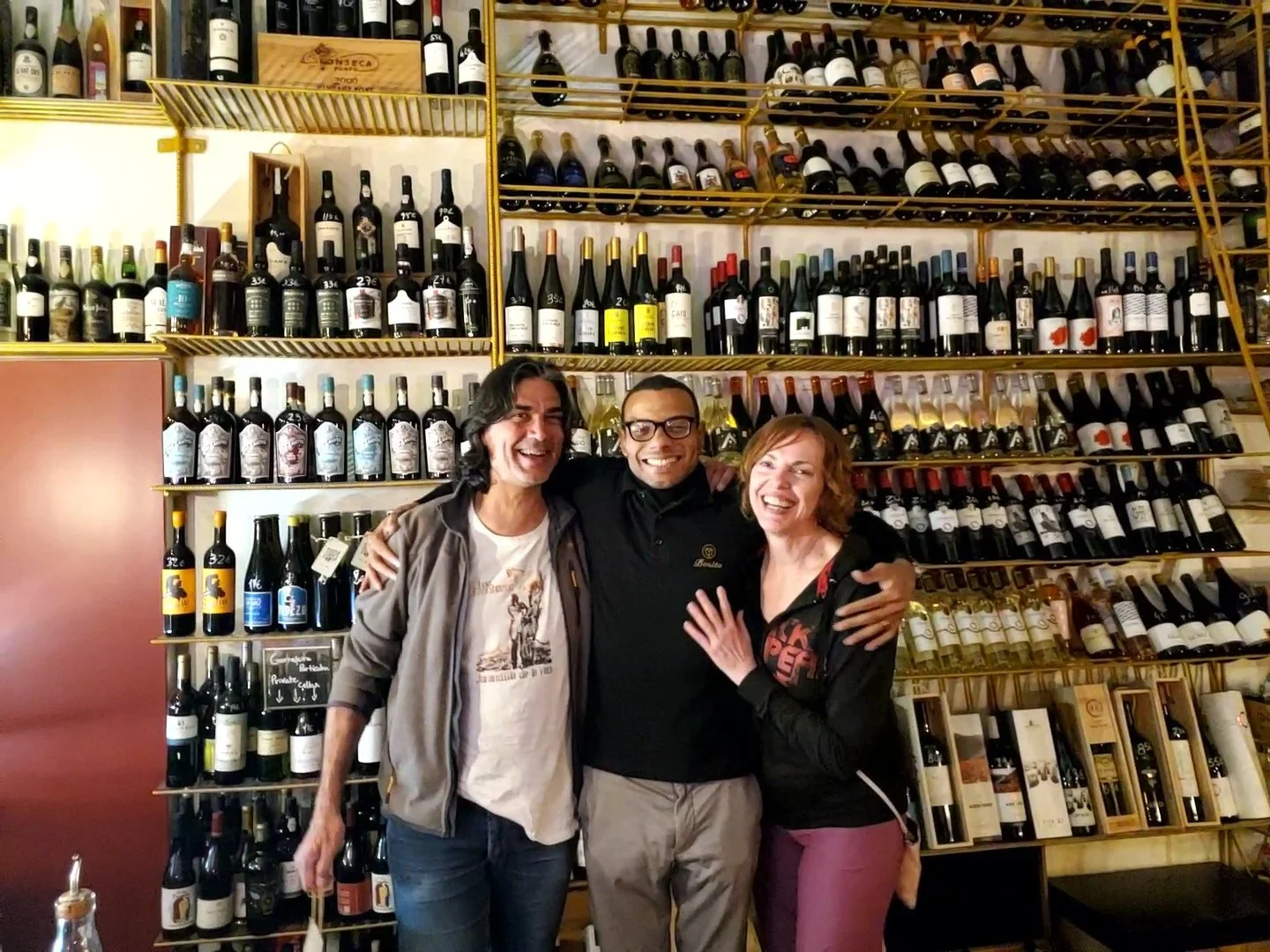
When we finally went inside to pay, I gaped at the wall of bottles in front of me and said, “I forgot to order a port!” As a port lover (Graham’s Tawny Port is my fave), I had been looking forward to drinking port in Porto for the whole trip, and I couldn’t believe I’d forgotten. No matter, because the lovely waiter gave us an impromptu port tasting right then and there! A was fairly new to port, so the waiter (and no, I cannot believe that I forgot his name!) decided to give us tastings of ruby ports, tawny ports and white ports (I’d never heard of white port before). They were all good, but I wound up buying a bottle of tawny.
Day 7
I can’t believe that day 6 consisted of Jarandilla, Valle del Jerte, Robledillo de Gata, Ciudad Rodrigo and Porto! What a day!
Porto, Portugal
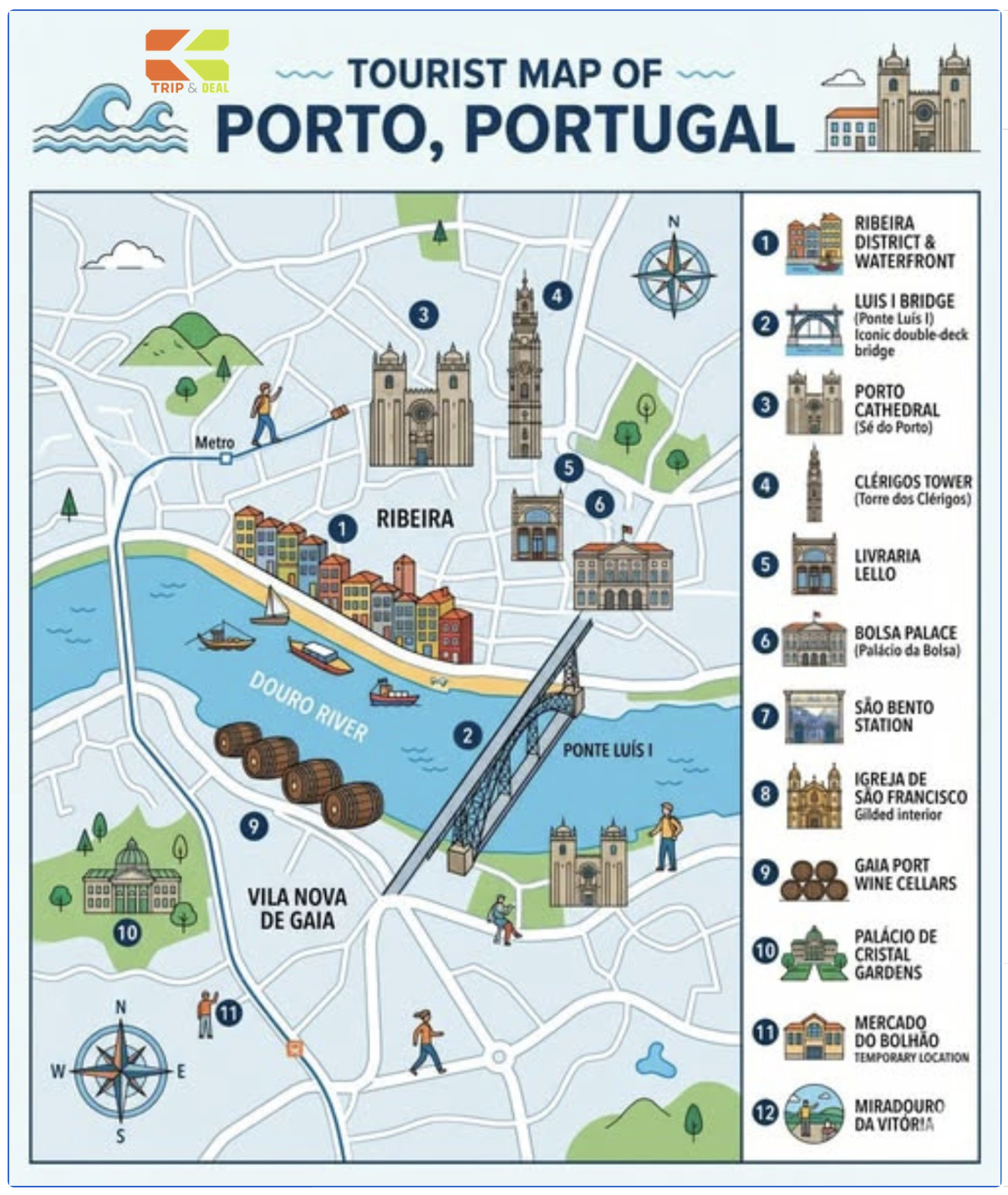
After sleeping well and waking up in a quiet room, we had a delicious breakfast buffet in the hotel’s dining area, packed up and then went out to explore a bit. We walked around the downtown area doing a speed tour of what to see, thanks, again, to the front desk guy at the hotel.
Source: Pinterest
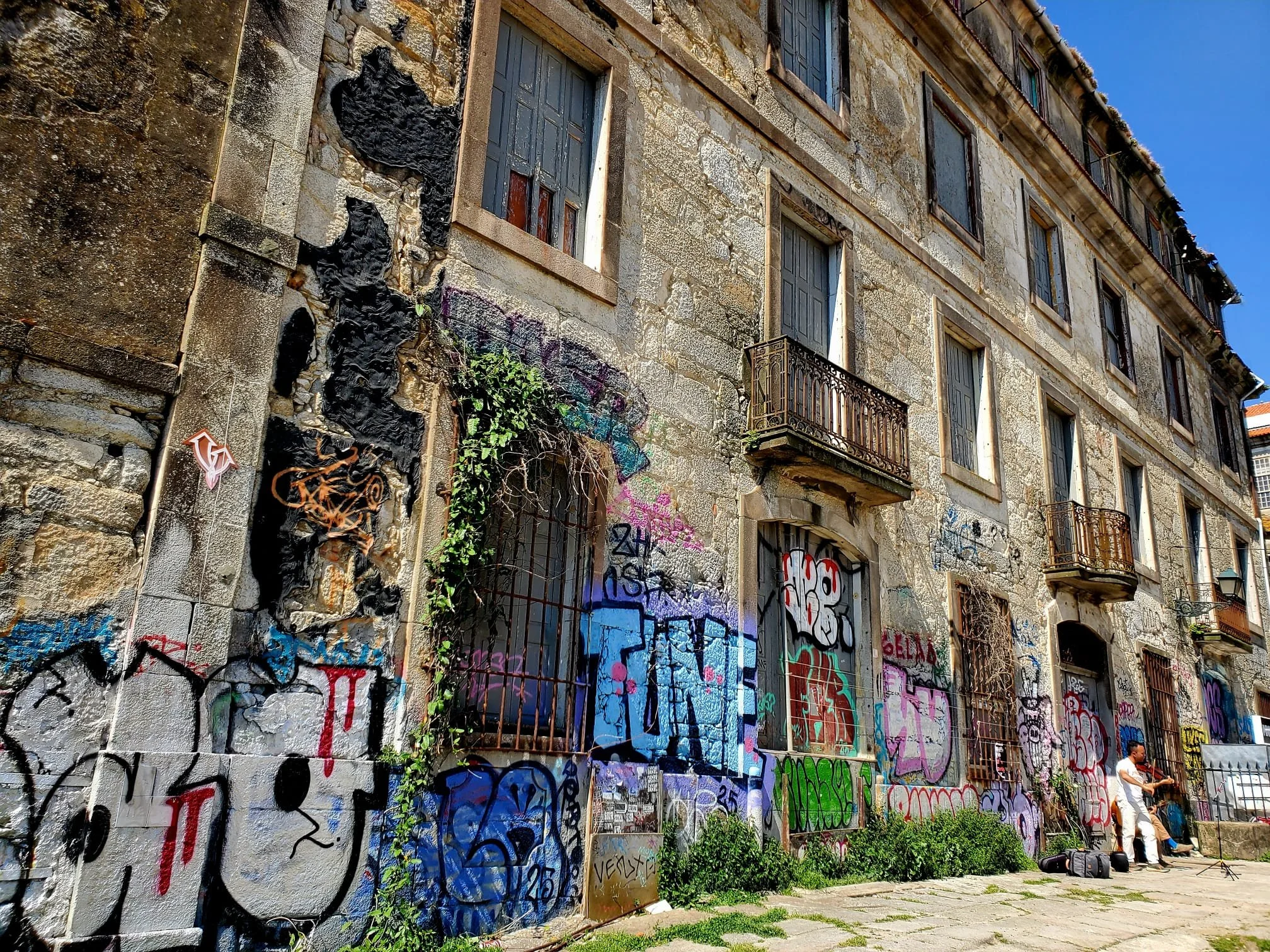
You can find pictures of the cathedral, the tower, the bridge, etc. anywhere, but here’s a picture of graffiti on an old building in an abandoned lot in which a lone musician played pop songs on his violin.
Lamego
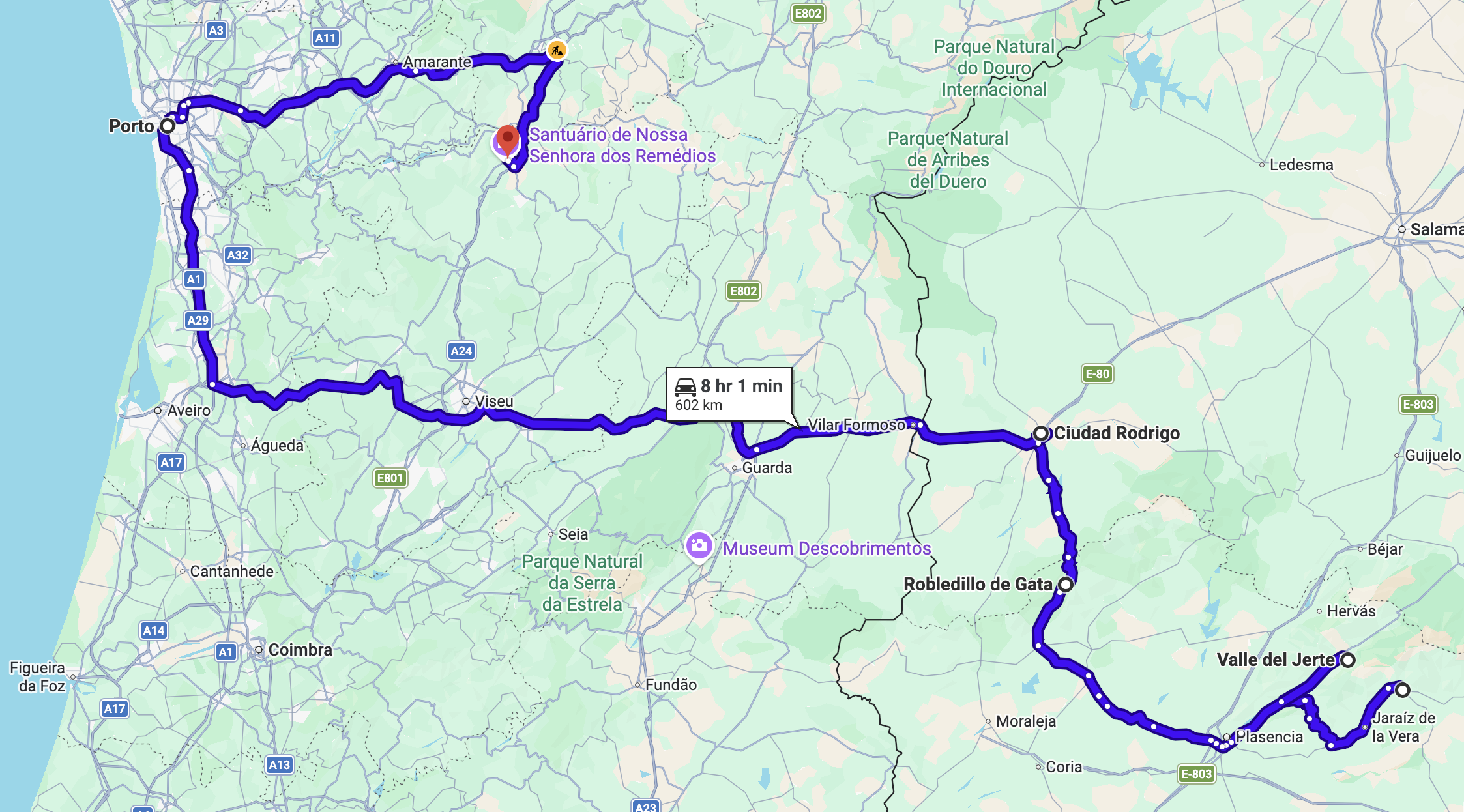
An hour and a half after leaving Porto, we stopped in Lamego, Portugal, which was more or less halfway between Porto and Seia, in the Vale do Douro (Douro Valley, with terraced vineyards for miles and miles!).
Lamego is a small city with a population of 24,037 in northern Portugal close to the Balsemão River. We parked our car and then walked around looking for a place to have lunch, and I was surprised to find that it was quite a lovely looking small town, with a mix of: baroque grandeur, medieval leftovers, religious devotion, wine culture, and slightly faded aristocratic drama. (Description thanks to Google searches, not my own observations, but in retrospect I can see it.)
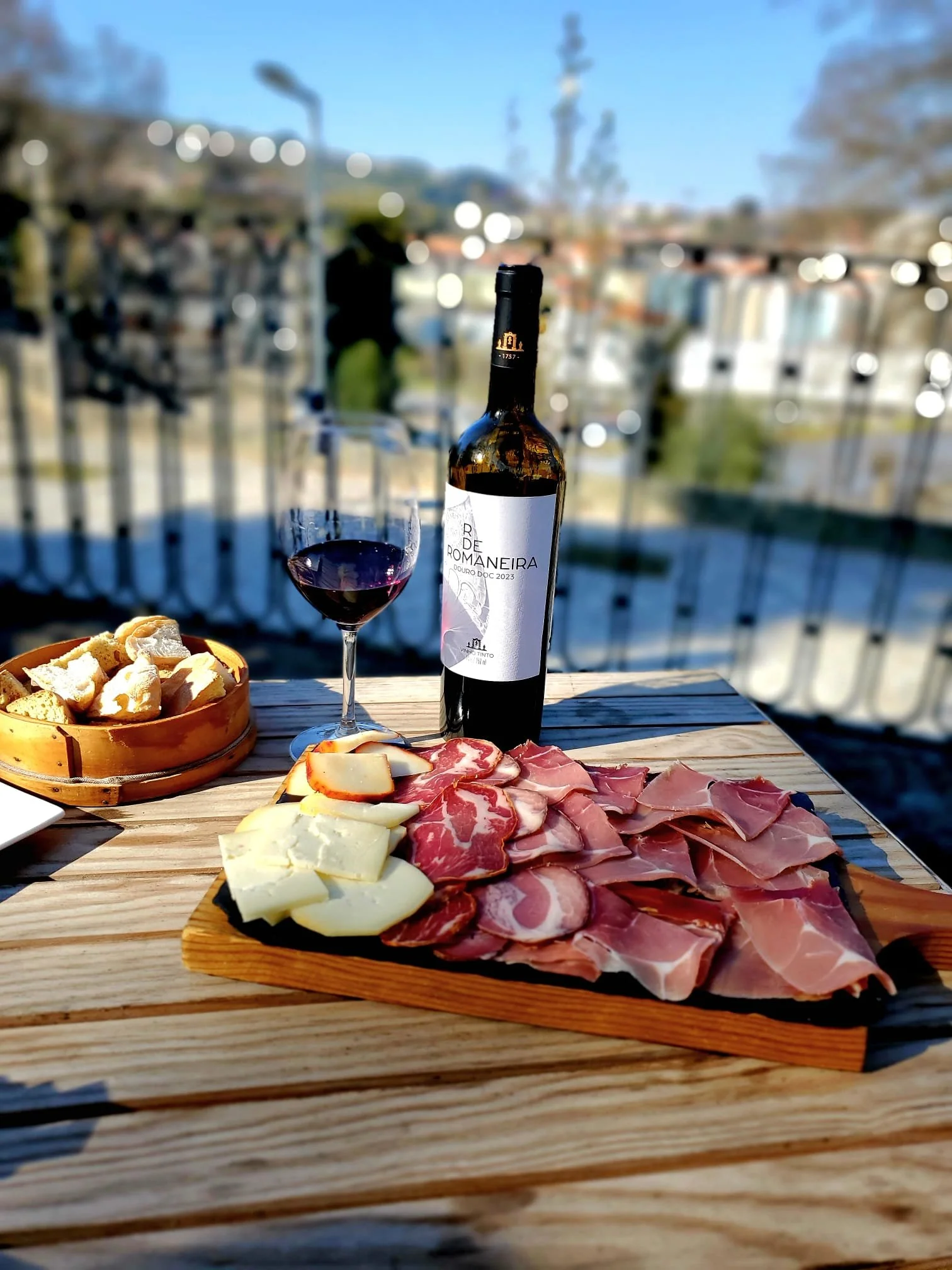
We found a great little place to have a light meal: A Presunteca. We entered the restaurant, which looked nice, and A asked (as he always asks, being a Spaniard through and through), “Do you have a terrace?” We hadn’t seen one out front, but maybe there was a hidden terrace out back? The rather dry waiter nodded and beckoned us to follow him, and follow him we did – through the restaurant, up a staircase, across a second floor of tables, out a door and, not just onto a balcony/terrace, but across it to the very edge where it was covered in grass and gave us a gorgeous view of the town from atop a small hill.
We spoke to the (still dry and very unfriendly) waiter in Spanish. Maybe he saw us as the equivalent of obnoxious American tourists who don’t speak the local language, so I was determined to be kind and polite no matter what. But every time we ordered something, he looked at us like we had just farted. “¿No lo tienes?” I questioned. (“You don’t have it?”) Or “¿Lo pronuncié mal?” (“Did I pronounce it wrong?”) Each time, he would shake his head and make that “ew, a fart” expression.
But when the food came, I suddenly didn’t care if he started farting. The ham and cheese board was not only abundant, but delicious. The salad was divine. The wine was heavenly. And the beautiful terrace in the cool but sunny afternoon was the cherry on top.
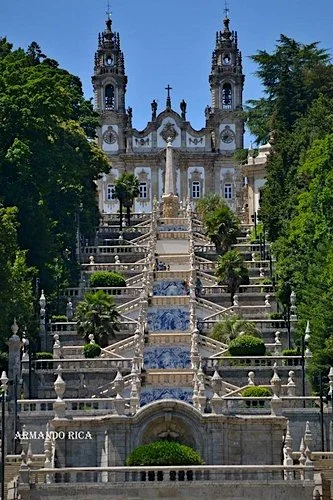
Upon leaving the restaurant, we headed back to the car in a different direction in which we walked down some beautiful steps. I thought we had descended the Escadório de Nossa Sra. dos Remédios (Staircase of Our Lady of Remedies, of the Sanctuary of Our Lady of Remedies), but they were just some regular stairs. This is the Staircase of Our Lady of Remedies (a grand, zigzagging, tile-decorated, fountain-filled baroque staircase):
Source: Travel in Portugal
As we neared our car, we found a wine shop where we purchased some port, and then off we went – to our final destination!
Seia
An hour and a half later, heading due south, we reached the small town of Seia, Portugal in the early evening. Seia (we were actually staying with my friend M in a small village just outside of Seia) is a municipality and city in the Guarda District, with a population of 21,755 (though the town itself has 7,000 people).
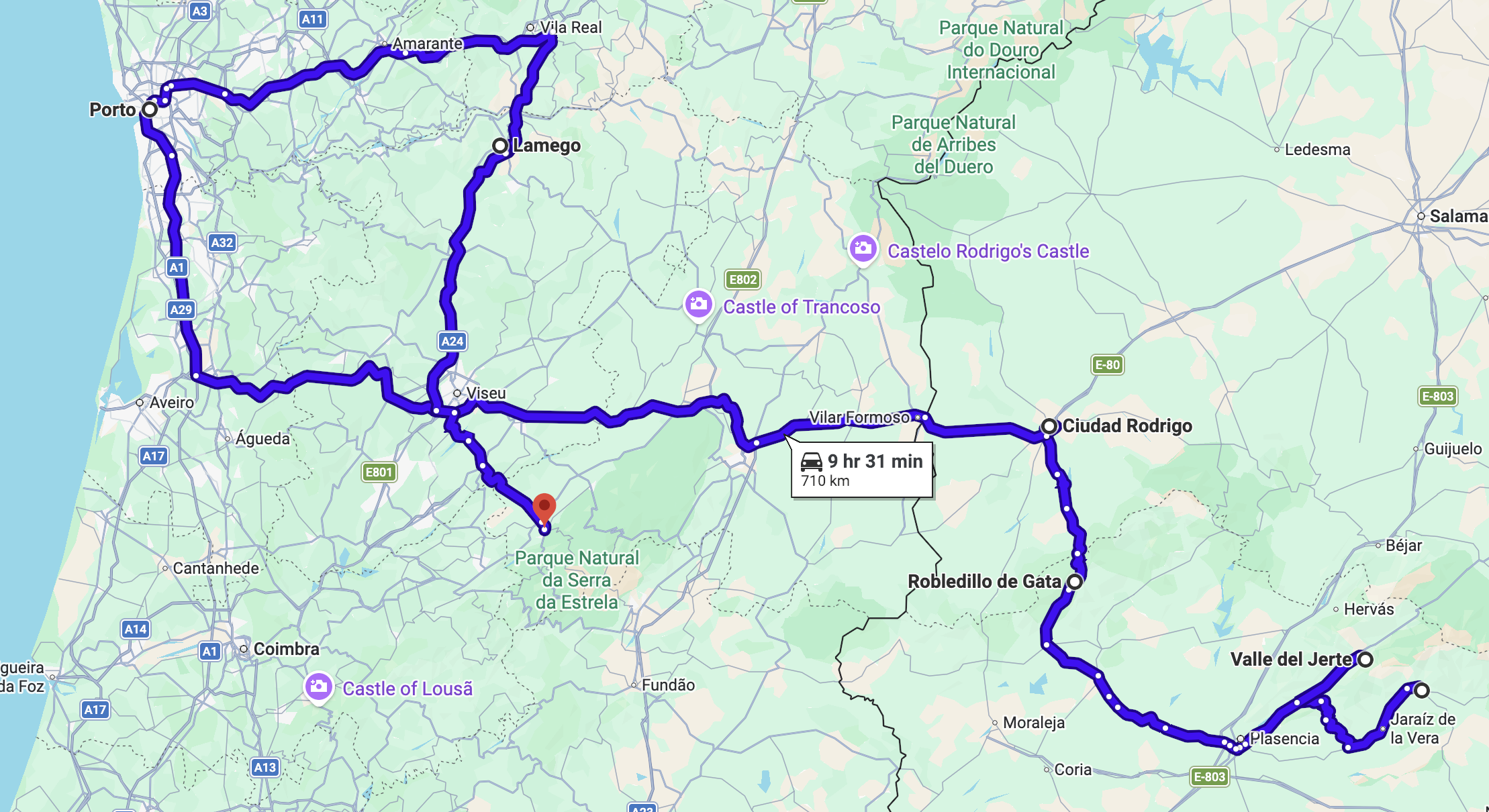
I have to say, we have had great luck on this trip – no complications, no traffic, no wrong turns, no disappointing towns, hotels, food. Just exactly what you would want a semi-spontaneous road trip with your boyfriend to be.
Anyway, so we arrived at my friend M’s beautiful home around 8 pm, chatted over Portuguese beer for a while, and finally went to bed early-ish.
Day 8
Seia
We awoke after a good night’s sleep thanks to another deliciously quiet bedroom. After breakfast on the front porch with a view of the mountains, I went off to work a bit (oh, the life of a freelancer; you don’t work, you don’t get paid) and A stayed on the porch reading. Later, he went up to the bedroom to rest:
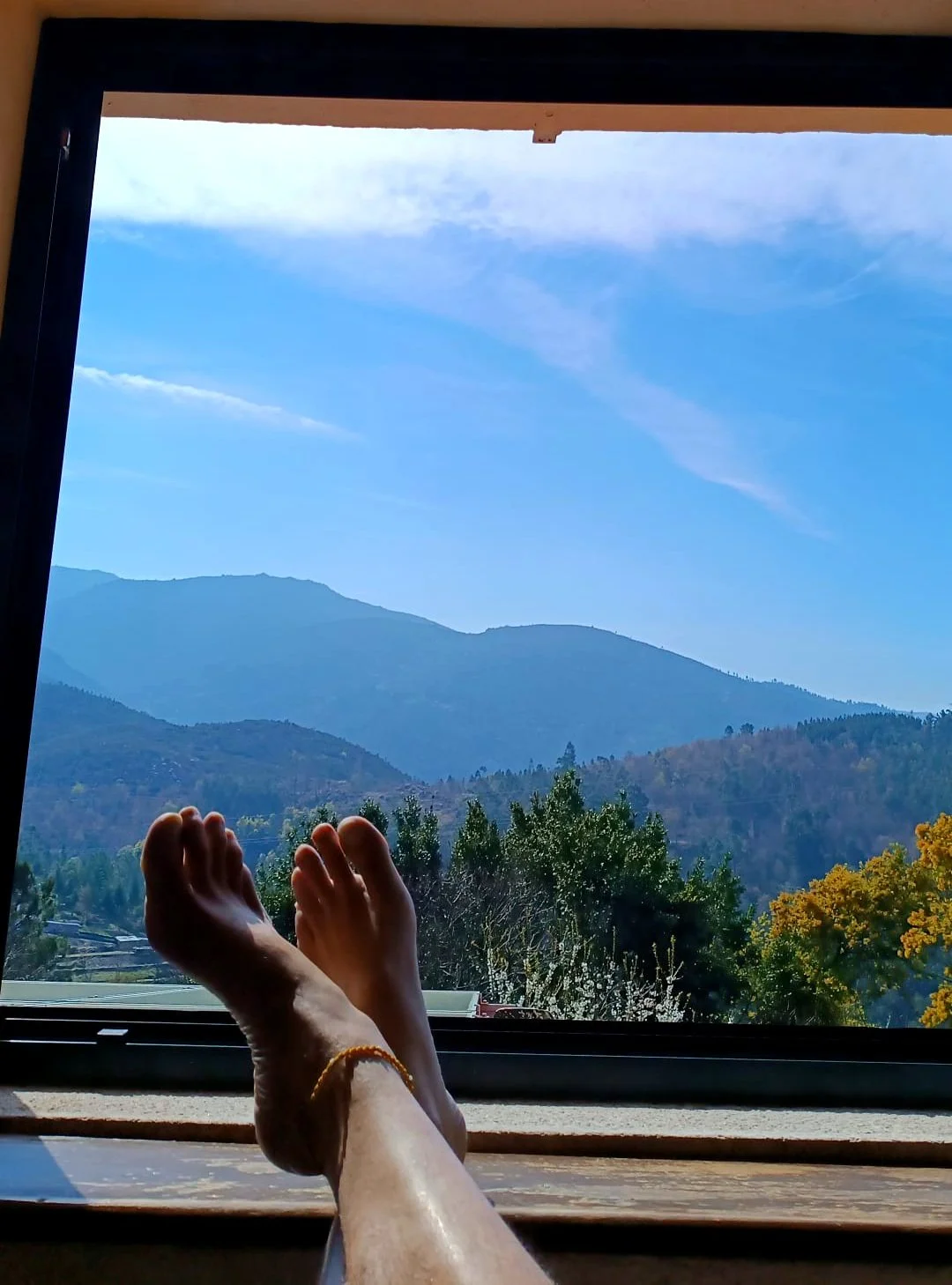
We chatted with M and later enjoyed a professional-grade lunch with a friend of his who’d just come in to town in the garden. As those two caught up with each other, A and I took a tour of M’s vast (to us cityslickers) property, which included climbing over the fence and continuing up the large hill/small mountain on an impromptu hike. There was no one else on this lonely (in the best way possible) little hill, and as we returned home via a different route, we came across an abandoned and dilapidated house, as well as this empty church.
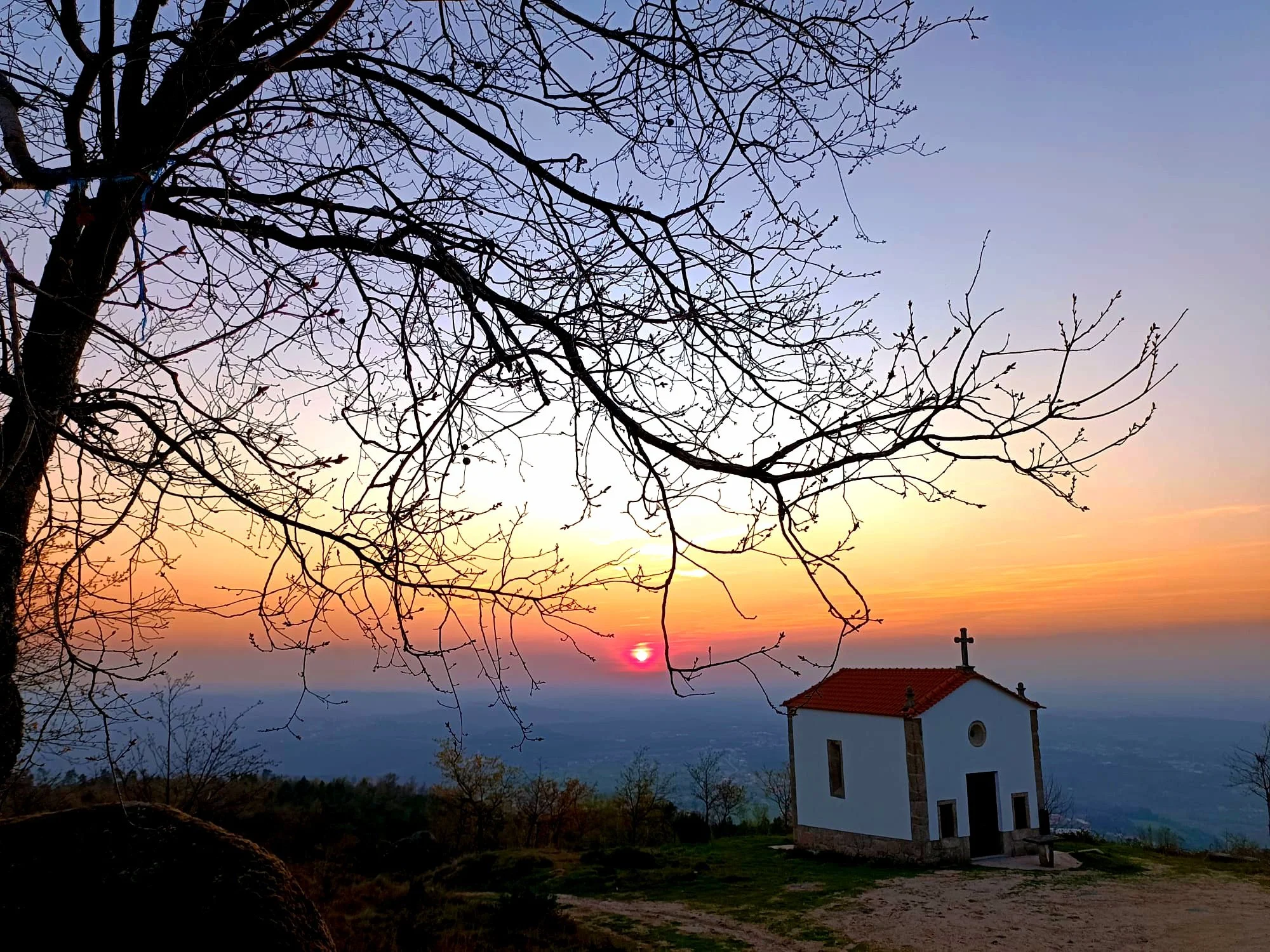
This was probably one of our most relaxing days, since we spent two nights here and did not get in the car once. Also because it was two days of speaking English, my brain was very relieved! Not much else to say, since it was just a quiet day visiting with a good friend.
Day 9
Seia
Before heading out (of Seia and our vacation!), M, A and I drove to the top of Serra da Estrela, near the Torre, for lunch in a ski-lodge-type restaurant called, simply, Restaurante A TORRE. As M said, it might not look like much, but the food was delicious in that very home-cooked way.
We were taken care of by a very friendly waitress – a grandmotherly type who particularly took to A – and after we chatted, laughed, enjoyed the meal, A and I hit the road, Madrid-bound. M sent us off with a recommendation to stop for a coffee at Pousada Serra da Estrela, just a half hour down the mountain.
Speaking of mountains, though it was still spring, there was snow on the ground!
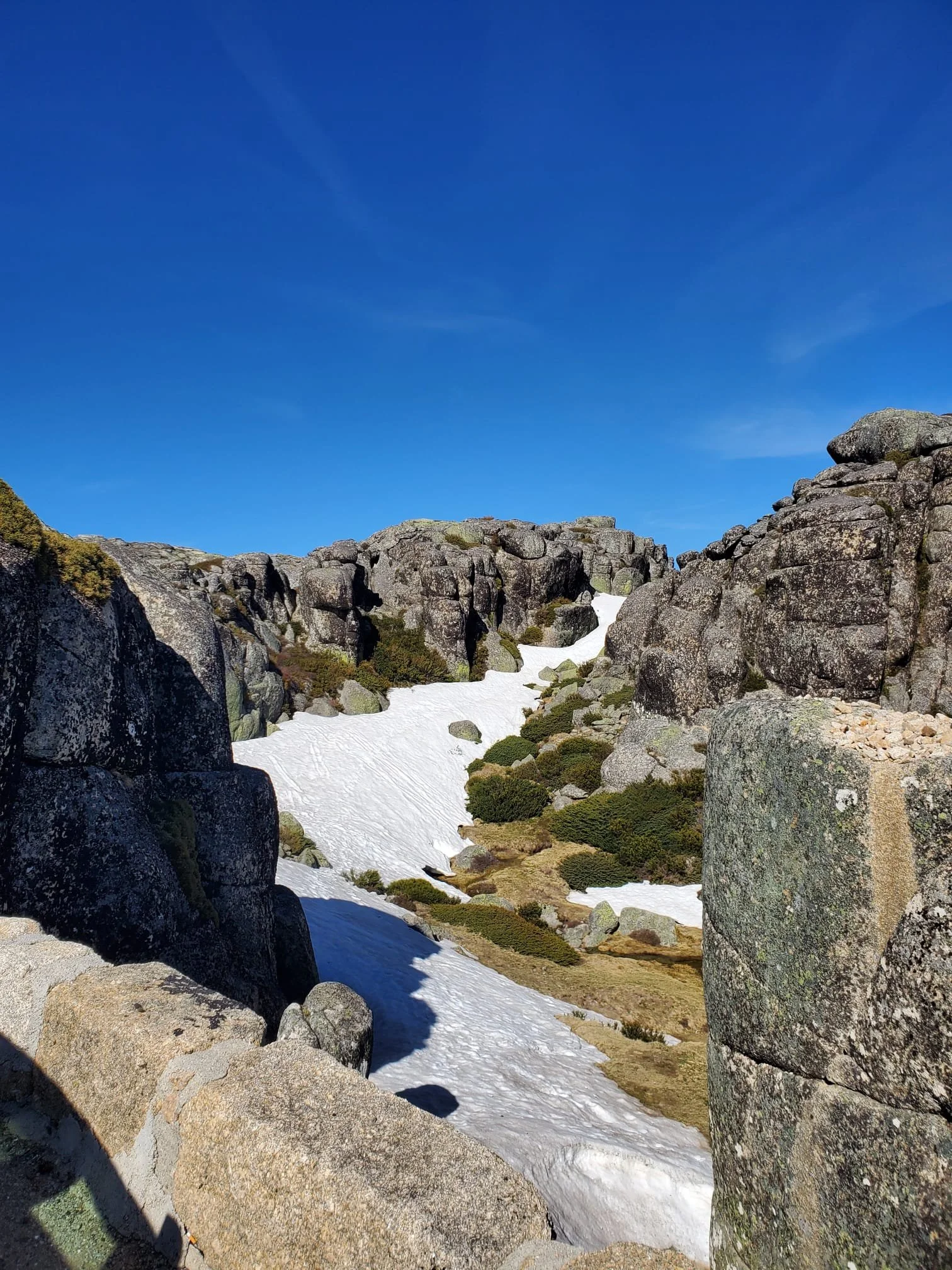
Anyway, we did indeed stop at the Pousada Serra da Estrela, which M had described as an Overlook Hotel-type hotel. Say no more! The hotel is in the Parque Natural da Serra da Estrela, in Covilhã with views of the highest mountains in Portugal. Although the hotel staff had to find someone to come and make the coffee in the very large and very empty dining room slash lounge, it was good coffee with a beautiful view out the window.
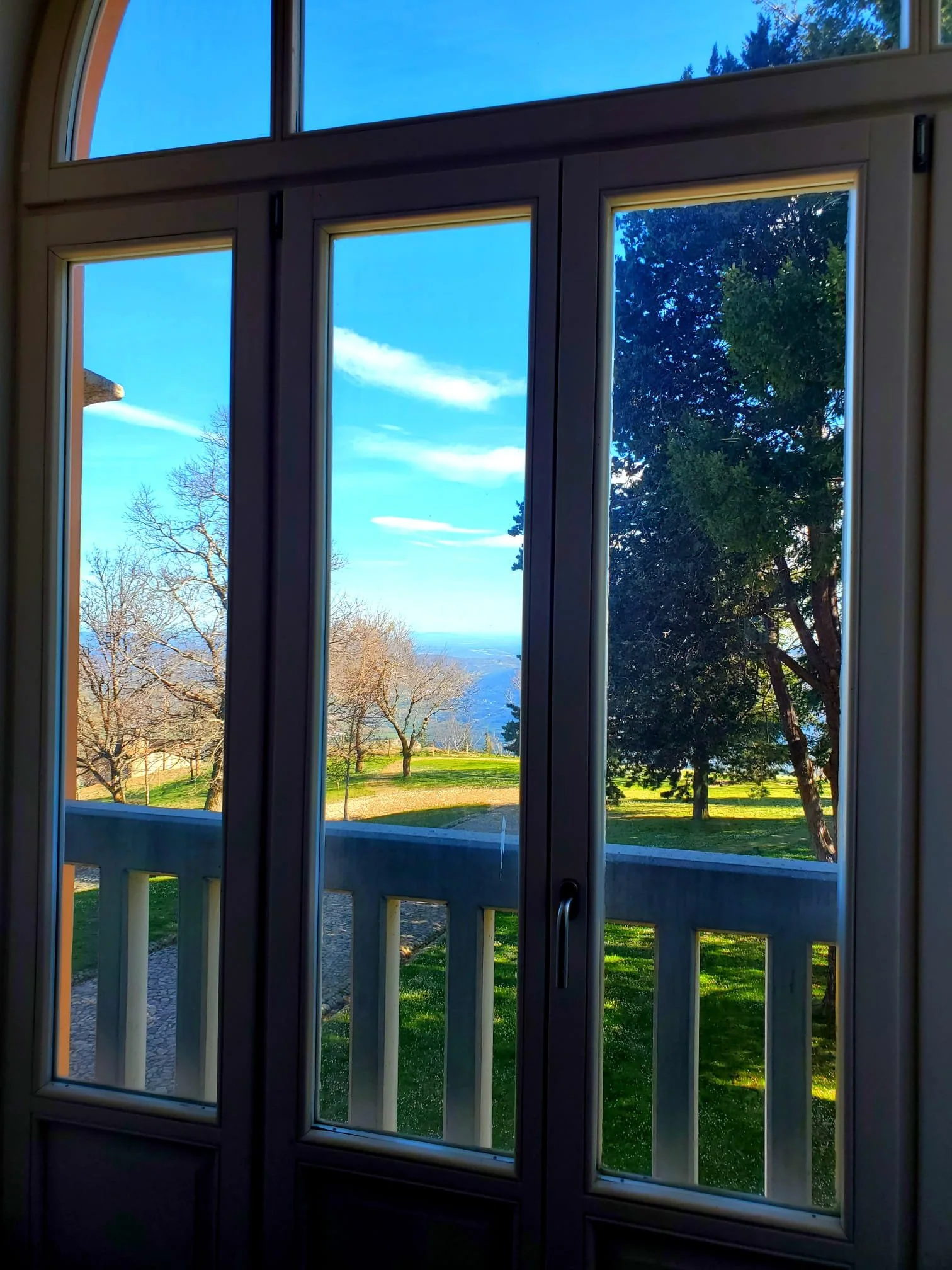
Four or five hours later, we were back home.
And that, my friends, was our road trip through Spain and Portugal! I’m back home, resuming my normal routine, and already itching to go on another trip.
Click here to read the next post Adjusting to Life in Spain: 69 Useful Spanish Phrases for Everyday Life
Note: All photos taken or created (using DALL-E) by Selena Templeton and Alberto Resino, unless otherwise noted.
If you enjoyed reading this travel blog, check out some of my other adventures:
Adjusting to Life in Spain: Dating in My Non-Native Language
Adjusting to Life in Spain: Using the Spanish Healthcare System
Adjusting to Life in Spain: Damn, I Can’t Find My Favorite Products Here!
From Fiesta Invites to Flamenco Nights: My Adventure in Spain
My Road Trip to the Four Corners: Utah, Colorado, New Mexico, Arizona
