Click here to read the previous post Adjusting to Life in Spain: Road Trip Through Spain & Portugal (pt. 1)
After spending several hours in Covarrubias, Burgos visiting the Museo del Libro (Book Museum) and lunching in the Plaza de Doña Urraca, we jumped into the car, ready to head out on the next leg of our trip.
Day 2 cont’d
Logroño
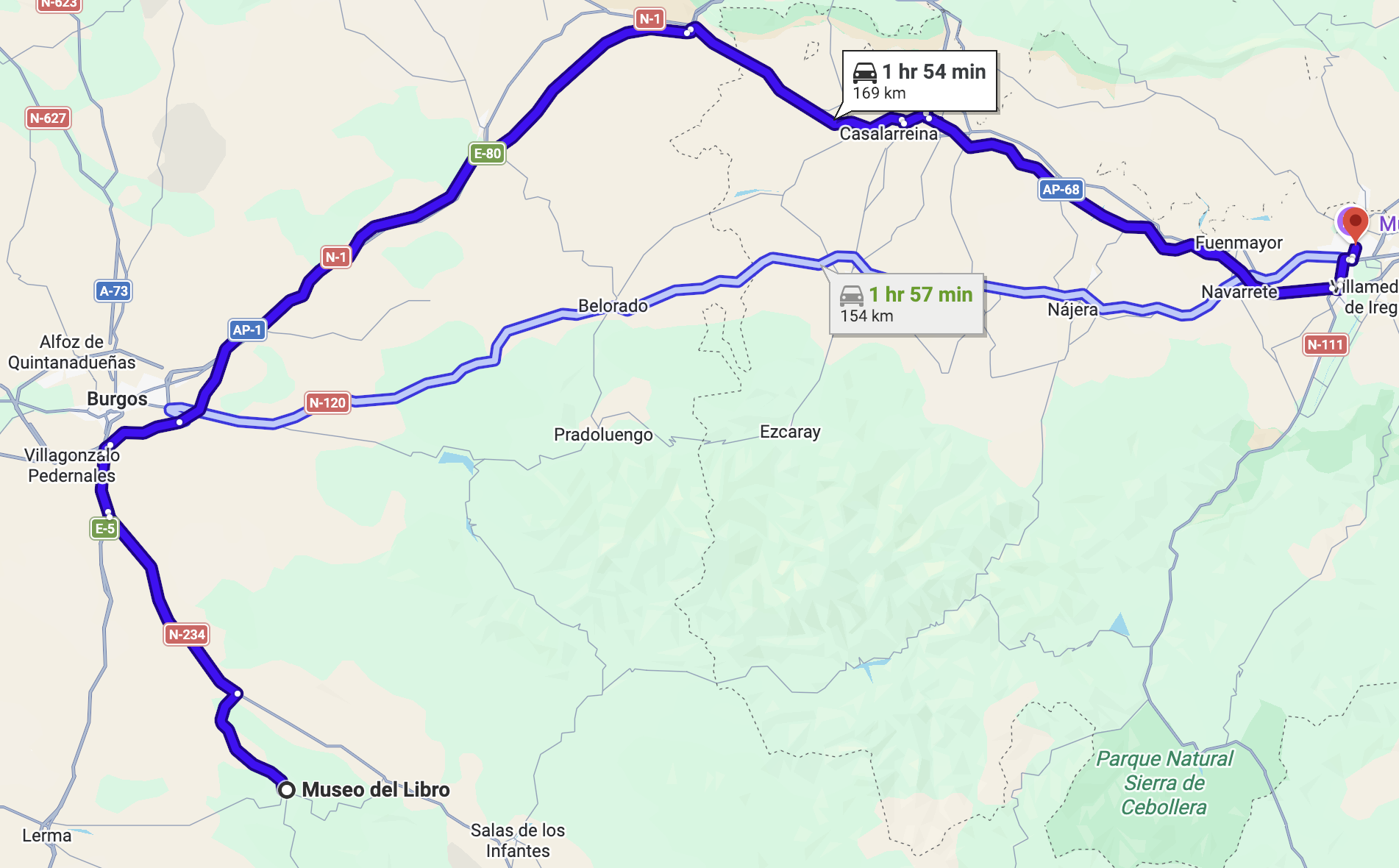
After almost two hours on the road, A and I arrived in Logroño just in time for our dinner reservation with A’s good friend, E. This city has 176,000 inhabitants and is the capital of the province and autonomous community La Rioja.
(Note: La Rioja is one of the two most popular wine regions — the other being Ribera del Duero — in which the two bodegas we visited are located. La Rioja wine region is larger and different from the province boundary.)
The first time I met E when he visited us in Madrid, he talked FAST and MASHEDALLWORDSTOGETHER, like a majority of native Spanish speakers (or, really, native speakers of most languages). I was frustrated because I couldn’t understand a damn thing he said! This time, however, as soon as we stepped out of the car, he greeted me with a warm hug and spoke reeeeeally slooooowly. And all throughout the time the three of us spent together, he made the effort to not only speak slowly, but also ask from time to time if I was understanding. And I did, which meant that I got to know him, which made me very happy! Not only is he A’s closest friend, but he’s a truly lovely person.
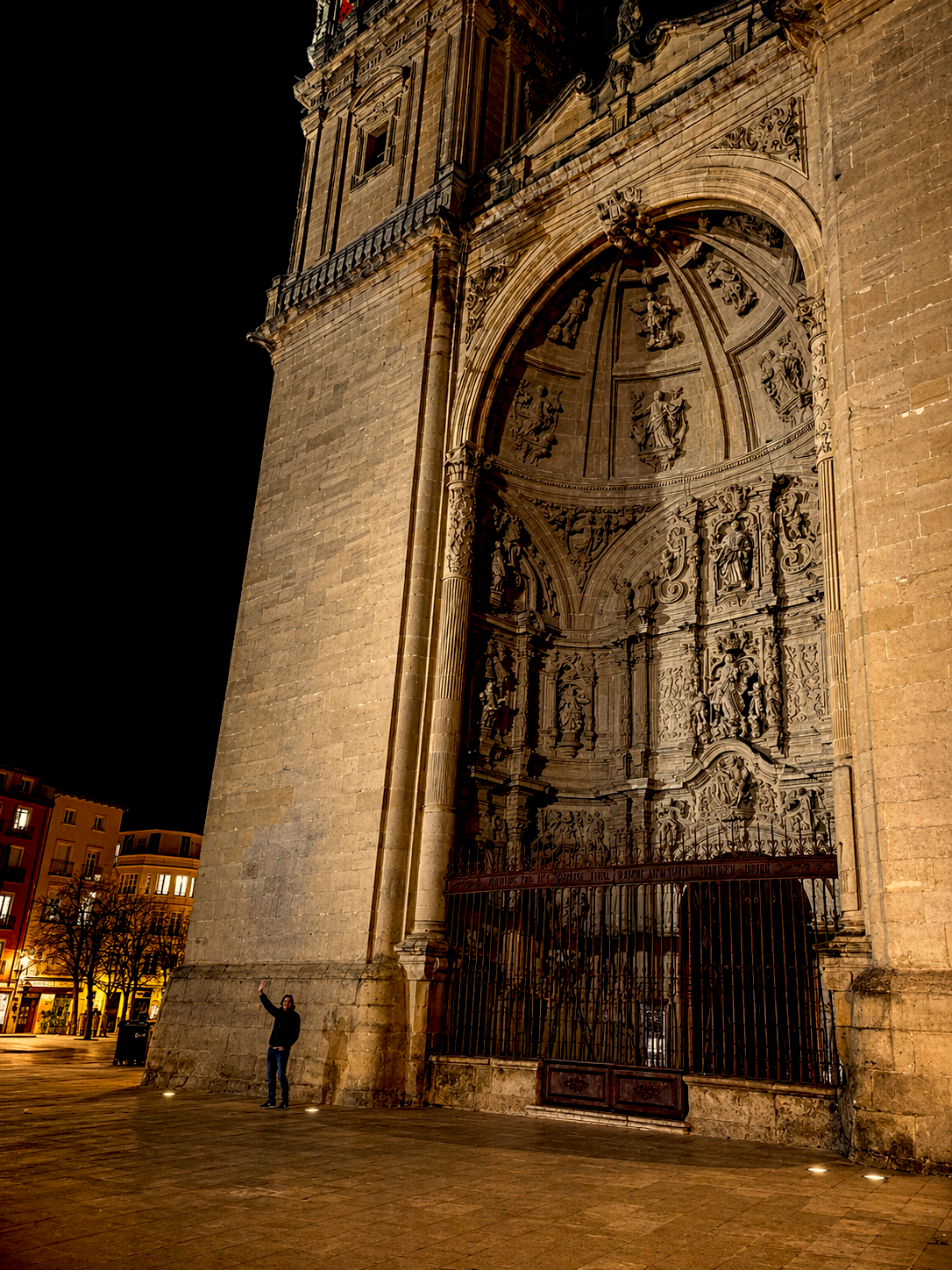
We had a delicious dinner and Rioja (of course!) wine, accompanied by great conversation. As we left the restaurant, we passed the Concatedral de Santa María de la Redonda de Logroño, a “grand, long-standing cathedral with two towers and historic art, including a painting by Michelangelo.” Also, the biggest front door I’ve ever seen (note how tiny A looks next to the entrance).
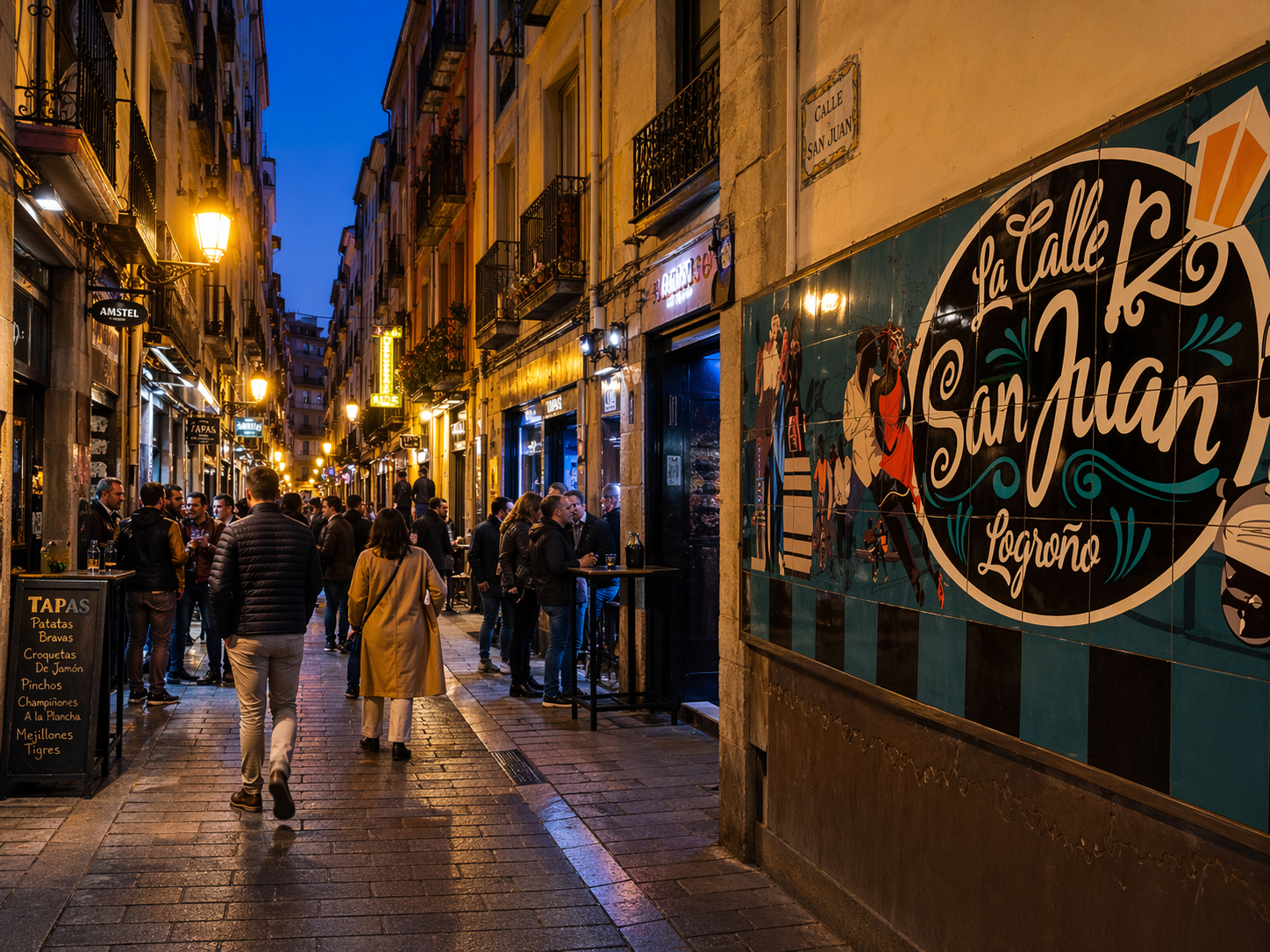
Then we walked to Calle San Juan, one of Logroño’s most popular streets in the historic center — narrow, cobblestone, no cars allowed — jammed with a couple dozen bars, where we meandered from bar to bar for drinks and pinchos (northern Spain’s version of “tapas”).
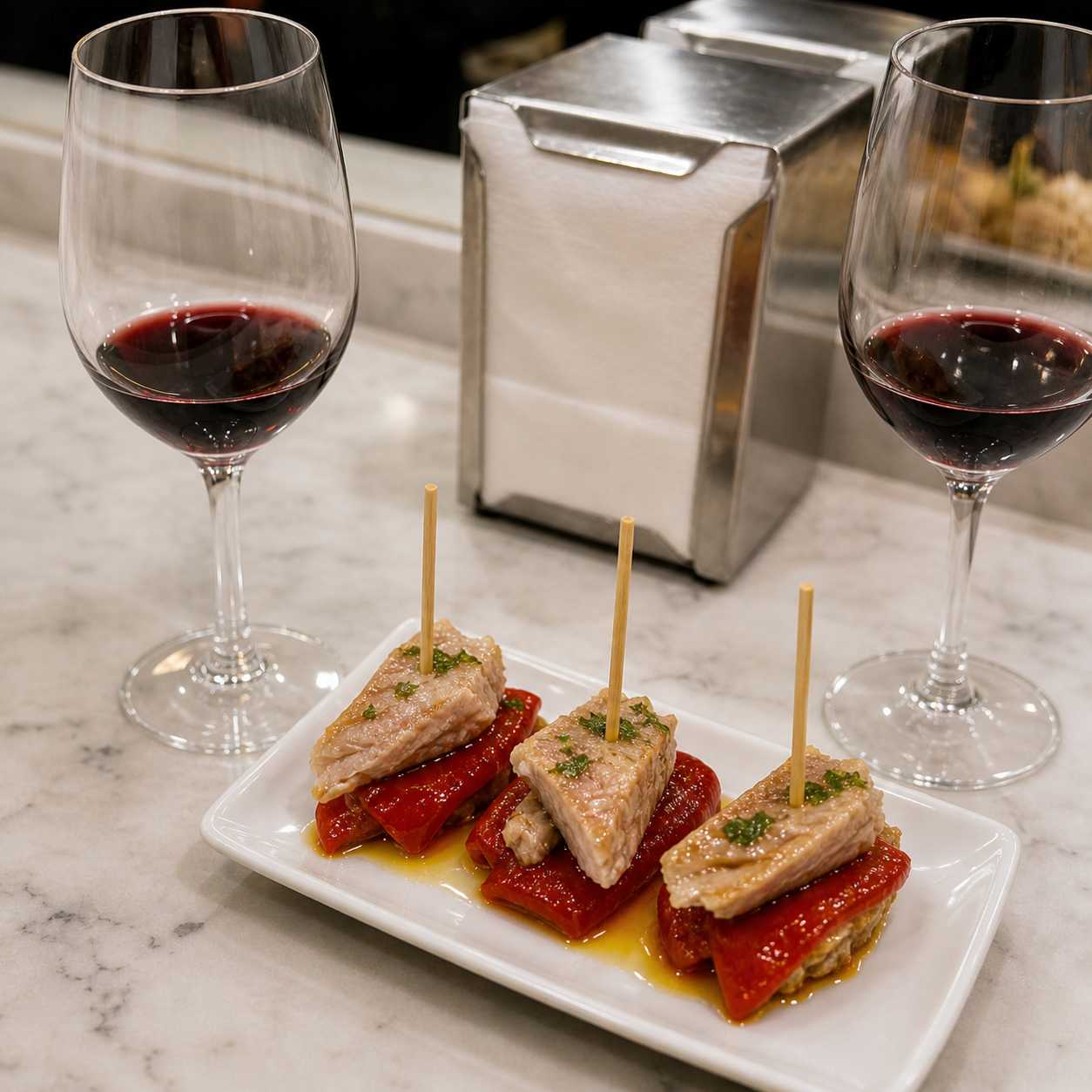
Part of the charm here is that you don’t really have dinner in one place. You order one pincho (like the ventresca (tuna belly) skewers with red peppers pictured below) and one small glass of wine, stand at the bar or outside, then move on. This rhythm is the whole point: eat, drink, walk ten steps, repeat. Like a moving buffet.
Day 3
The next day, after a relaxed breakfast at home, we headed out to a full day that E had planned for us.
Bodegas LAN
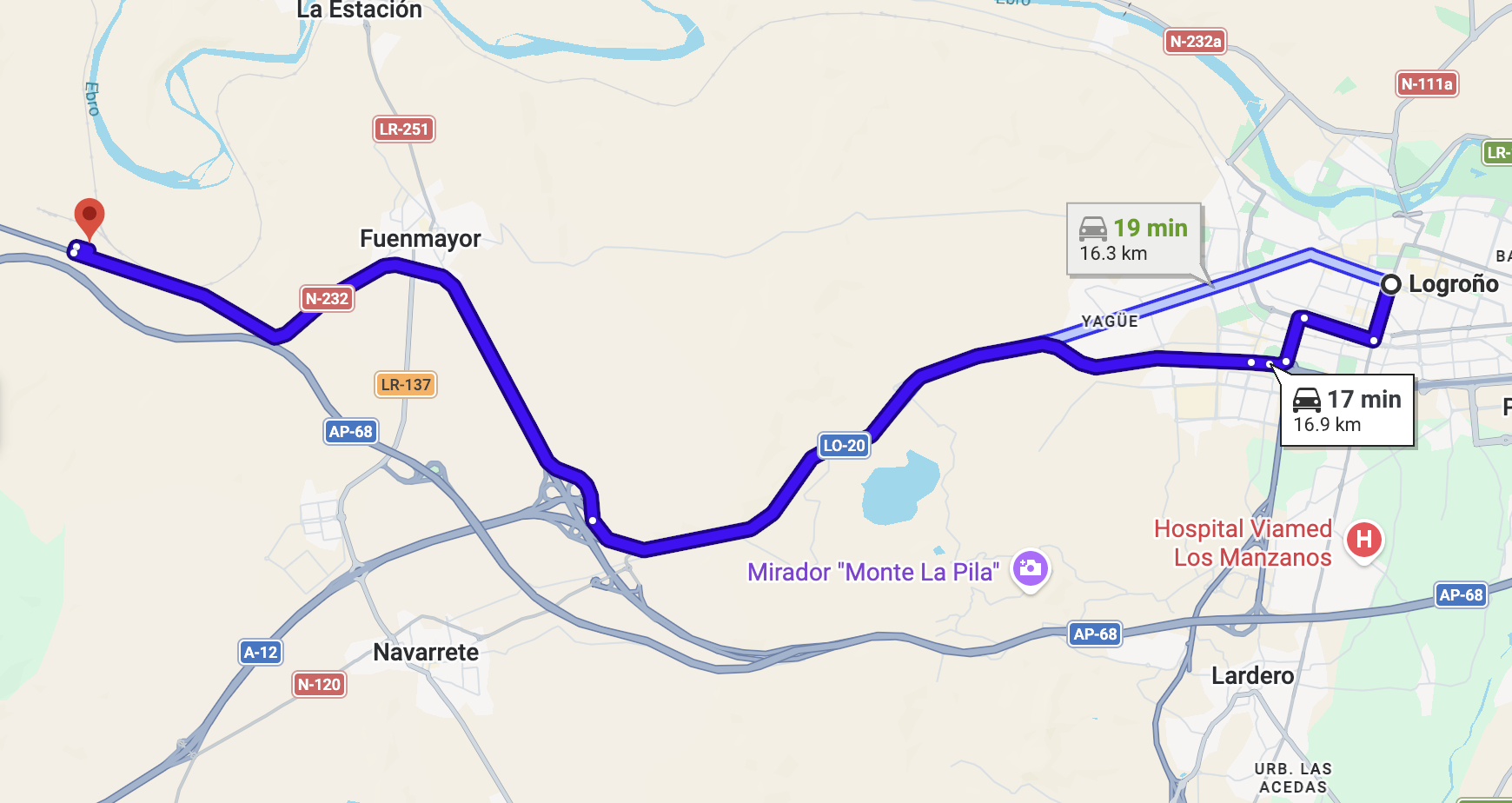
First stop: a private tour at Bodegas LAN, a “modern” (as in early 1970s) Rioja winery in Fuenmayor, about 15 km/9 miles west of Logroño.
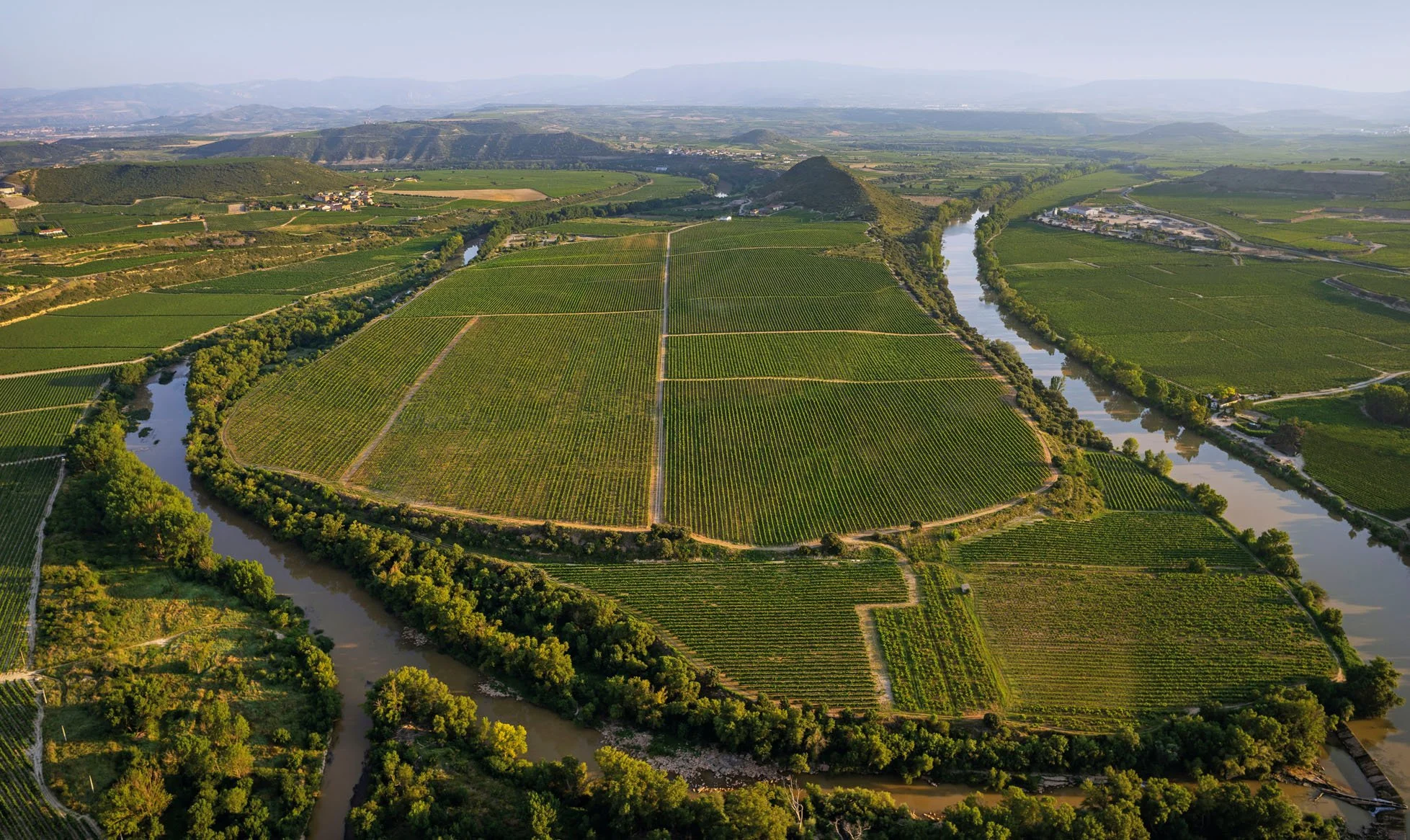
Laura, our tour guide (and E’s friend), started by telling us what LAN stood for: Logroño, Álava and Navarra — the first initials of the three historic Rioja wine areas. This winery is especially associated with Viña Lanciano, its most important vineyard, which is surrounded by a bend of the Ebro River and is one of its most distinctive assets.
Source: Black Stallion Spirits
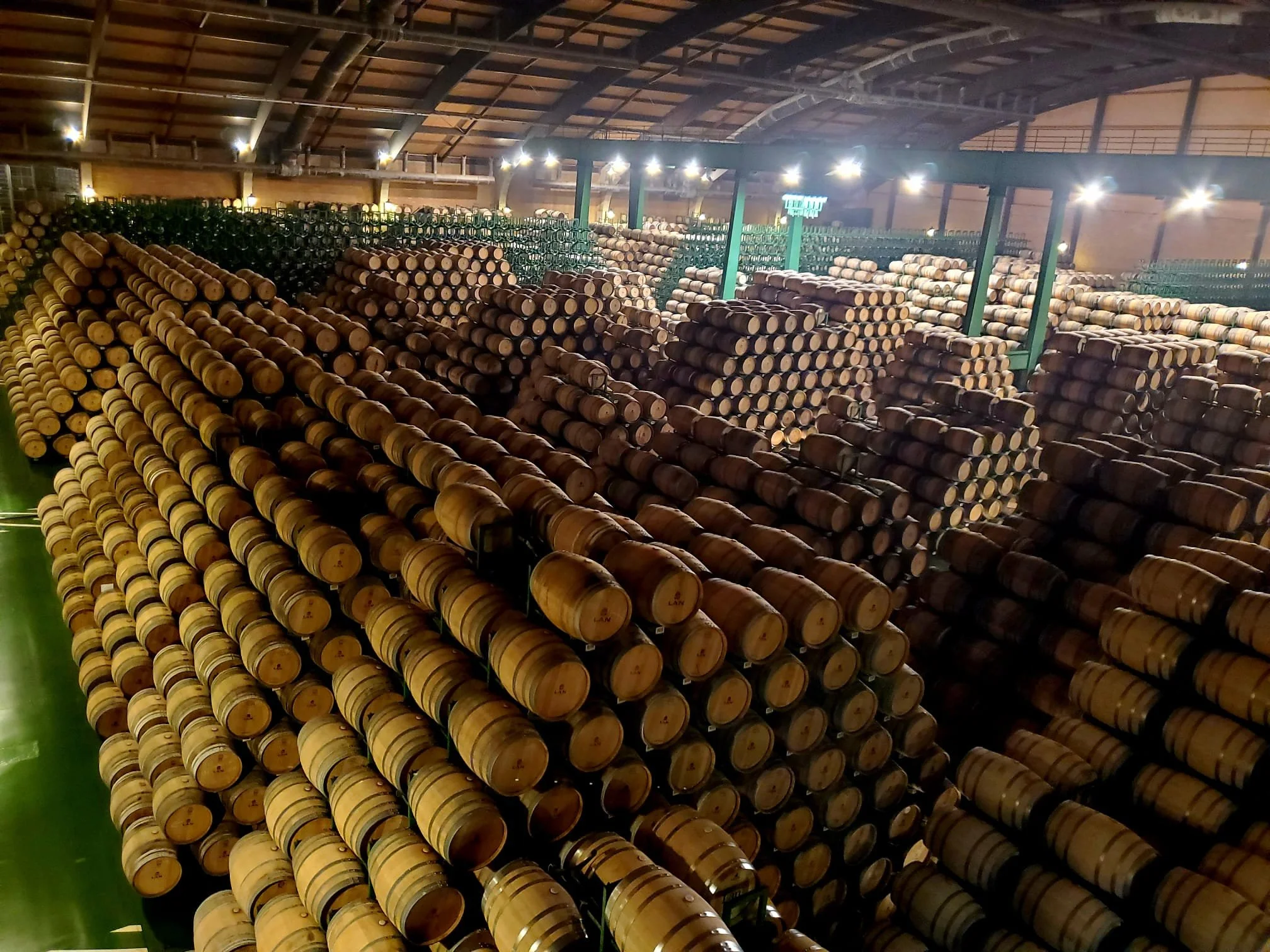
As Laura took us through the entire facility, she mentioned they had an annual production of 3.5 million bottles, and I couldn’t help but stop, open-mouthed, when we entered this room (and the photo doesn’t even do it justice — it was a lot bigger than it seems here):
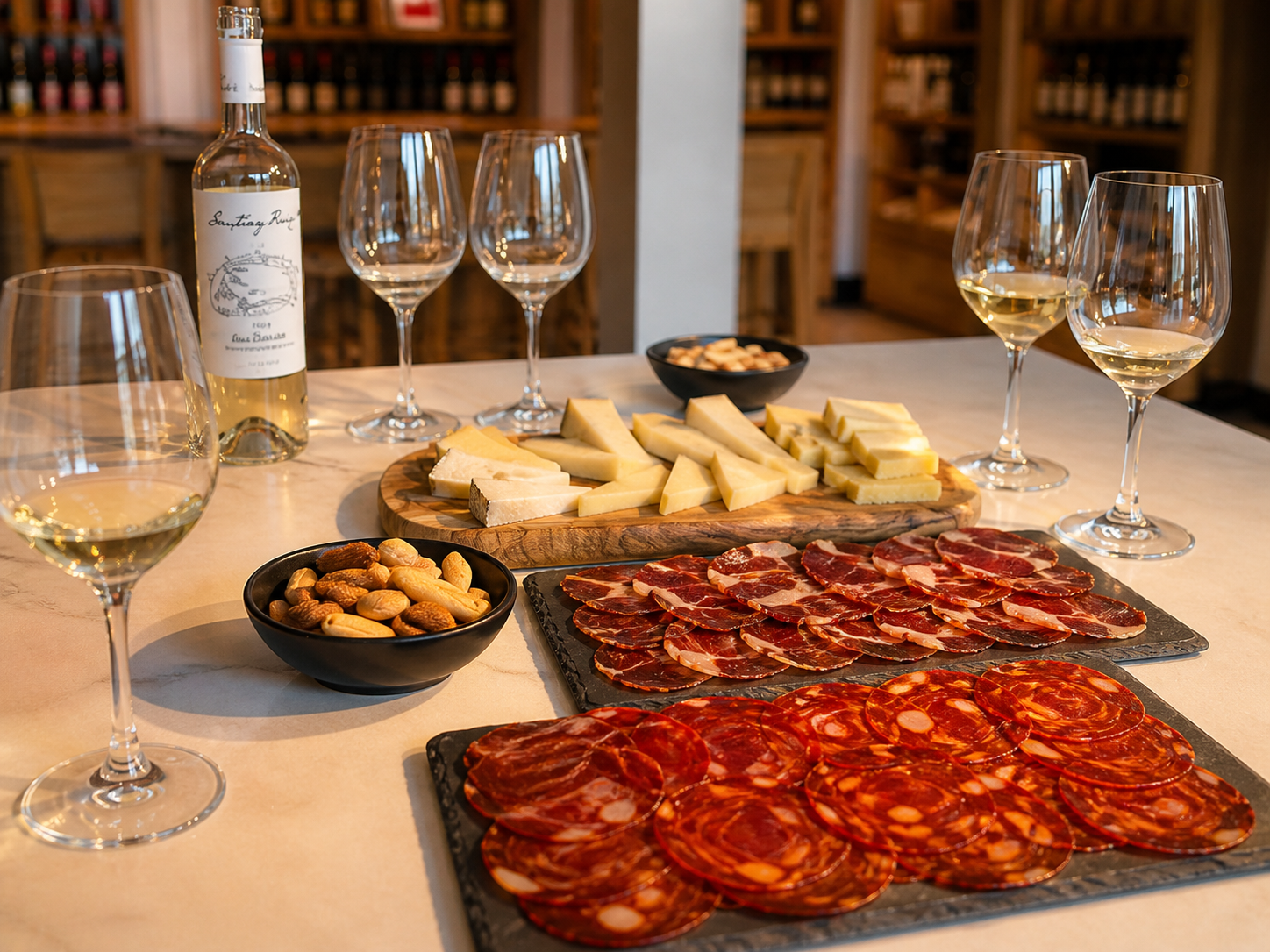
Upon the tour’s end, we enjoyed a tasting of white wine, red wine, and an assortment of chorizo and queso.
Tobía
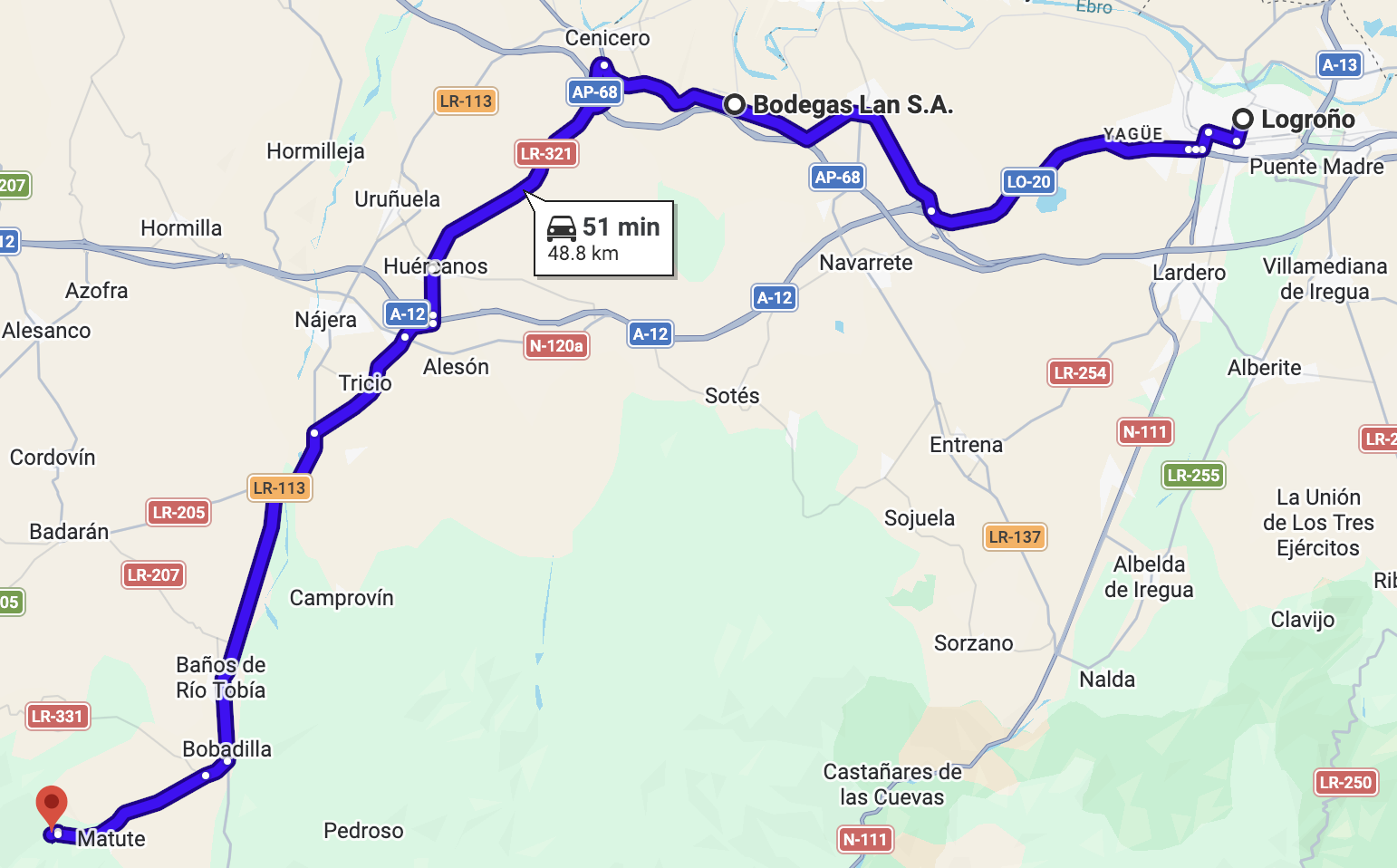
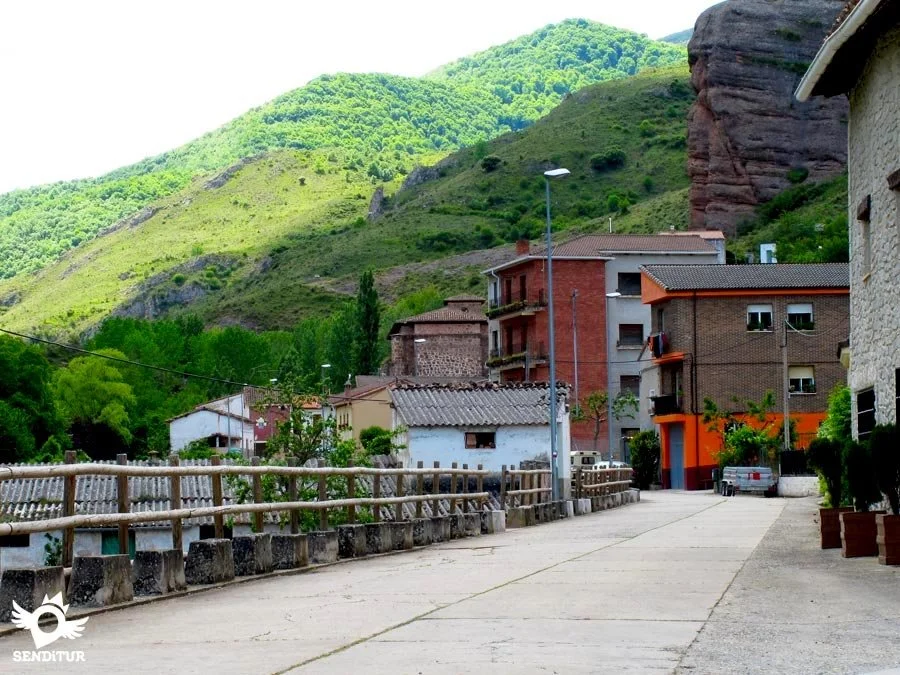
From Fuenmayor, we drove about 30 km / 18 miles southwest until we came to Tobía, a tiny village — just 41 inhabitants! — in the province of La Rioja.
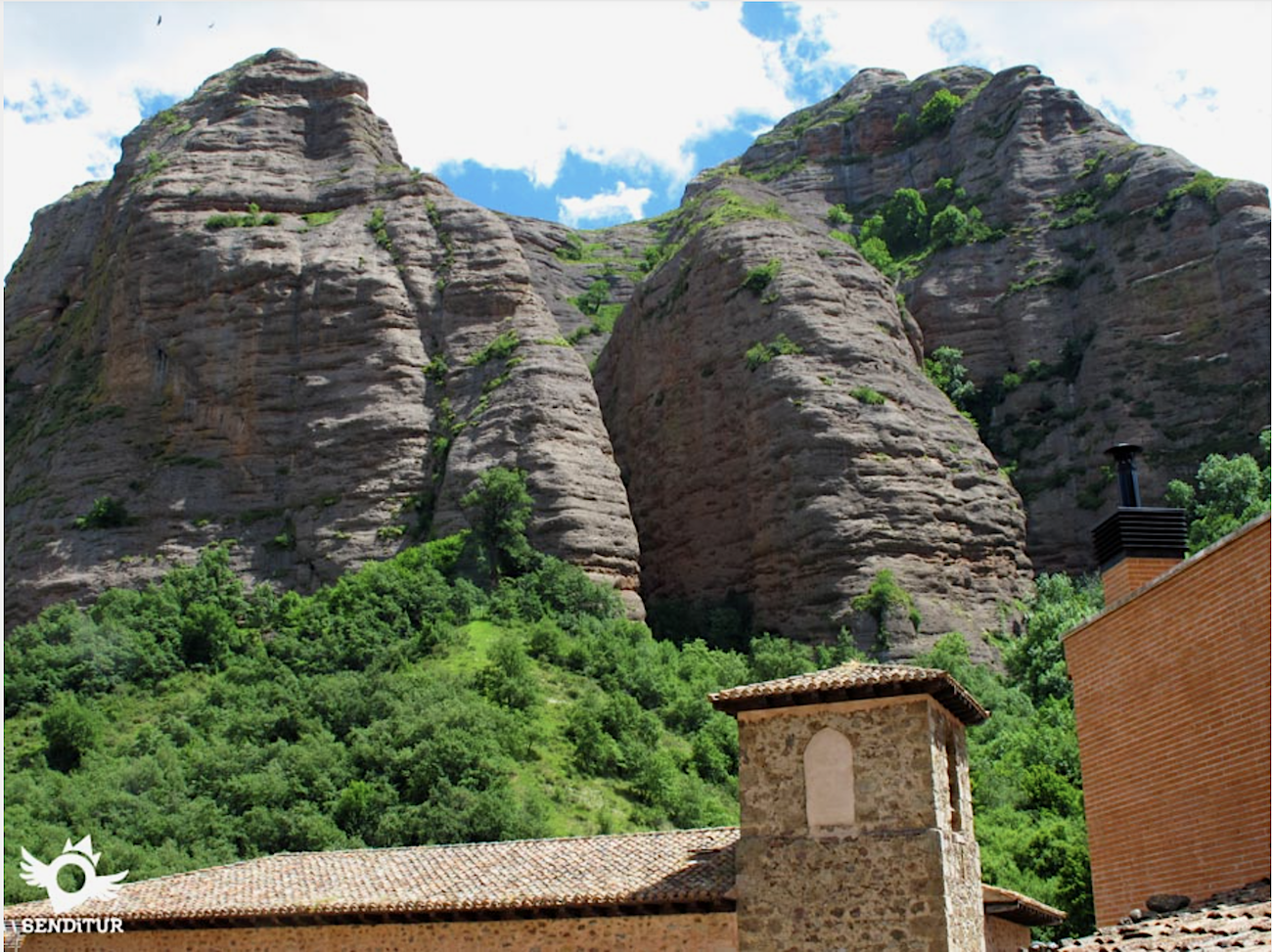
We made a brief stop here and sat outside in the chilly but sunny afternoon looking at the amazing mountain right there on the other side of the street while sipping wine.
Source: Senditur
According to Tobías’ website: “The first documented mention of Tobía dates from 1014, when King Sancho the Great [sounds like a name I’d make up for myself] donated the village of Colia — located between Tubía and Matute — to the Monastery of San Millán de la Cogolla.” There are traces of prehistoric settlement, Roman remains near the cemetery, and medieval links to the San Millán monastery.
It was a nice reminder that La Rioja is not only wine bars and bodegas. Just a short (albeit out of the way) drive from the vineyard-and-pincho world, you find villages like Tobía, where it feels more a mountain village with old stone houses where you’re pretty sure they’ve never heard of WiFi.
Since I’ve mentioned wine regions aplenty — or at least La Rioja — you might be interested in learning a bit more. Here in Spain, you don’t order wine by the grape (Chardonnay, Pinot Noir), you order by the region (La Rioja, Ribera del Duero). What happens if you don’t know the regions? You better like beer.
In this map, the main headers (with the colored squares) — Aragon, Castile and León, Extremadura, etc. — are the autonomous communities of Spain. The numbered places beneath them are the official wine denominations (usually DOs or Denominaciones de Origen) located within each one.
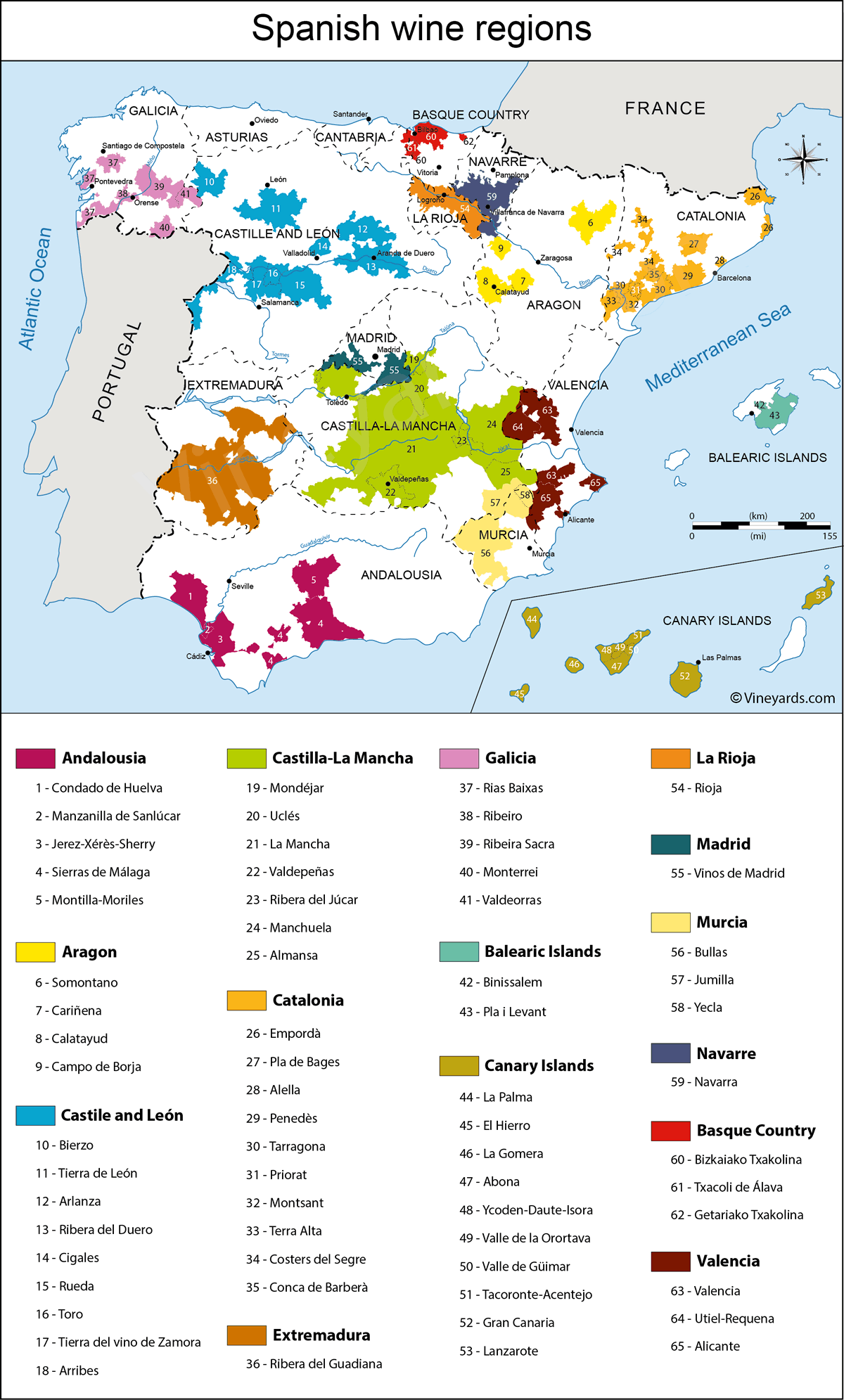
Source: Vineyards
San Millán de la Cogolla
After that quick stop, we drove a bit further (15 km/9 miles) and stopped for lunch at Restaurante El Molino in San Millán de la Cogolla, still in the La Rioja area.
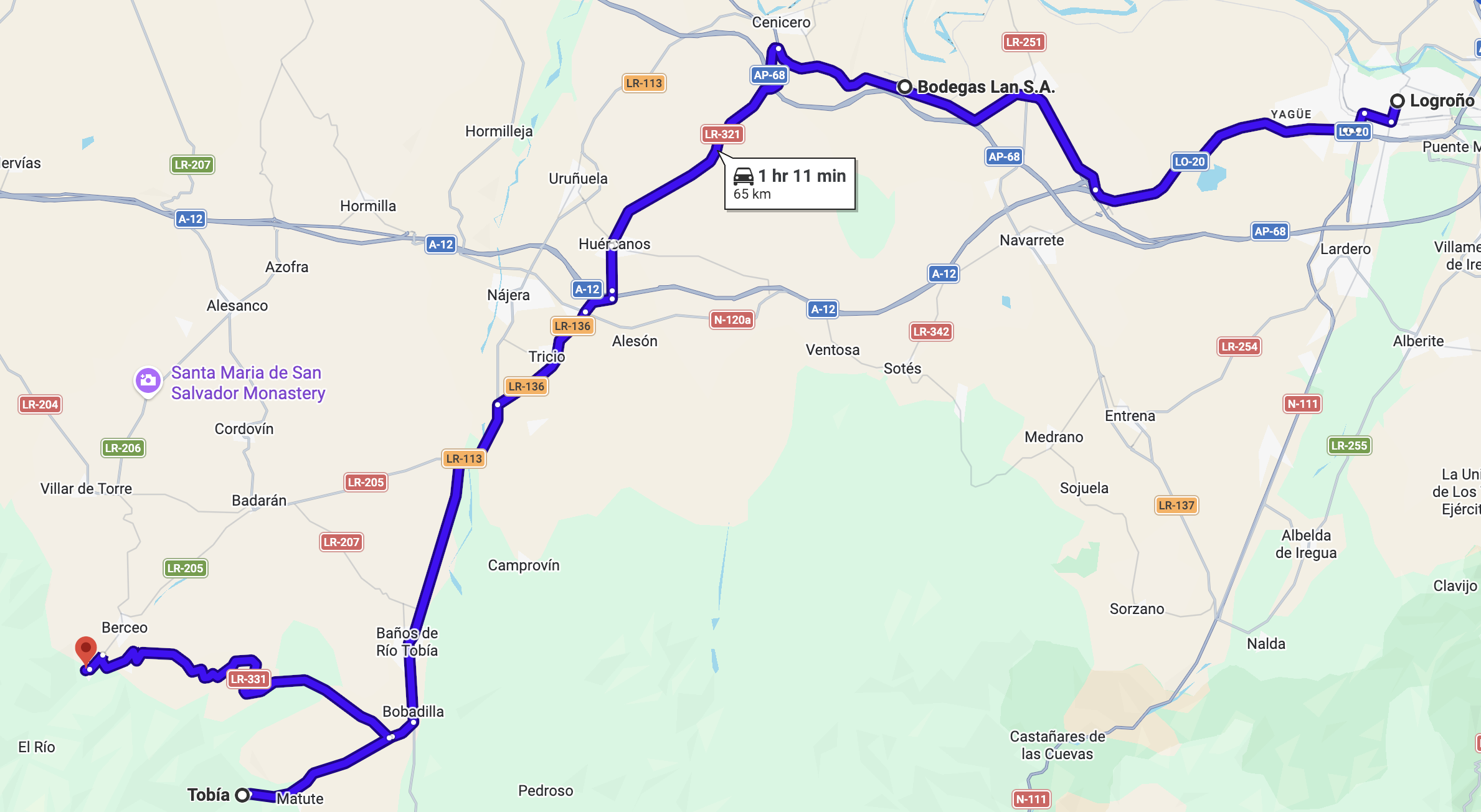
The restaurant is in the former warehouses of La Fábrica de Harinas La Gloria (The Gloria Flour Mill), which “is situated atop one of the seven mills belonging to the Benedictine monks of the Monastery of Yuso, on the banks of the Cárdenas River…. The flour mill is designed according to the Robinson method, patented in 1850 by a French engineer of the same name. Robinson designed the method to harness gravity for moving goods; consequently, the mill is designed vertically, spanning four floors.”
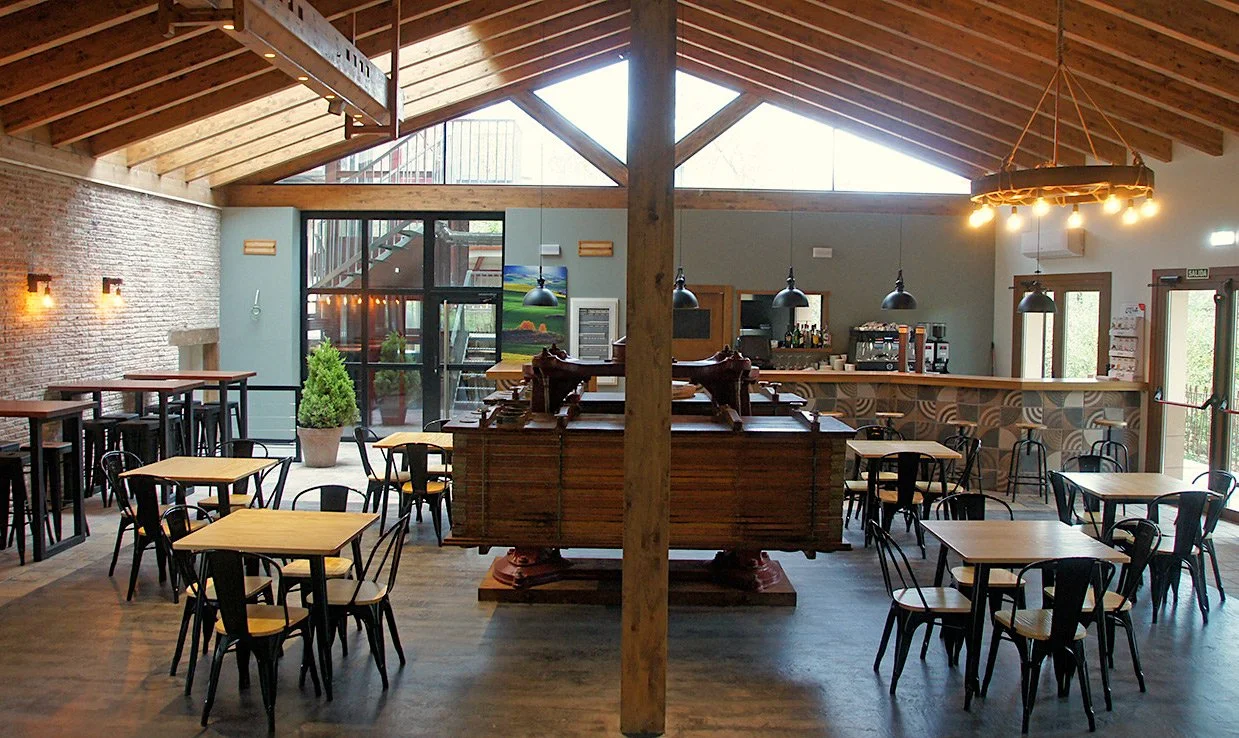
Source: Fabrica de Harinas la Gloria
We had a delicious meal made from local products and, naturally, drank La Rioja wine. (I’m pretty sure that ordering a Ribera del Duero wine in this region would’ve landed us in jail.) With a high, peaked roof, plenty of wood and big windows with a view of the valley, it was an all-around great experience.
No sooner had we drained the last drop of coffee from our cups, when they kicked us out. Like many establishments in smaller towns (and sometimes bigger cities), the hours are: 13:00-16:00 y 20:00-23:00 (1-4pm, 8-11pm).
But no matter, because we had our own schedule to keep. Off we went to our second bodega!
Bodega Clemente García
Winery number two on today’s tour was Bodega Clemente García in Baños de Río Tobía (stiiiill in La Rioja), about 13.5 km/8 miles east of the restaurant (less than 20 minutes).
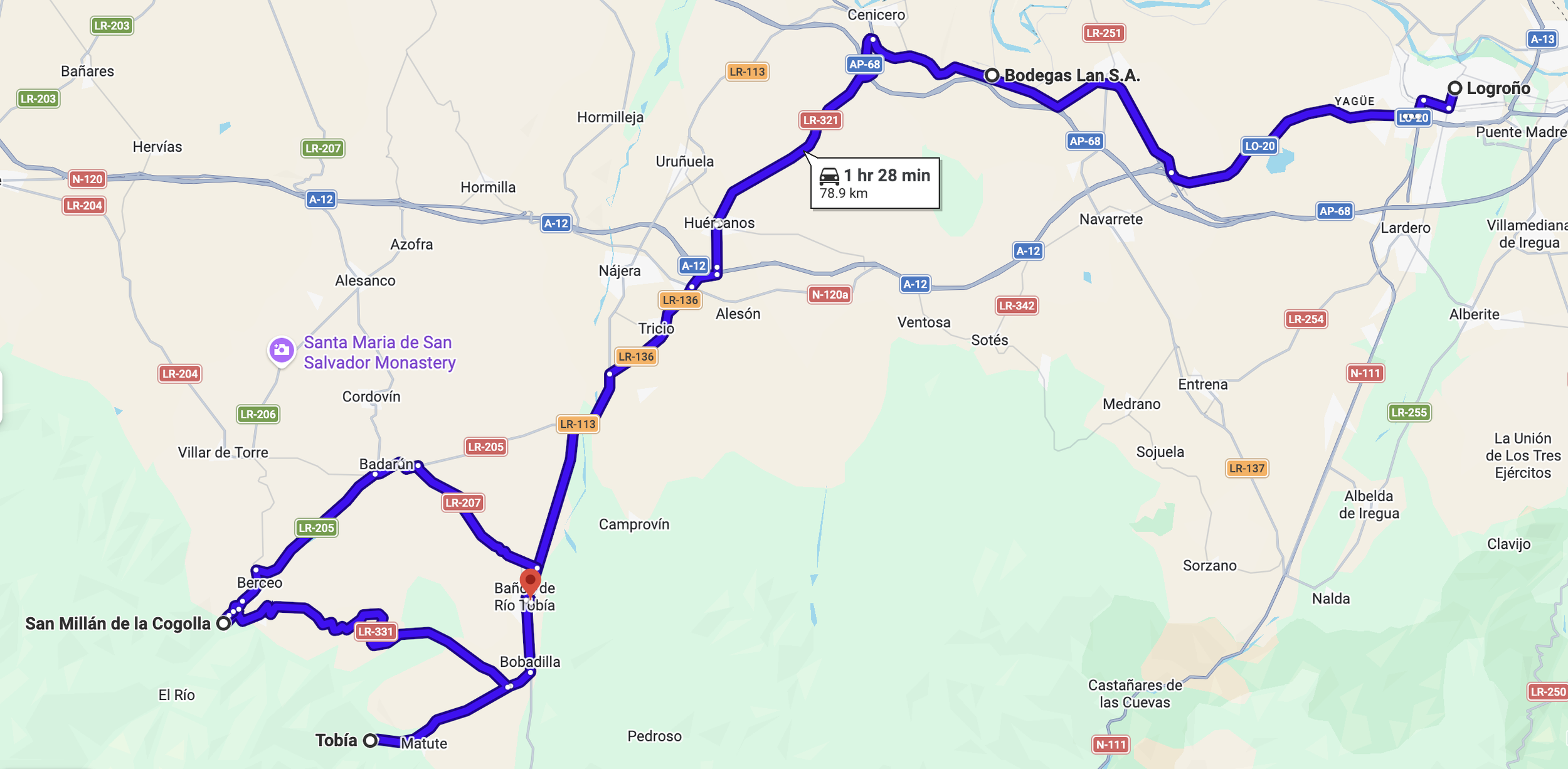
This second bodega couldn’t have been more different from LAN. Whereas that bigger winery produces 3.5 million bottles of wine per year, Bodega Clemente García produces around 20,000 bottles per year.
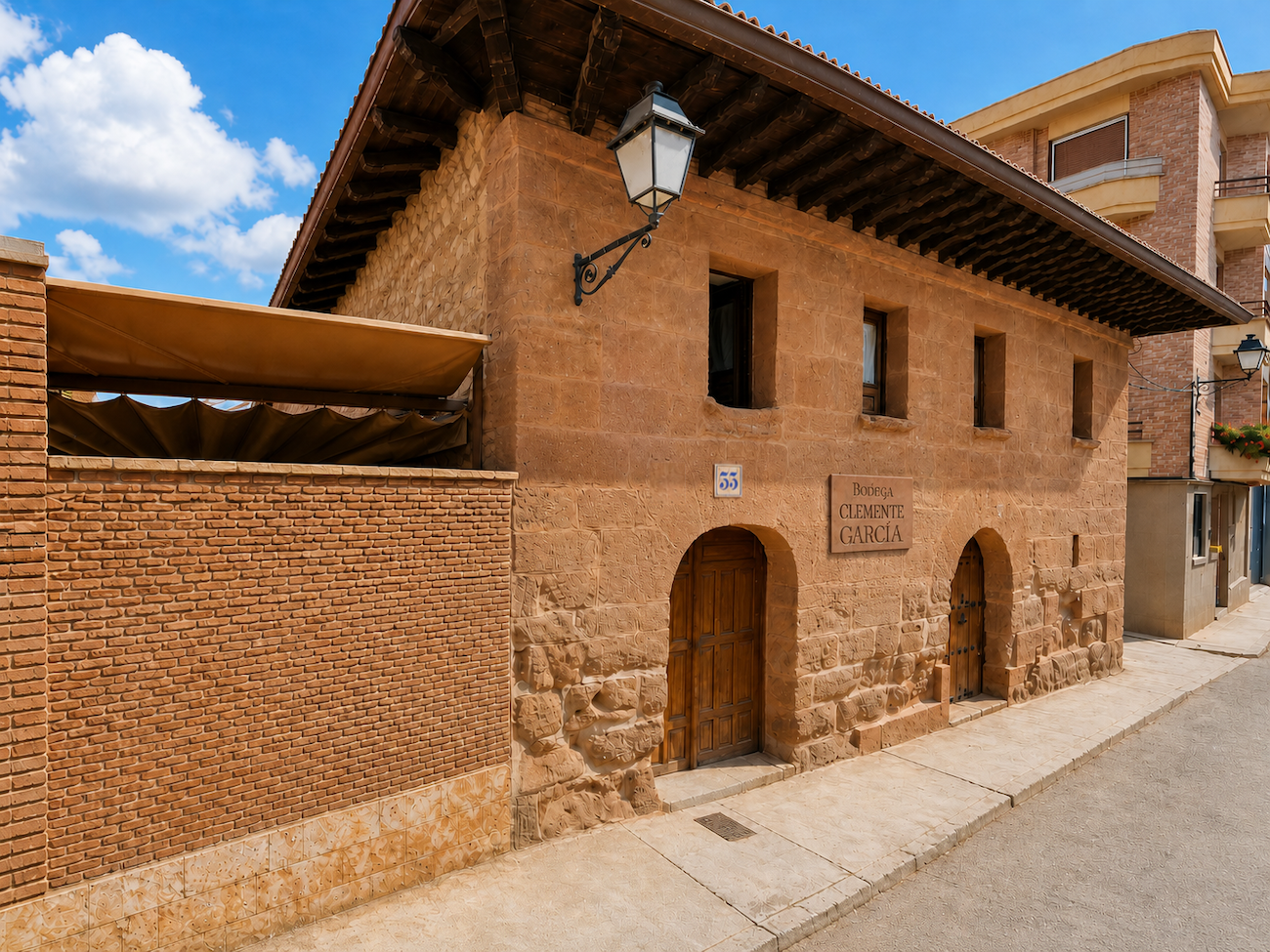
In fact, it’s so small, that as we entered the building, the owner himself was labeling bottles on a table in the main area. With nary another soul to be found, he gave us a tour of the old below-ground cave.
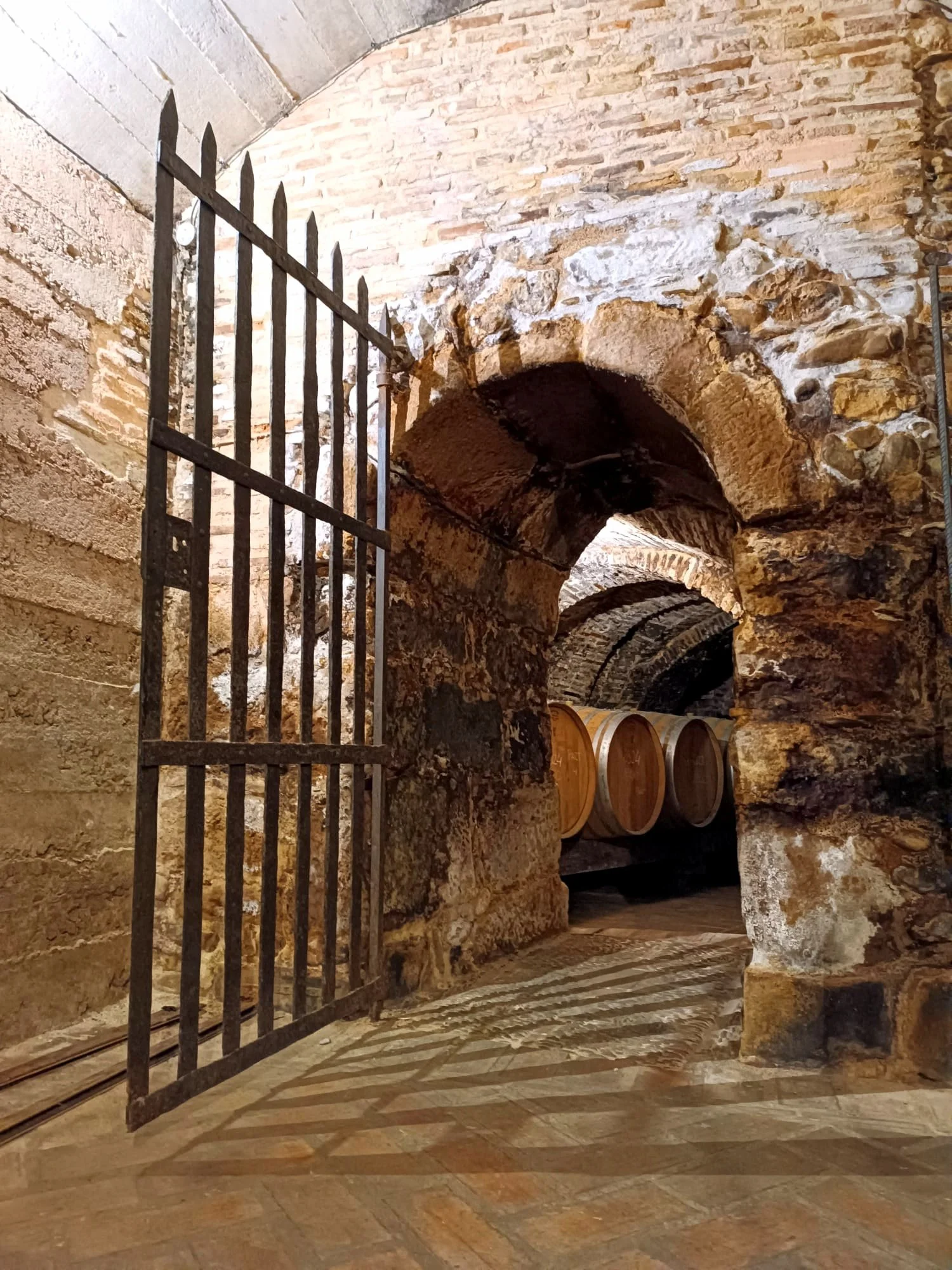
From the age of 18, the current owner Clemente García began looking after the family vineyard, which includes vines planted by his grandfather. This winery produces just four Rioja wines made from Garnacha, Tempranillo and Viura, including a Garnacha aged in a clay amphora (a barrel-sized clay jar or vase), or a white wine aged on its lees. (“Lees” refers to the spent yeast and fine sediment left after fermentation; aging wine on its lees can add texture, body and complexity.)
After the tour, we enjoyed a wine tasting of one of their reds and one of their whites.
Day 4
The next morning after breakfast at E’s and a warm goodbye, A and I got back into the car, the trunk now jam-packed with boxes of wines, and headed to Frías.
Ermita Nuestra Señora de la Hoz
Or, rather, we intended to go to Frías. But we were sidetracked by the most amazing site a couple of kilometers before our original destination: Ermita Nuestra Señora de la Hoz.
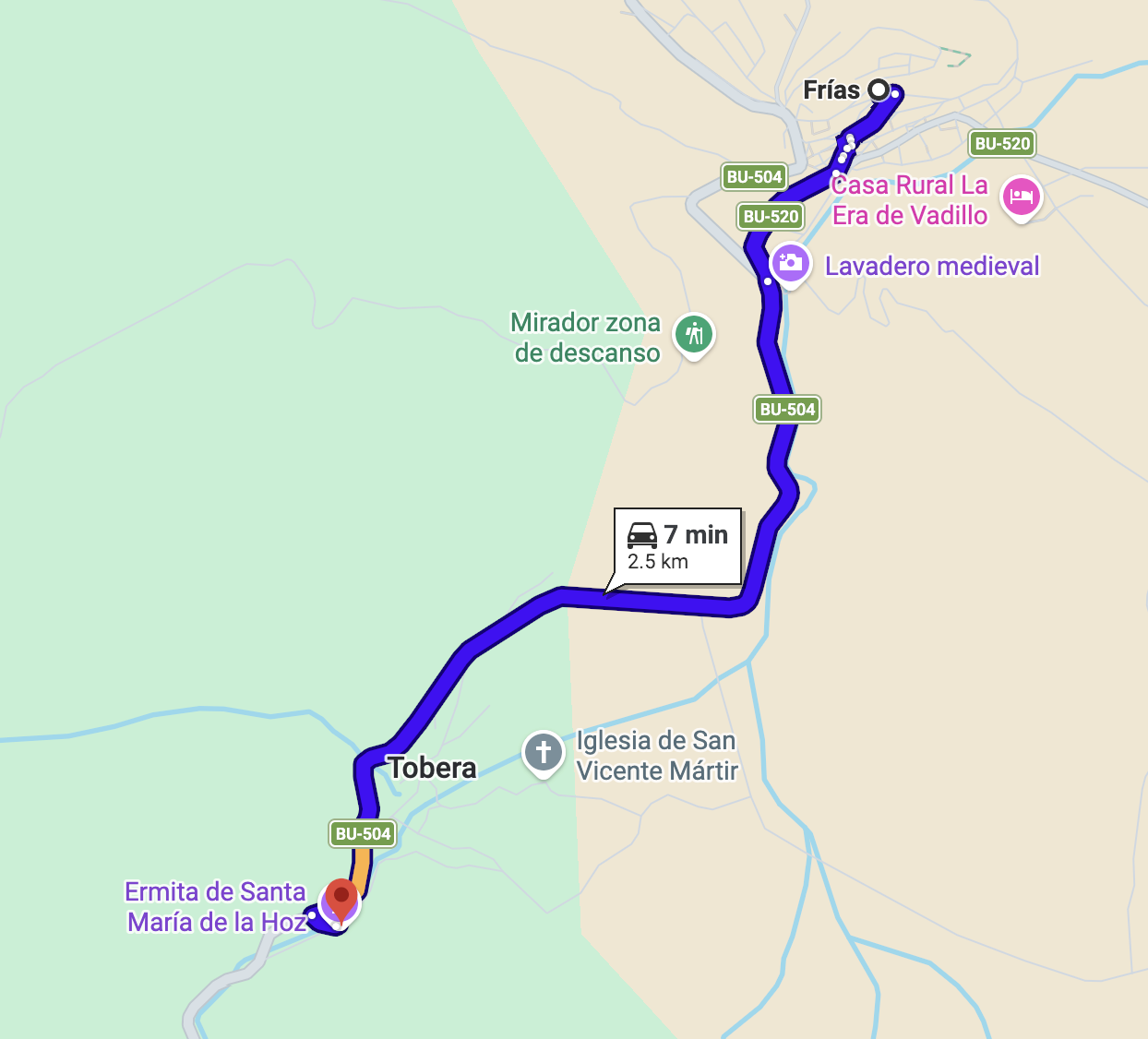
Roughly halfway between Burgos (city) and Bilbao (on the norther coast of Spain), the Hermitage of Our Lady of the Gorge is tucked away on a quiet country road.
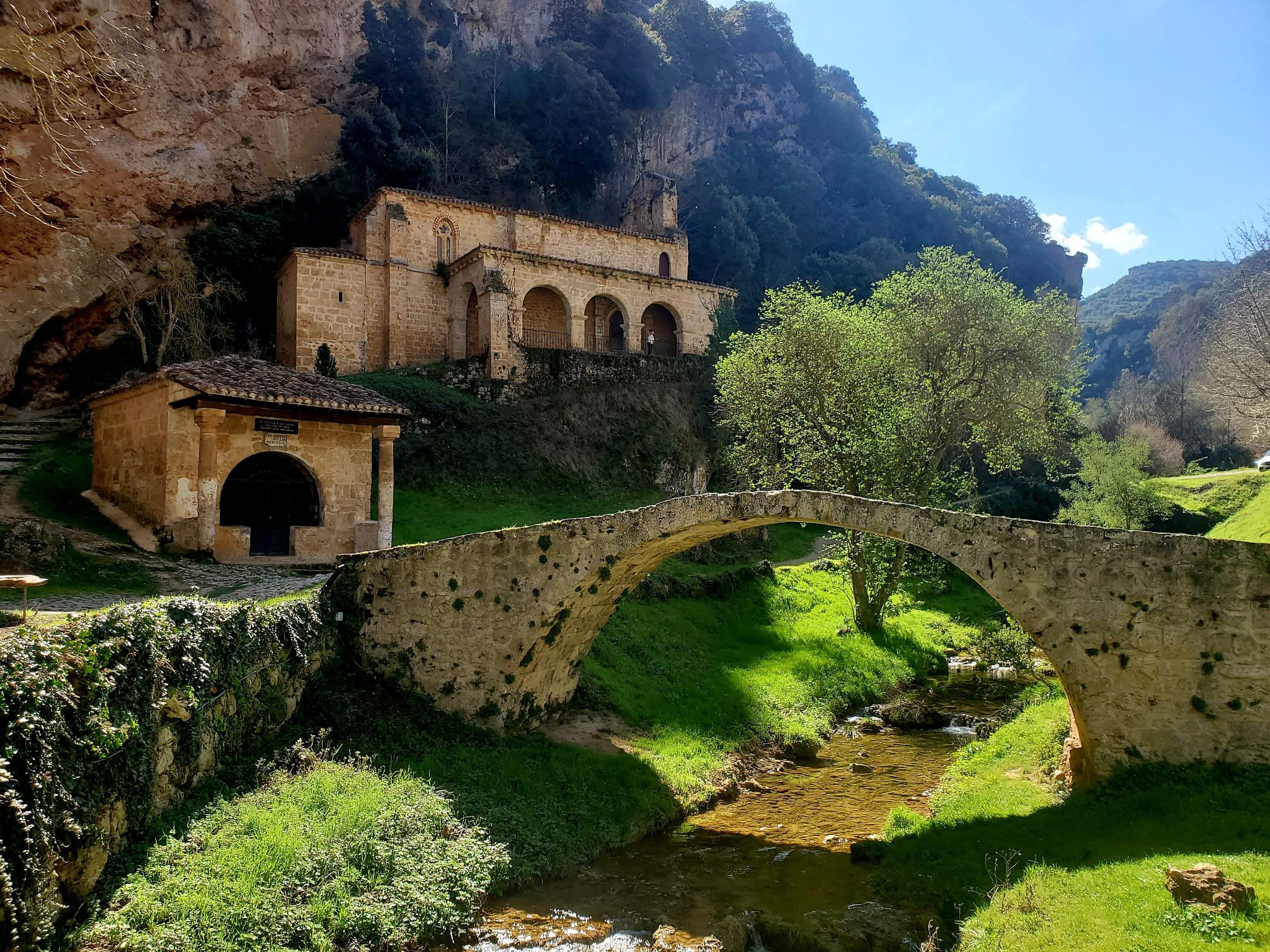
Protected beneath the rocky cliff, the chapel is a beautiful Gothic transitional-style church, with a single nave, a belfry at the foot of the church, and a small porch that shelters the simple entrance doorway.
It’s a tiny medieval cluster that, in addition to the chapel, includes the Humilladero del Cristo (Shrine of Christ), a stone bridge under which the Molinar River runs and also has waterfalls (that used to power the grinding stones of various mills, fulling mills or textile mills located nearby).
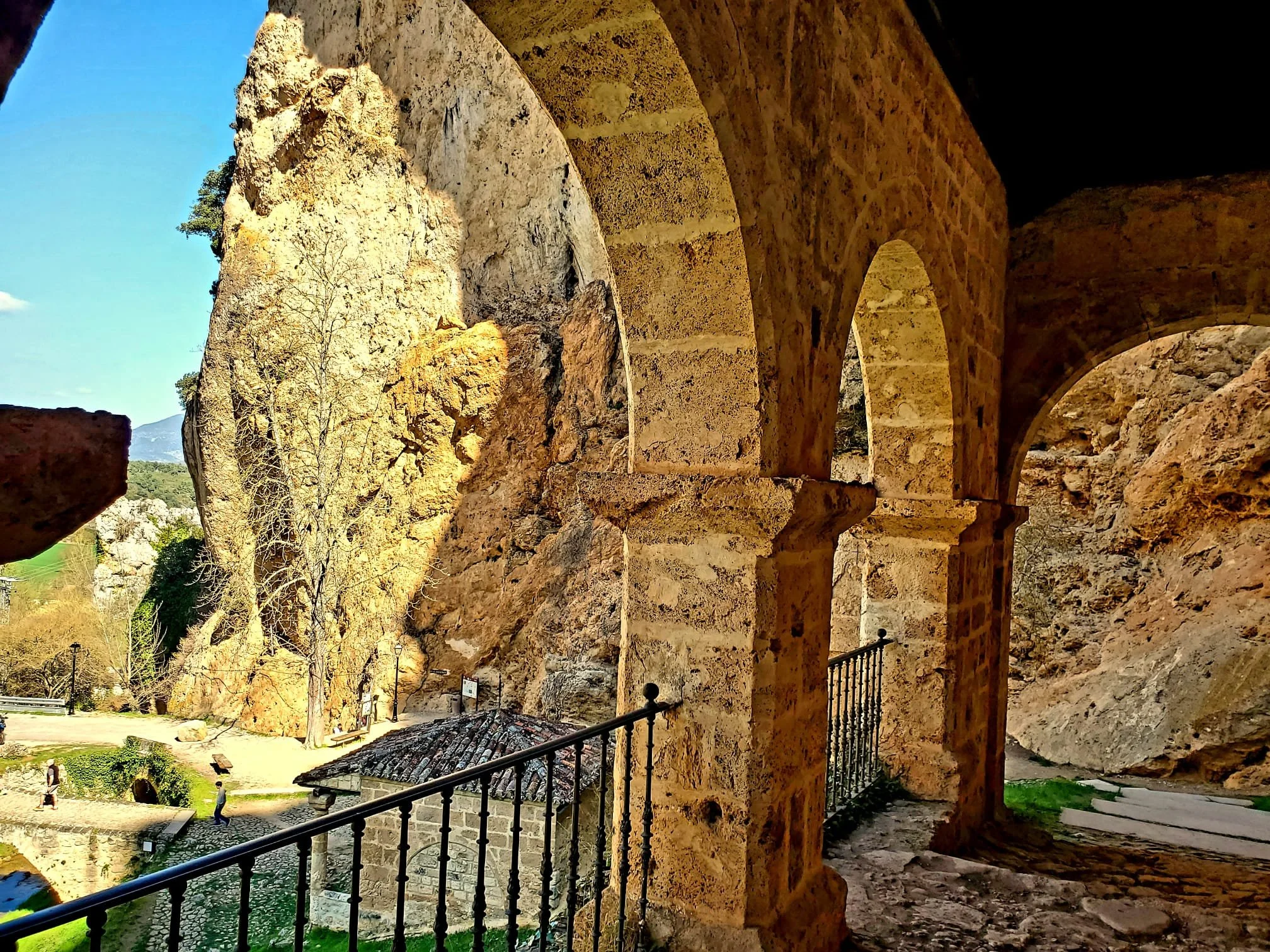
The information sign posted outside says that in the 11th century, Gómez Díaz and his wife sold the village of Oña to Count Don Sancho in exchange for this quiet little place.
According to legend, a royal courier once passed this way and was confronted by a giant serpent. His horse panicked and threw him to the ground, but he saved his life by entrusting himself to the Santo Cristo de los Remedios (Holy Christ of the Remedies). In gratitude, he ordered this humilladero (roadside shrine) to be built.
The single-arch bridge that crosses the river here is known as the Roman Bridge, although the structure that survives is medieval. However, there is evidence that an ancient Roman road once existed here, linking the plateau with the Cantabrian coast through the Tobera gorge.
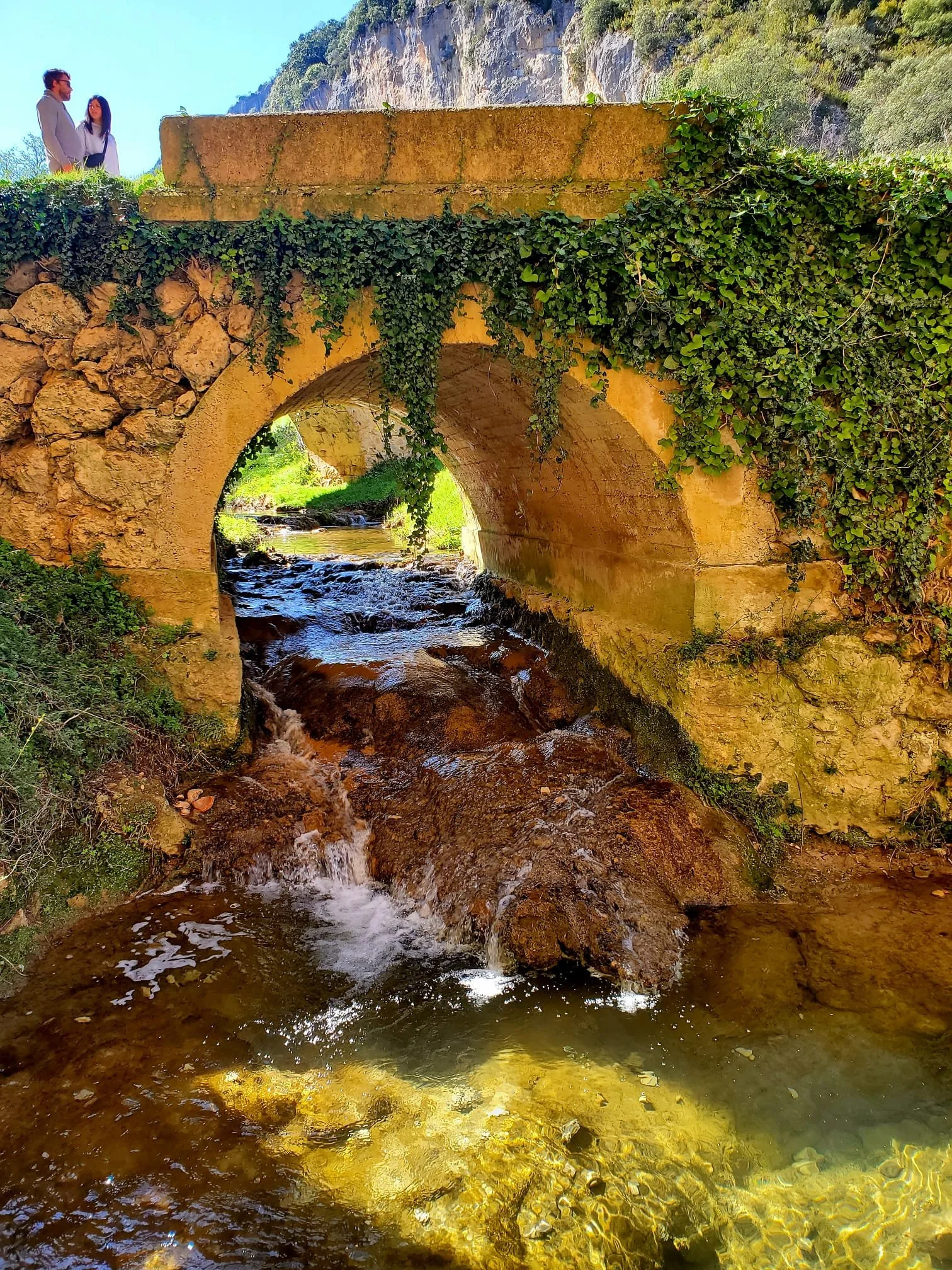
But, history or no history, this place is beautiful and feels so peaceful.
Frías, Burgos
From the spontaneous stop at Ermita Nuestra Señora de la Hoz, we got back on the road and within five minutes were in Frías.
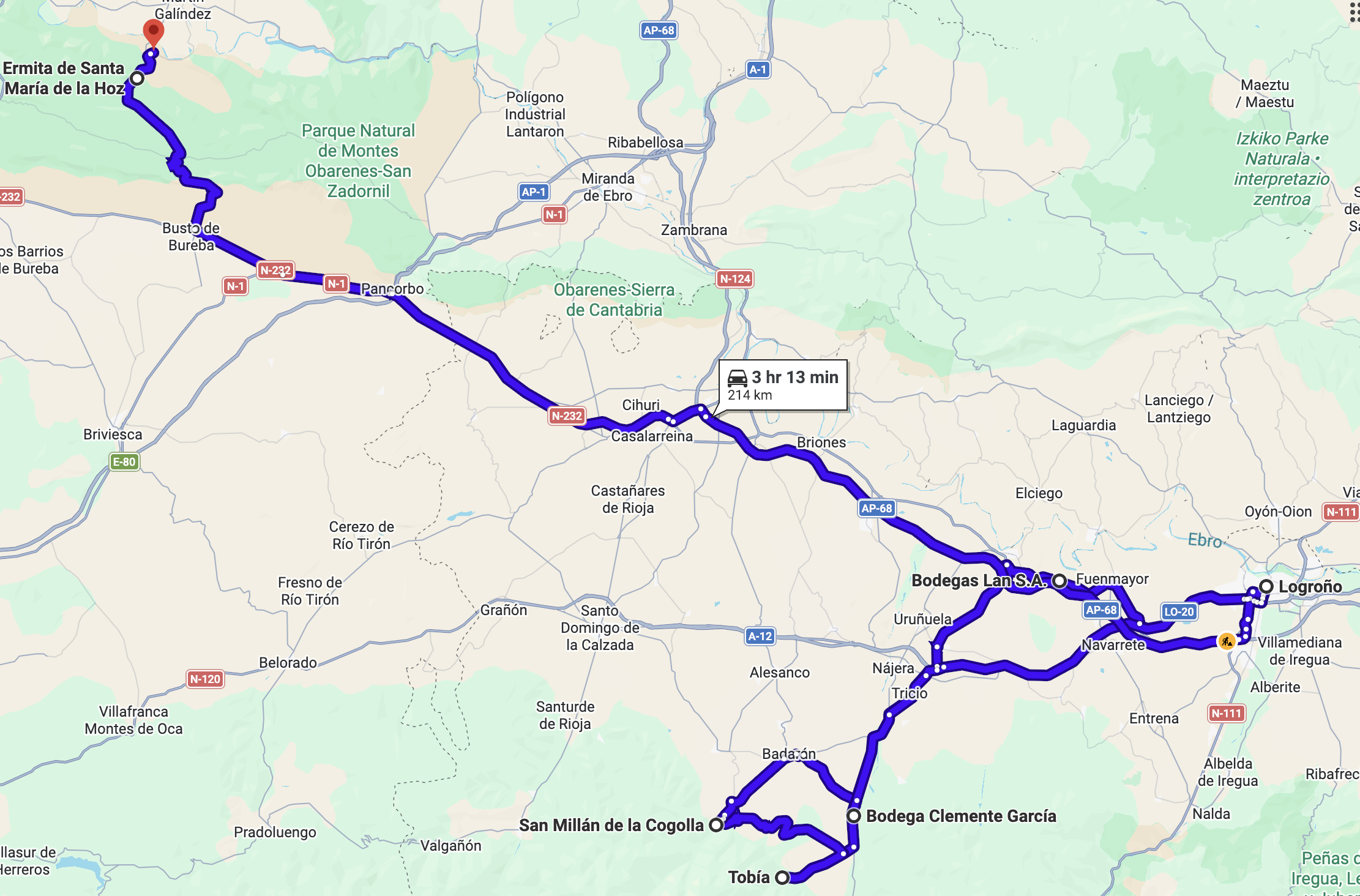
Perched above the Ebro River, Frías looks like a village, but it’s technically a city, often called the smallest city in Spain (with a population of just 258). King Juan II of Castile gave it city status in 1435, but make no mistake, it’s a medieval village.
The Castillo de Frías (Frías Castle) is a classic castillo roquero, or rock castle. It was built directly onto a rocky outcrop above the Tobalina Valley, using the landscape itself as part of the defense. The Frías tourism site calls it one of the most spectacular rock castles in Castile. That’s why it feels so wondrous: the castle tower seems to grow out of the rock.
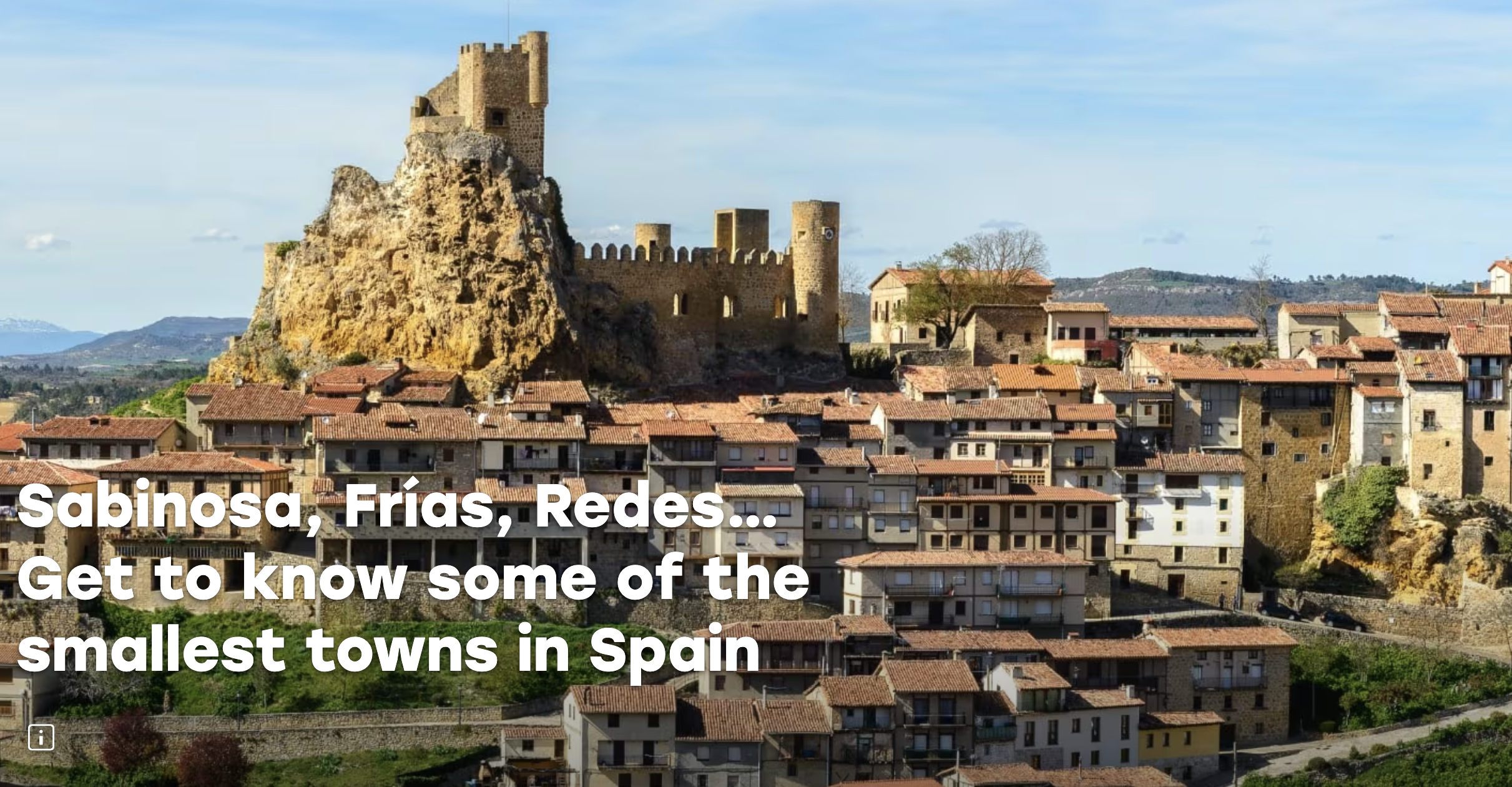
Source: Spain
Frías controlled routes through the Ebro area, so the castle’s position high above the valley gave it a strong defensive and surveillance role. And the fortified bridge below the castle once guarded an important river crossing into the village.
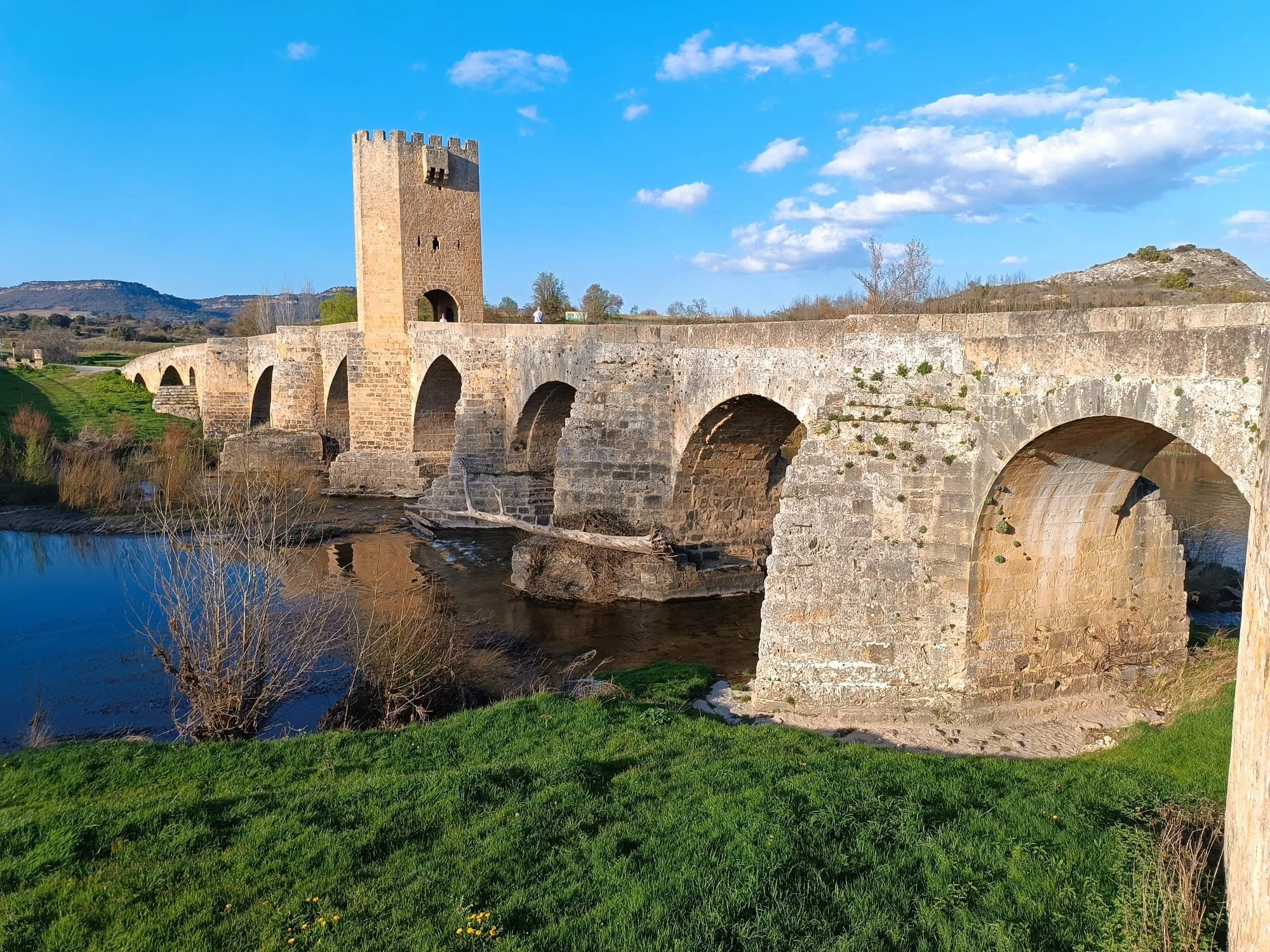
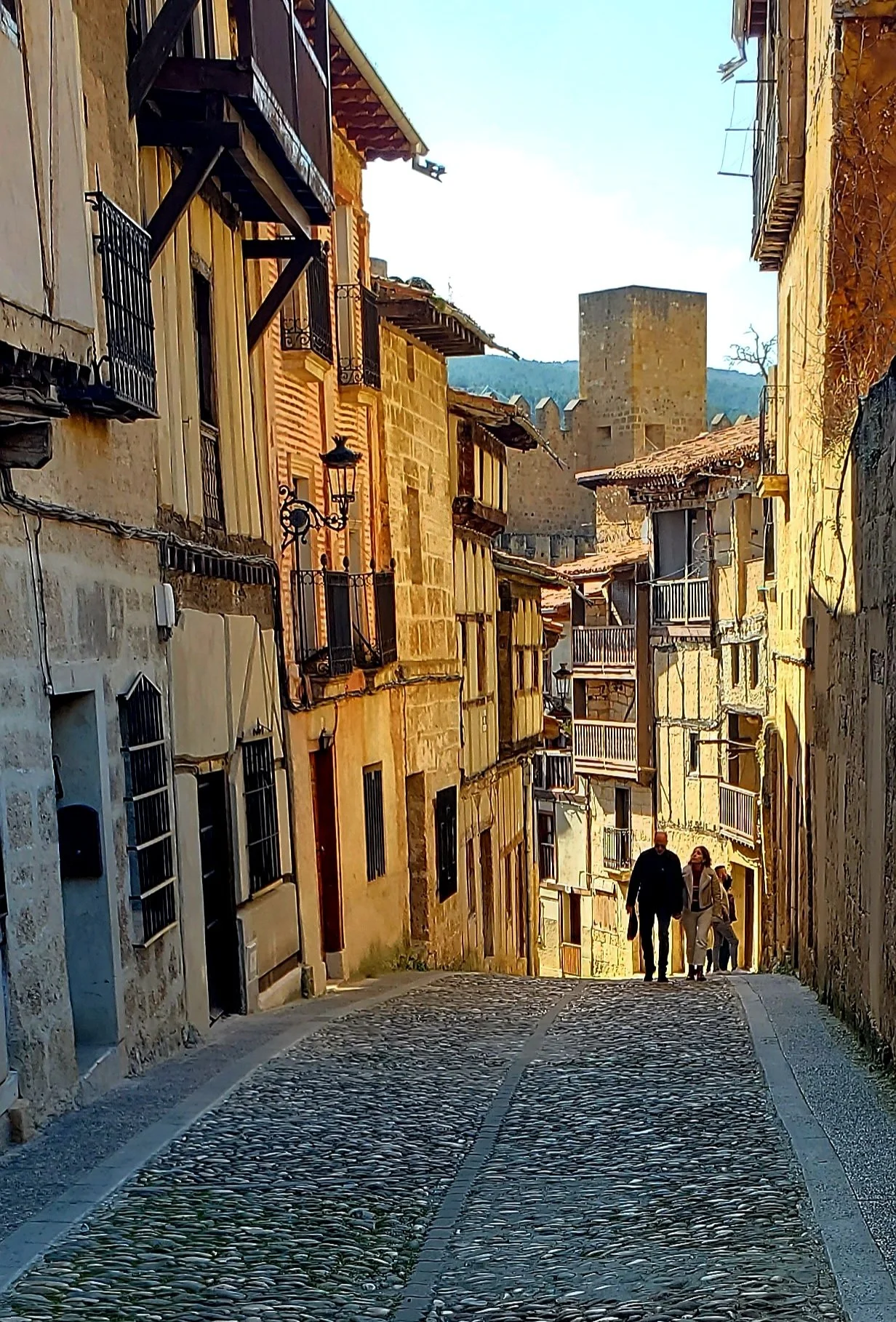
Also, cars are not allowed to drive the narrow, cobblestone streets.
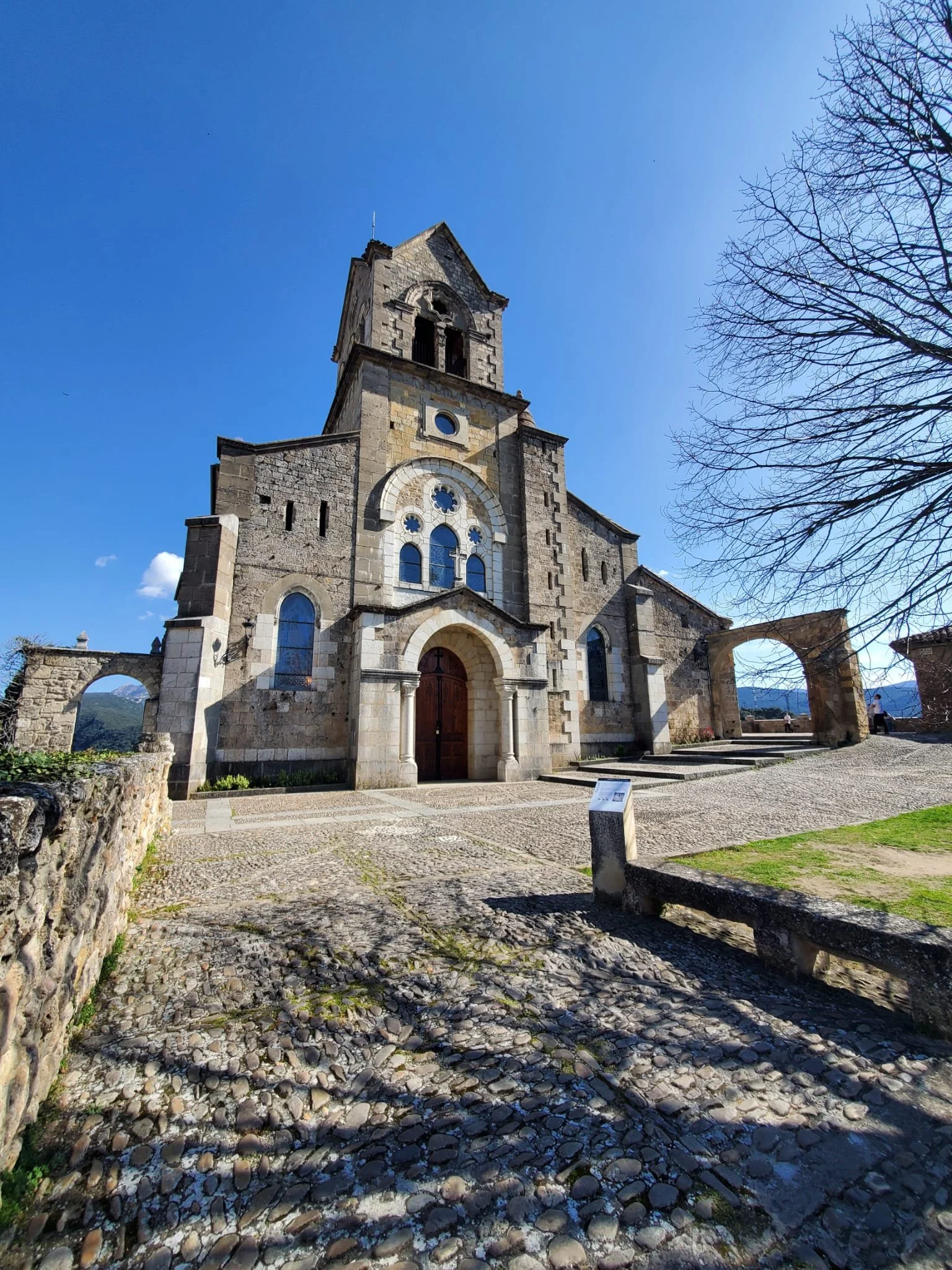
After wandering around the village for a bit and admiring the church at the top of the hill…
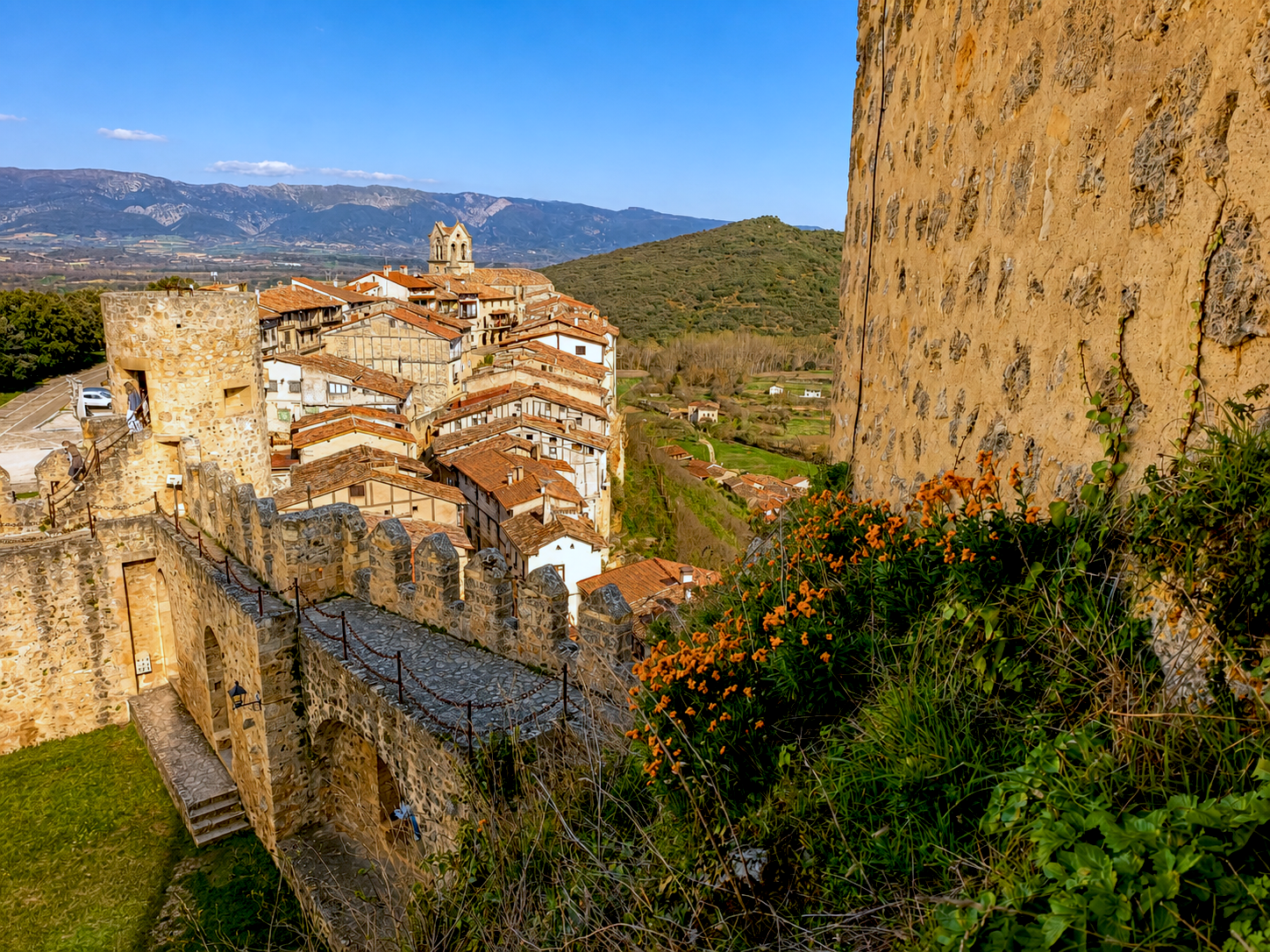
…we paid €2 ($2.35 USD) each to visit the 10th century castle ruins.
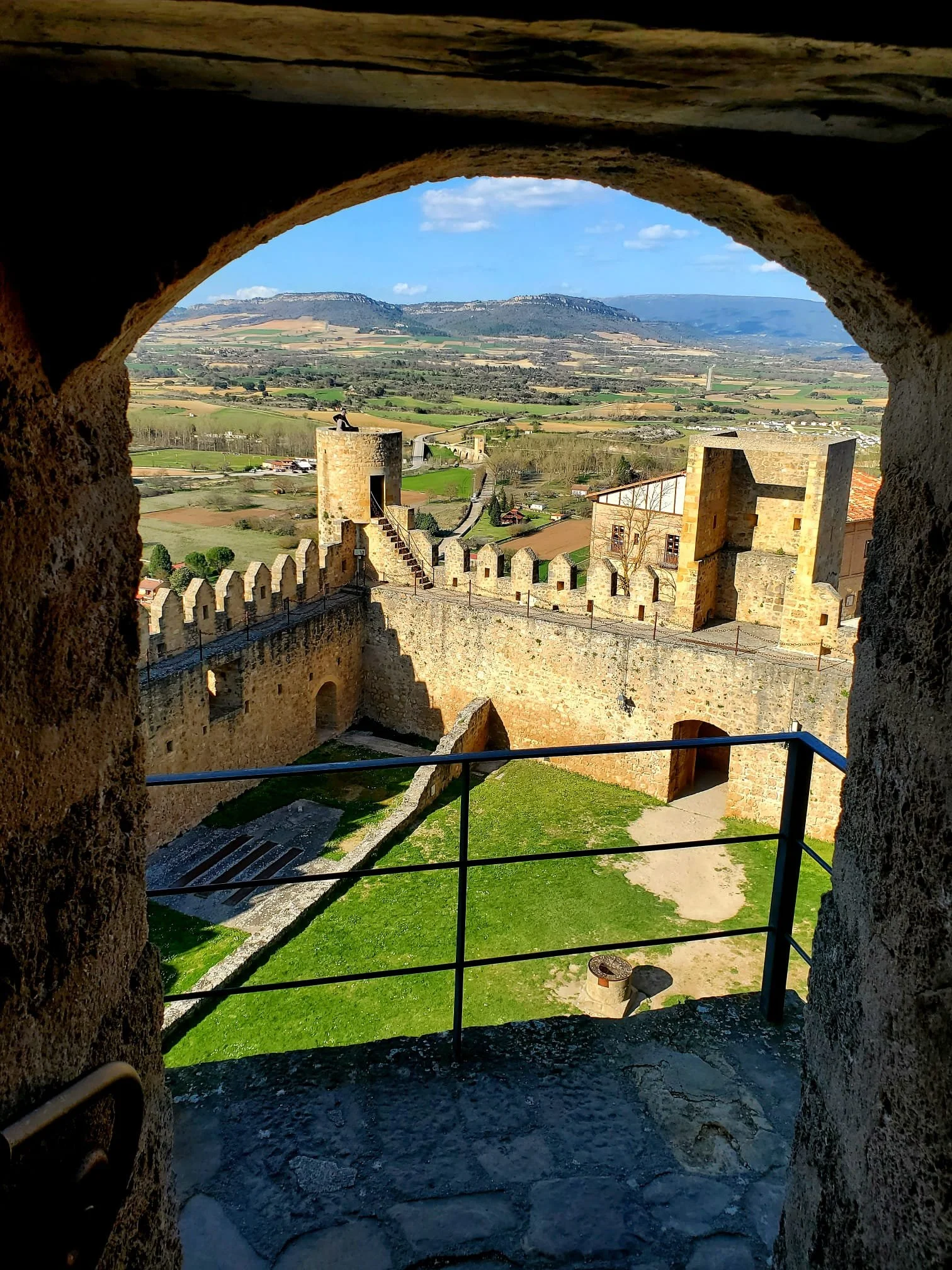
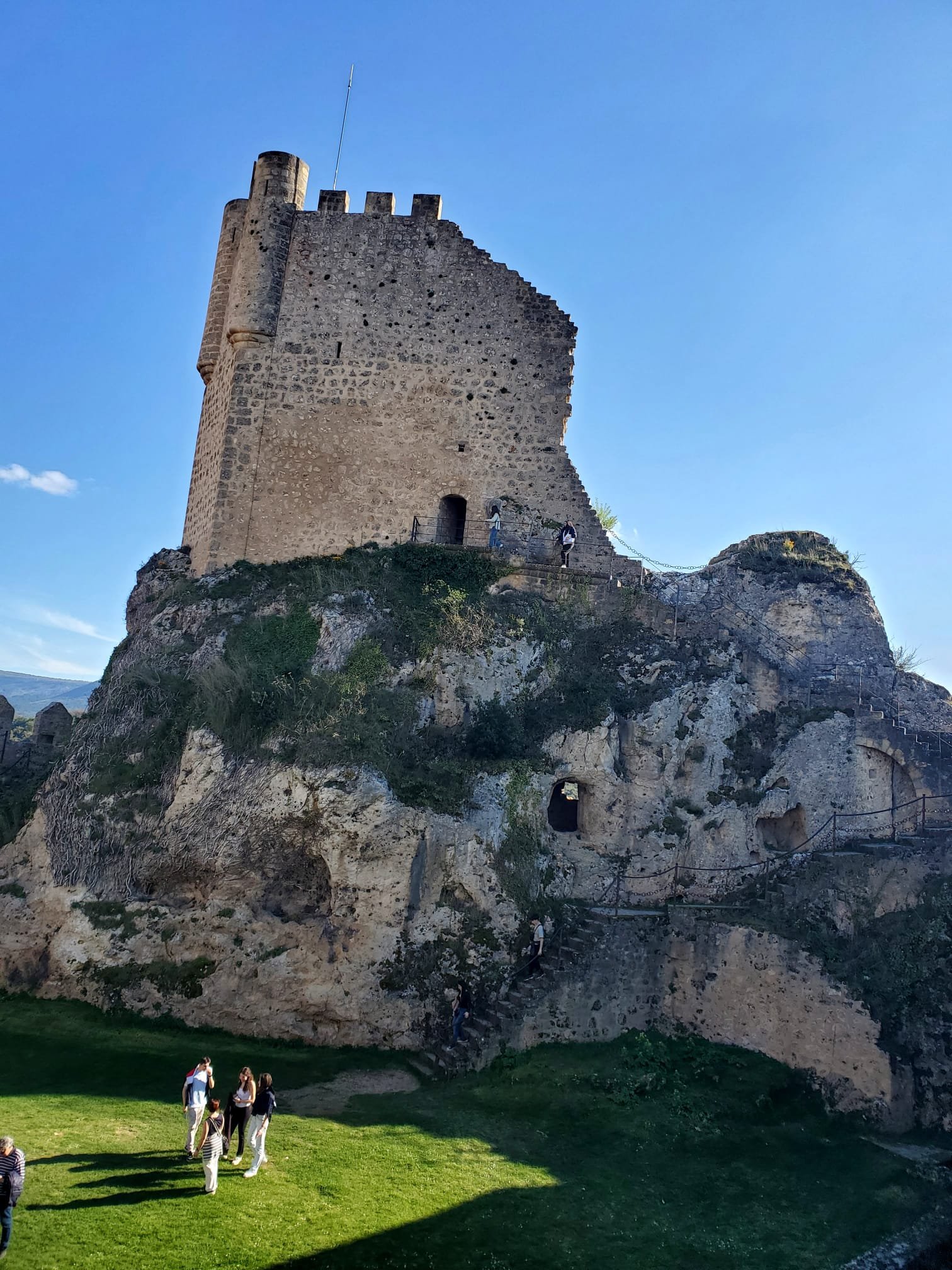
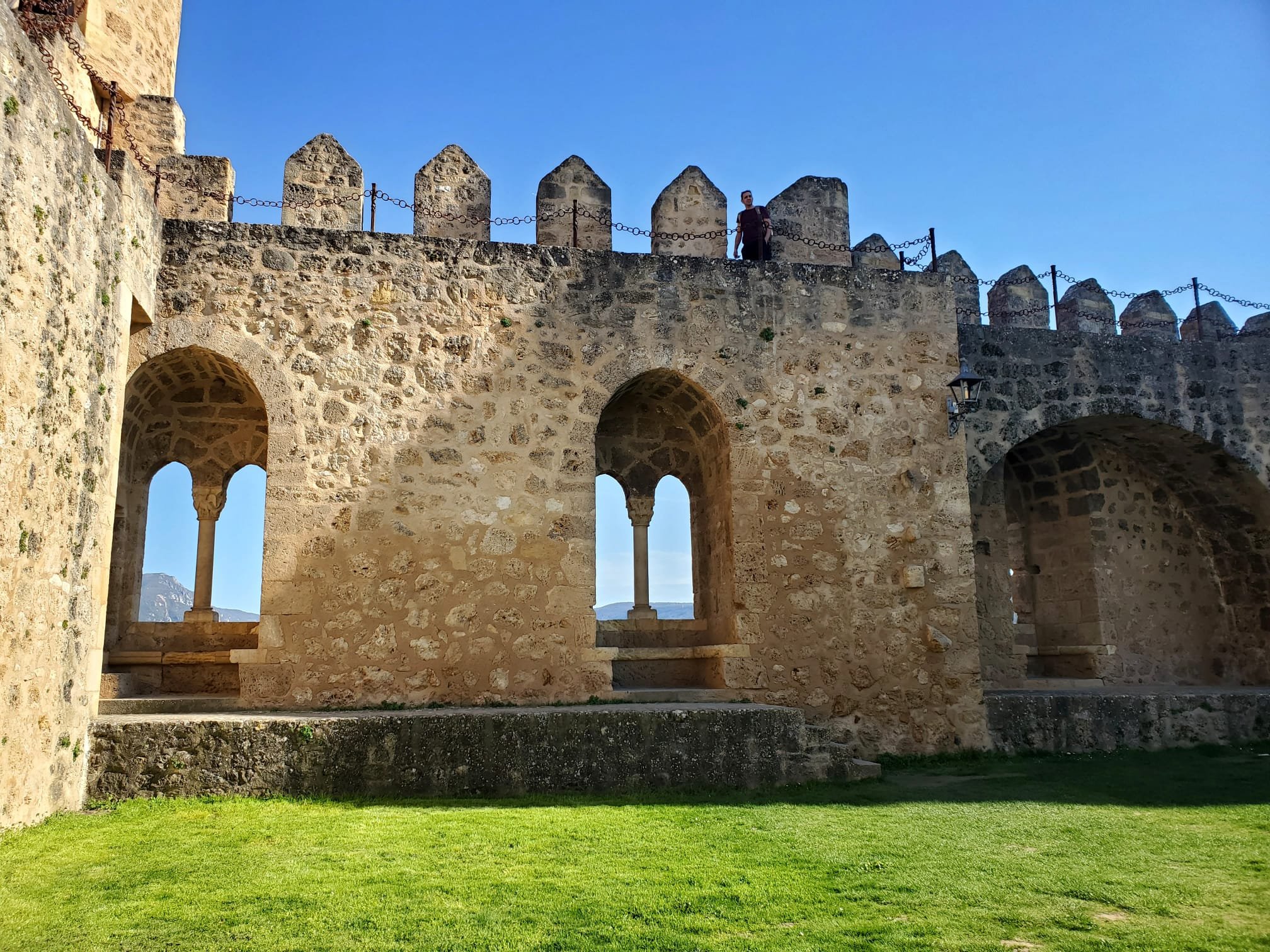
Then we sat at a table outdoors, which gave us a view of the castle UP on the rock/hill, and enjoyed some beer and tapas.
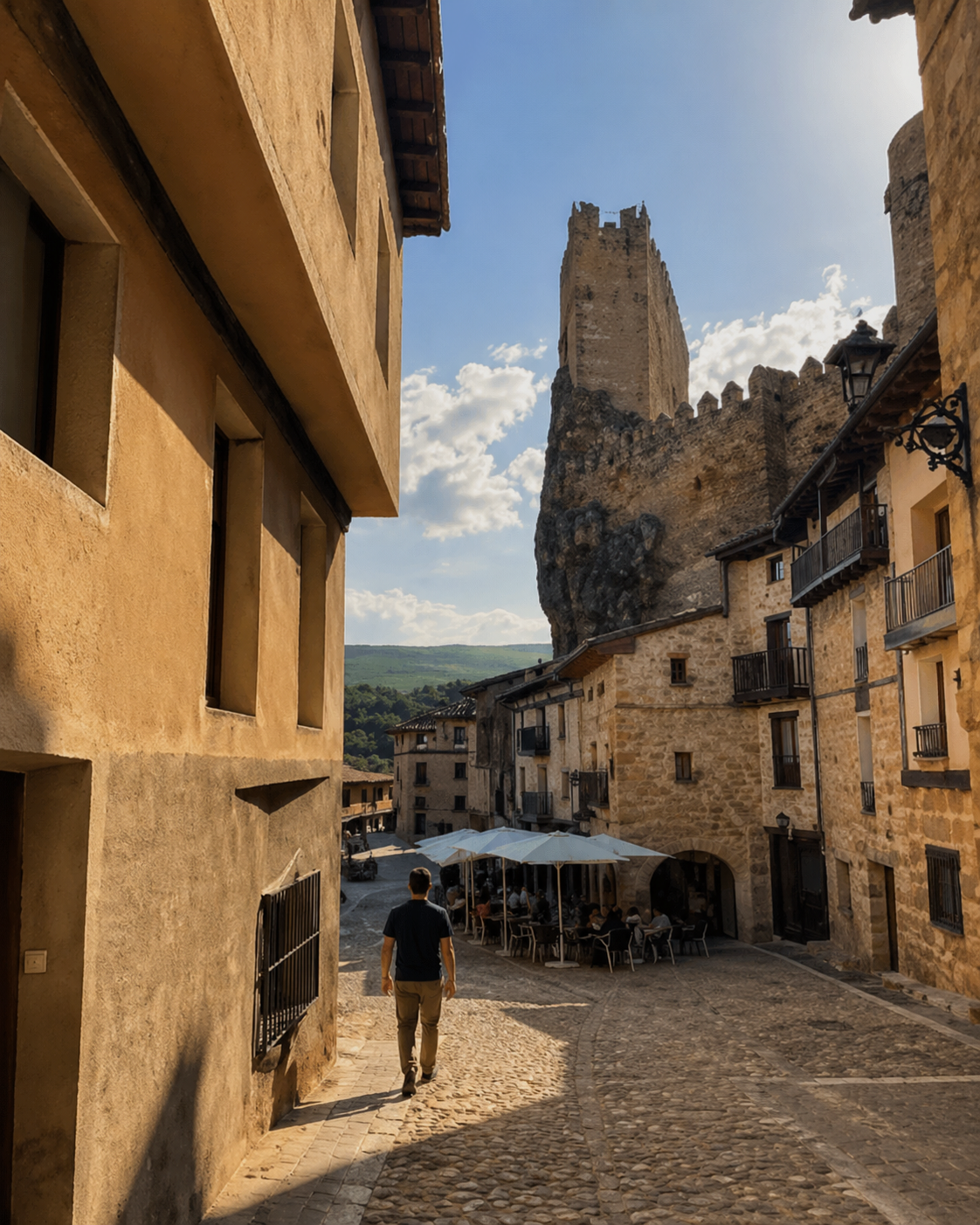
What a trip so far! Beautiful nature, medieval villages, vineyards and good food!
Click here to read the next post Adjusting to Life in Spain: Road Trip Through Spain & Portugal (pt. 3) where we finally make it to Portugal!
Note: All photos taken or created (using DALL-E) by Selena Templeton and Alberto Resino, unless otherwise noted.
If you enjoyed reading this travel blog, check out some of my other adventures:
Adjusting to Life in Spain: Dating in My Non-Native Language
Adjusting to Life in Spain: Using the Spanish Healthcare System
Adjusting to Life in Spain: Damn, I Can’t Find My Favorite Products Here!
From Fiesta Invites to Flamenco Nights: My Adventure in Spain
My Road Trip to the Four Corners: Utah, Colorado, New Mexico, Arizona
