Click here to read the previous post Adjusting to Life in Spain: I Can’t Understand Spoken Spanish (and What Helps)
My boyfriend A and I were sitting in the living room one sunny afternoon, when he suddenly said, “Let’s take a road trip around parts of Spain and then into Portugal!”
He was between jobs with his new one starting a few weeks hence and, after having already enjoyed several weeks of resting, waking without an alarm and working on his own projects, he was keen to take a vacation together.
As for me, you don’t have to say “road trip” twice! I’ve visited plenty of places in Spain by train (like Alcalá de Henares and Ávila), but I was eager to explore by car – seeing out-of-the-way towns even this country’s fine train system doesn’t go to, stopping when and where the mood strikes…. And since I am a freelancer, I could take my laptop with me and work when I needed to.
An hour later, we’d made a plan: Hiking in Parque Natural de las Hoces, Book Museum in Burgos, his friend E in Logroño, tawny port in Porto, Portugal and finally my friend M in Seia, Portugal.
Two days later, we hit the road.
Day 1
We hit the highway heading north from Madrid, one large backpack and one small wheeled suitcase tucked neatly into the trunk of the car. In the console between us was: one water bottle, one partially eaten package of black licorice, one phone charger, one audiobook (well, it was on my phone) and two cameras (also on our phones).
The day was sunny and warm, so we had the windows open, and I felt excited as I watched the city slowly morph into the suburbs, the outskirts and finally the countryside.
Parque Natural de las Hoces del Río Duratón
About two hours (and 150 km/93 miles) later, we arrived in Parque Natural de las Hoces del Río Duratón (Duratón River Gorge Natural Park) in the province of Segovia, Spain.
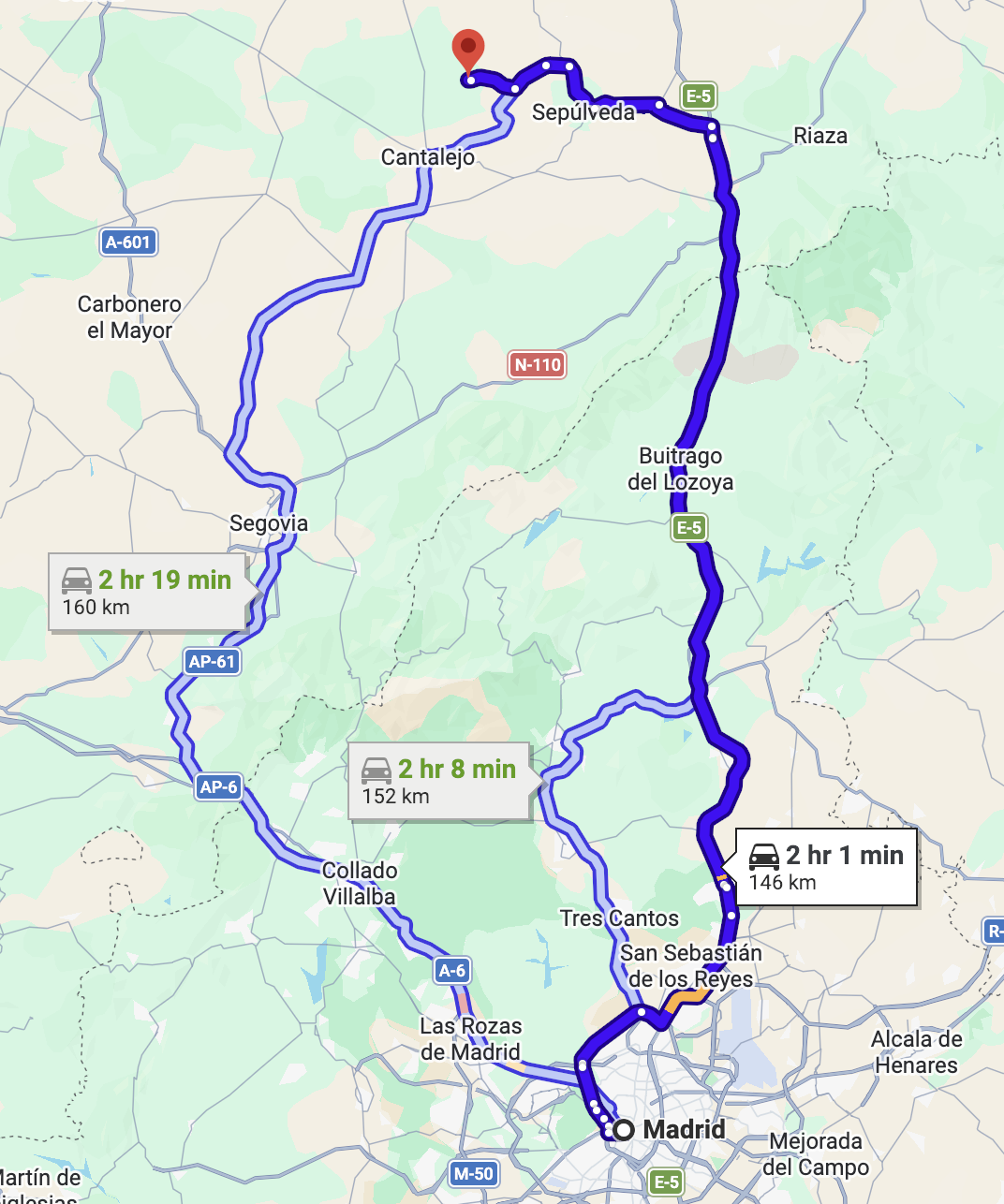
As we pulled into the small, gravel parking lot, already in our hiking gear, ready to get going, a park ranger who was heading out of the lot in his truck told us you needed a pass to hike anywhere but the most immediate trails. Since we’d planned to do the full hike (or as near to “full” as possible with a slightly late departure from home), we asked what we could do. He pointed to a big “About the Park” sign and told us to call the number on it. So A called, provided the necessary info, and five minutes later they’d emailed him our hiking pass.
The Parque Natural de las Hoces del Río Duratón is one of the most dramatic river landscapes in central Spain.
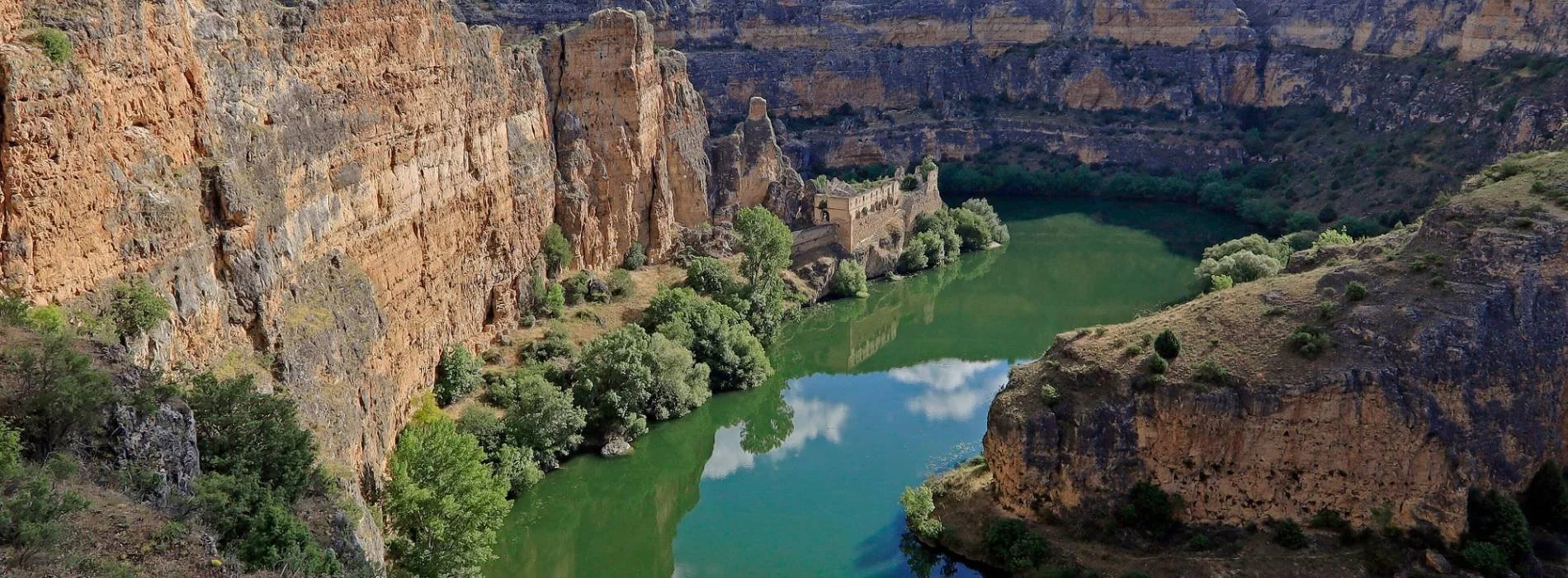
Source: Turismo Castilla y León
The Duratón has carved a long limestone canyon with cliffs that can rise to around 100 meters and have large patches of beautiful ochre color.
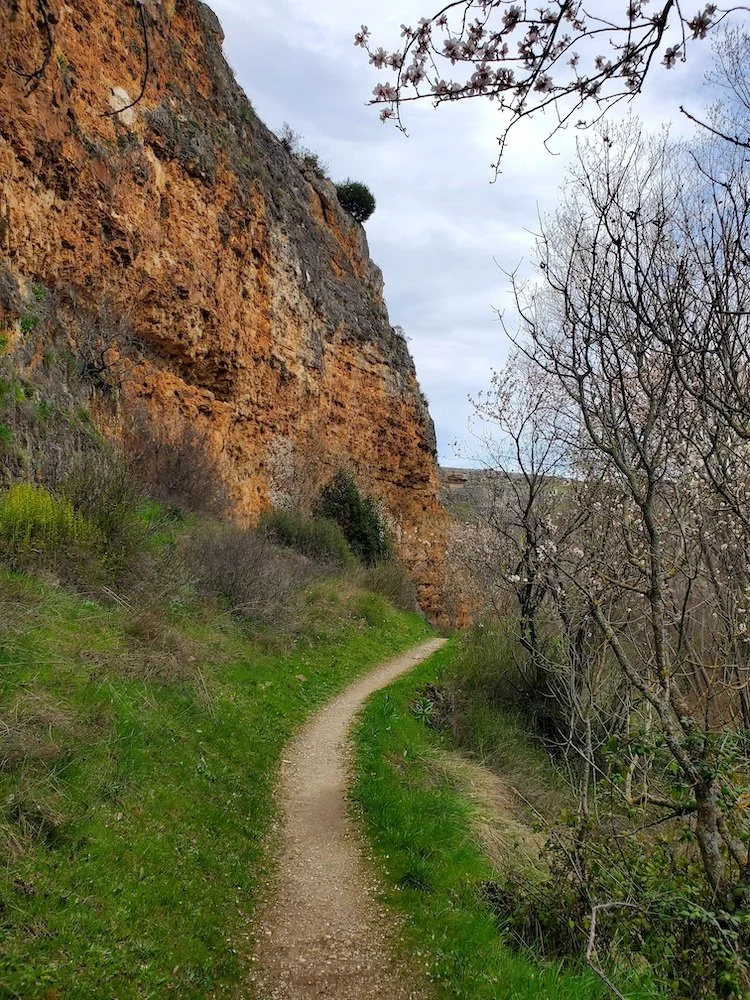
The Hoces del Río Duratón canyon has “a rich archaeological and historical heritage, including the Benedictine Priory of San Frutos and the Convent of Nuestra Señora de la Hoz…. [There are also] caves with Bronze Age engravings.” These aren’t them (as you can see, the date engraved on the photo below is 1889), but still…interesting!
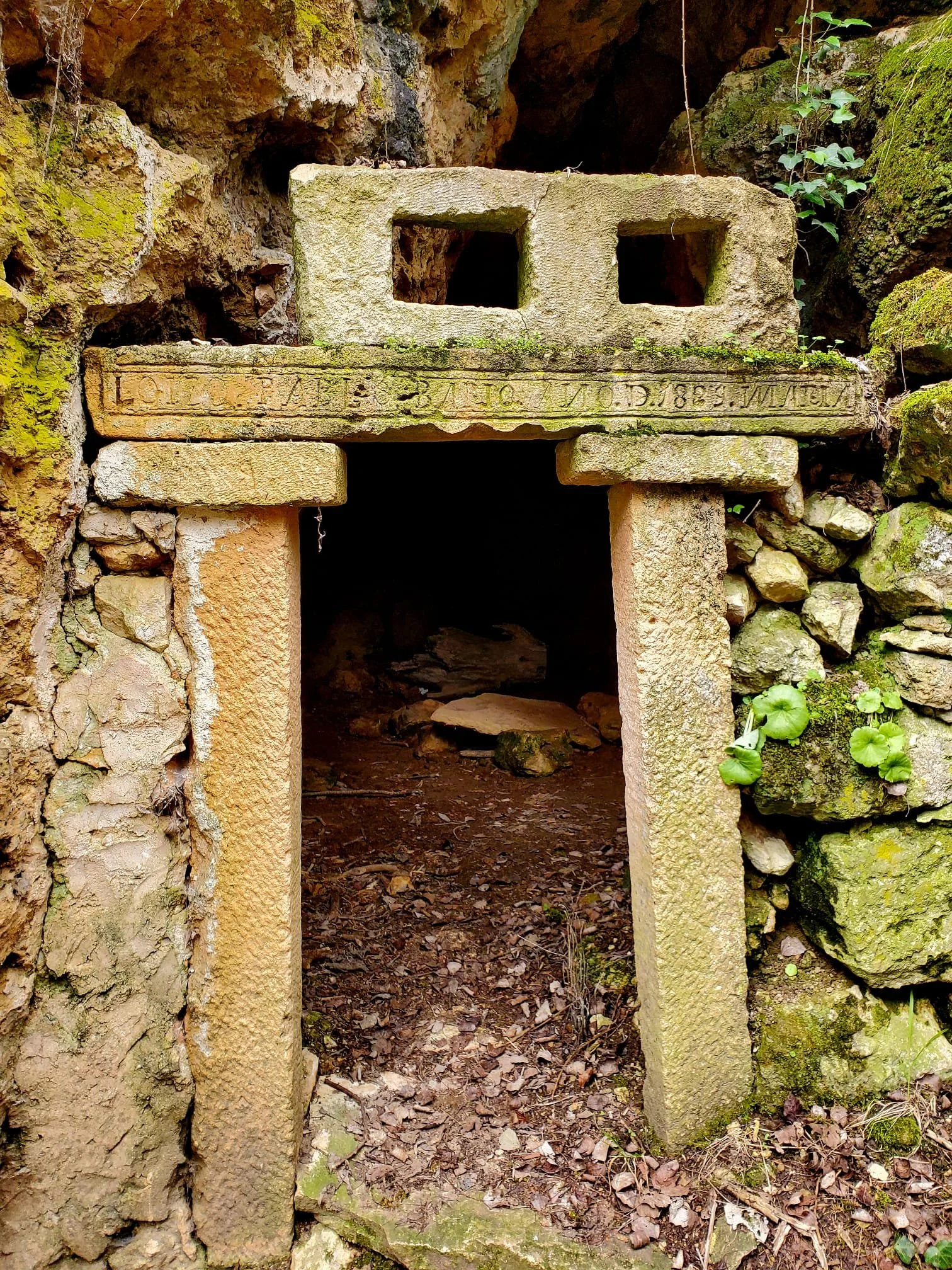
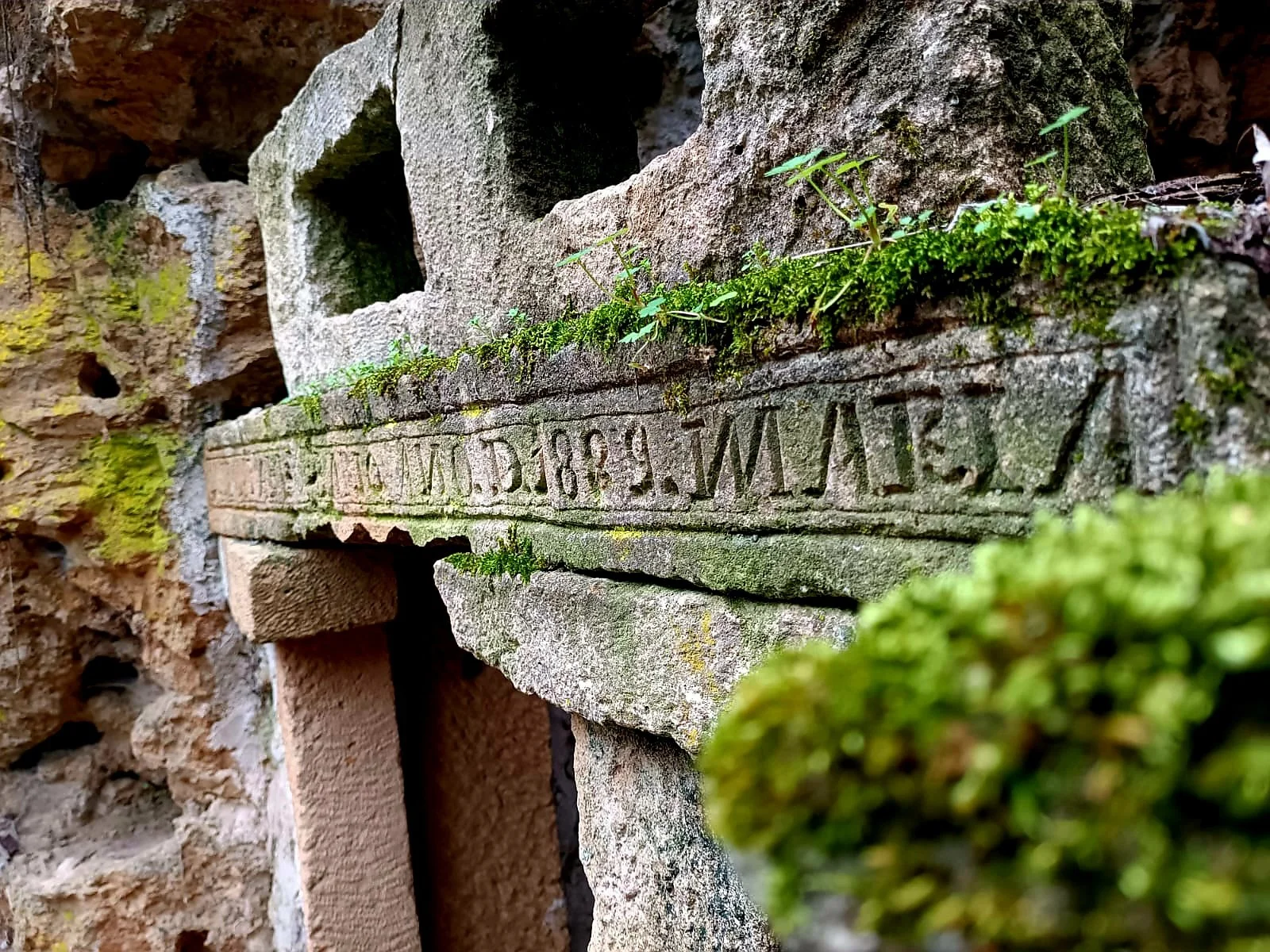
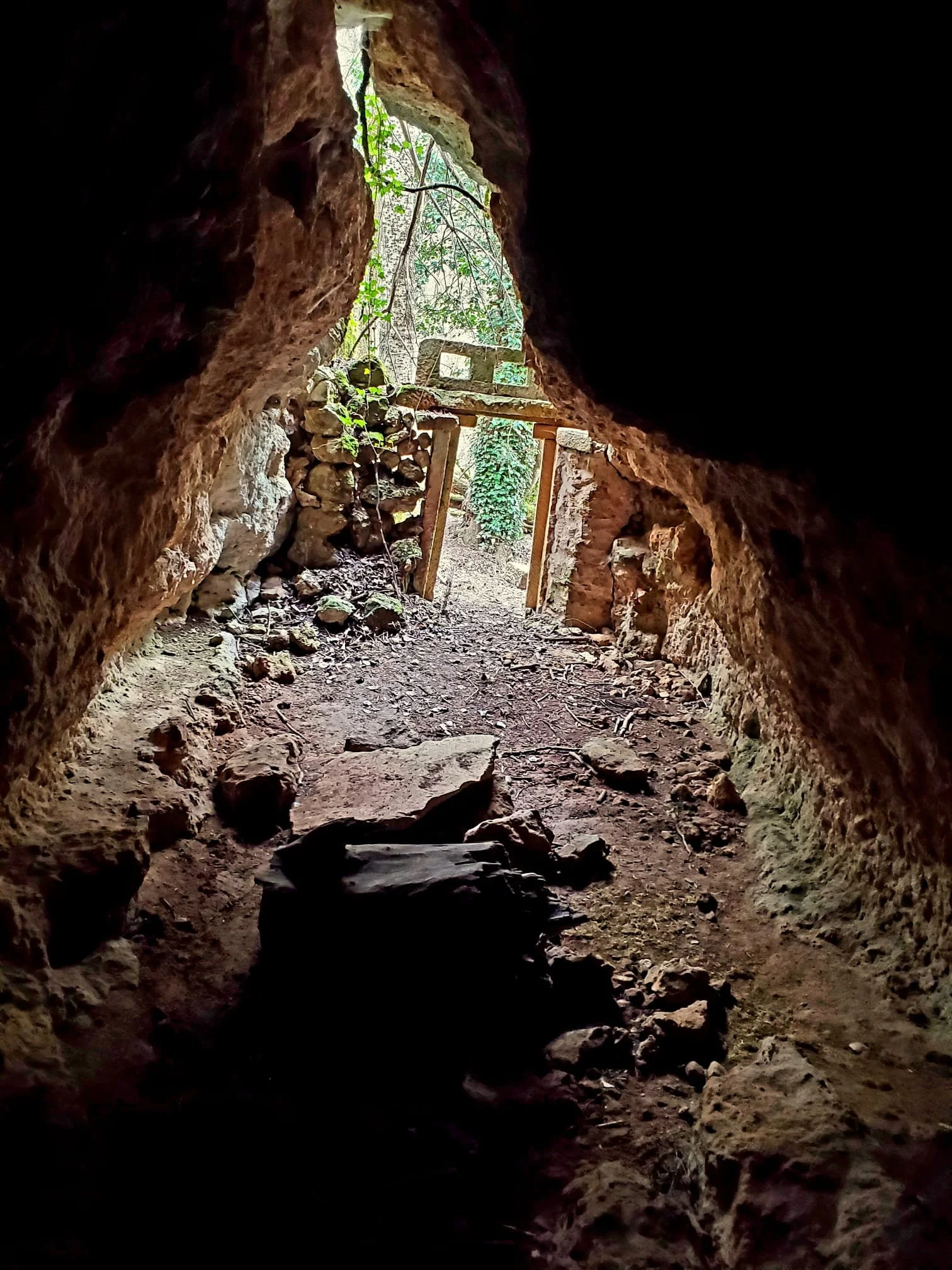
But the main reason A wanted to take me here was to birdwatch – or, more specifically, vulture-watch. It’s particularly known for its large colony of griffon vultures, which is why a park pass is needed: They only let a small number of hikers in at a time so as not to disturb the birds.
We used binoculars to watch them coast around in circles, land on narrow cliff edges and hang out at their nests.
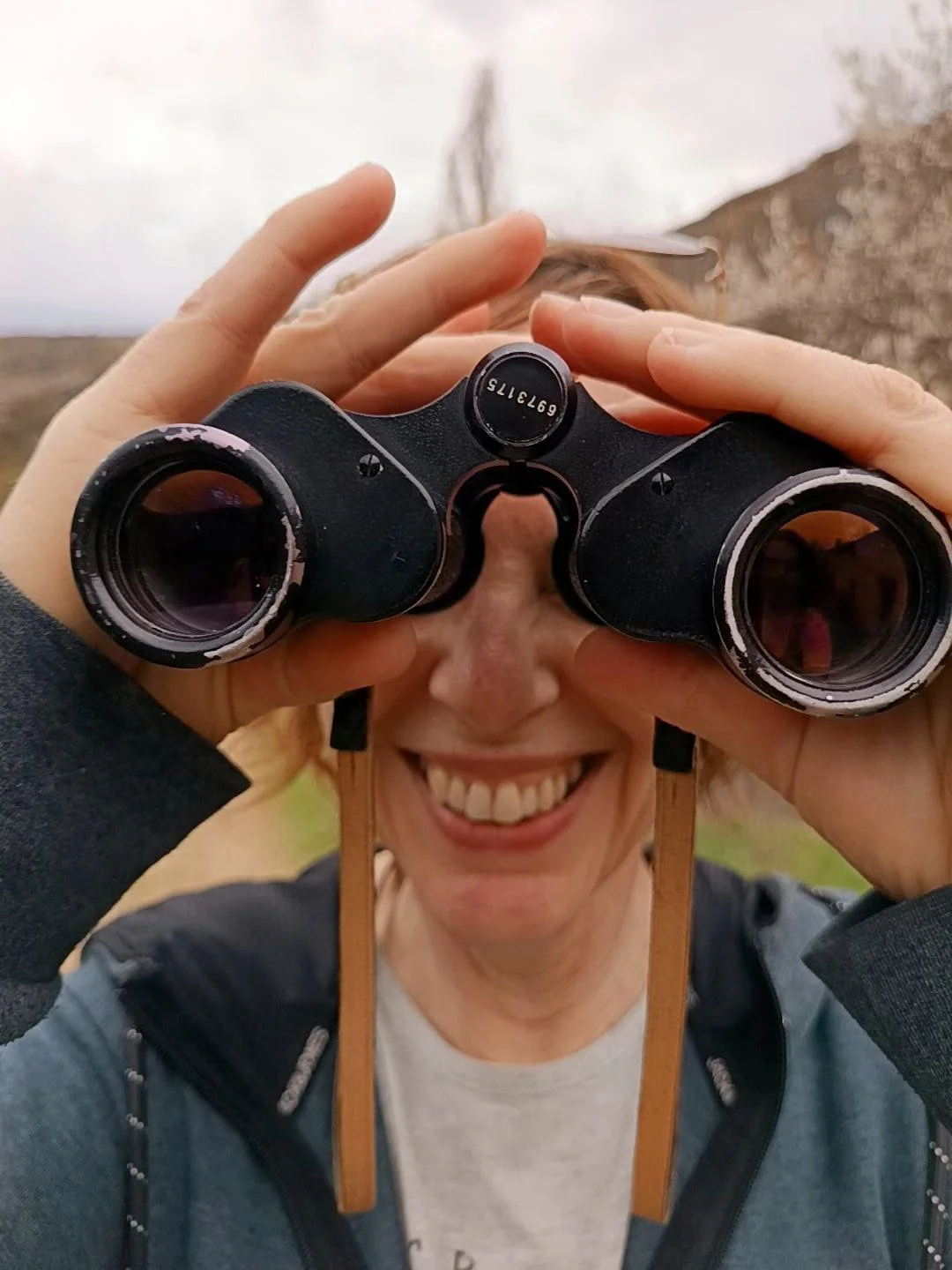
We stopped to rest, propped up against a fallen tree, and just listened to the silence. Well, until the crunching of our apples and walnuts put a stop to that. We did not, due to the aforementioned late start, get to do the full hike, but we did manage to do 12 km/7.5 miles in a beautiful setting with nary another soul to be seen.
Sepúlveda
After the hike, we drove about 20 km (12.5 miles) to Sepúlveda, also in the province of Segovia, on a narrow road that winds its way up the hillside with some tight bends and great views.
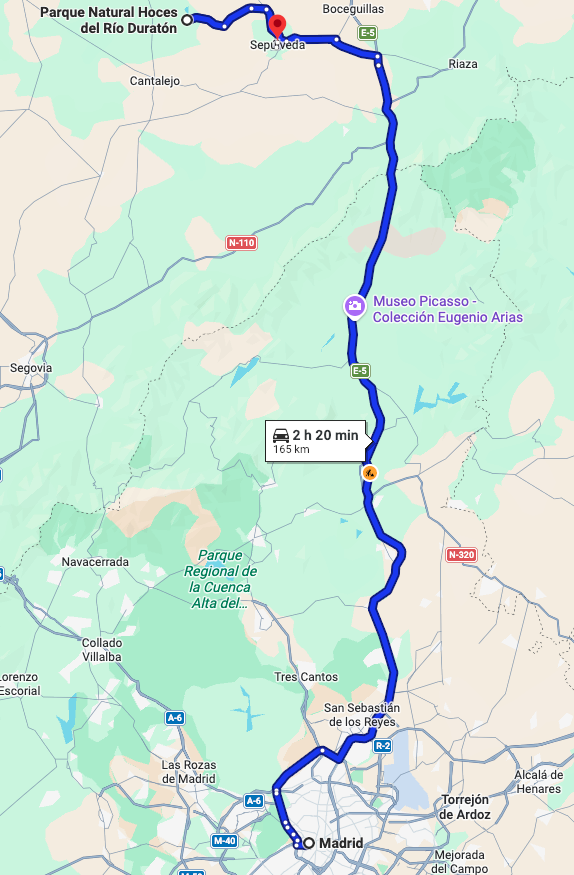
Sepúlveda, with a population of about 977, is part medieval town, part landmark, part wildlife haven, and part culinary destination – so they say.
We arrived at the Posada de San Millán, where we were spending the night, in the pueblo’s historic quarter (although, honestly, the whole town looked like the historic quarter). It’s the oldest building in the pueblo, and the front is a Romanesque façade that dates back to the 12th century...
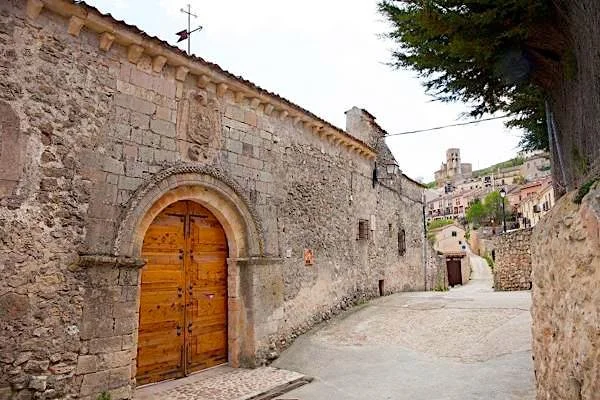
Source: Terranostrum
...while the rest of the building is from the late 15th century.
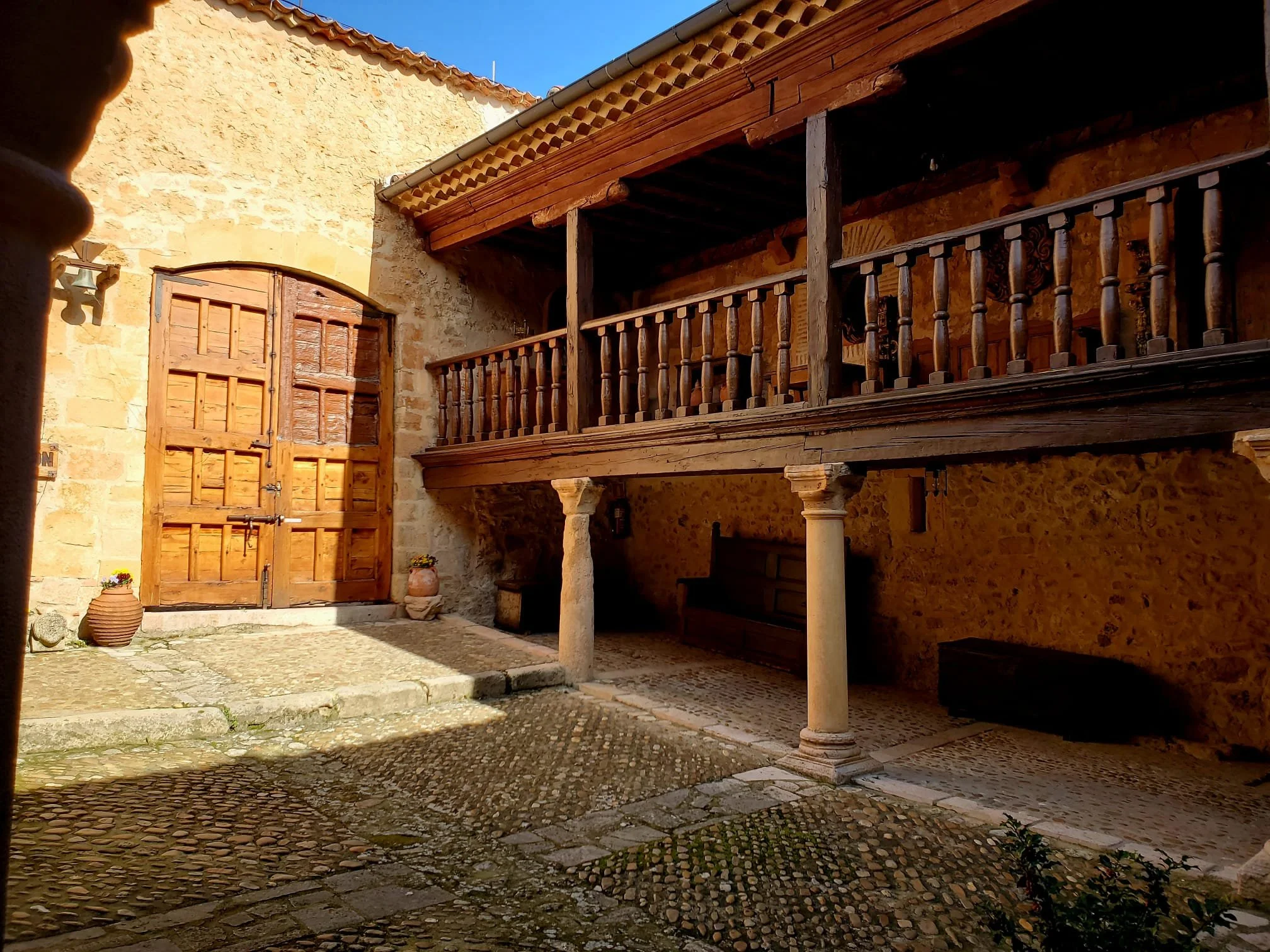
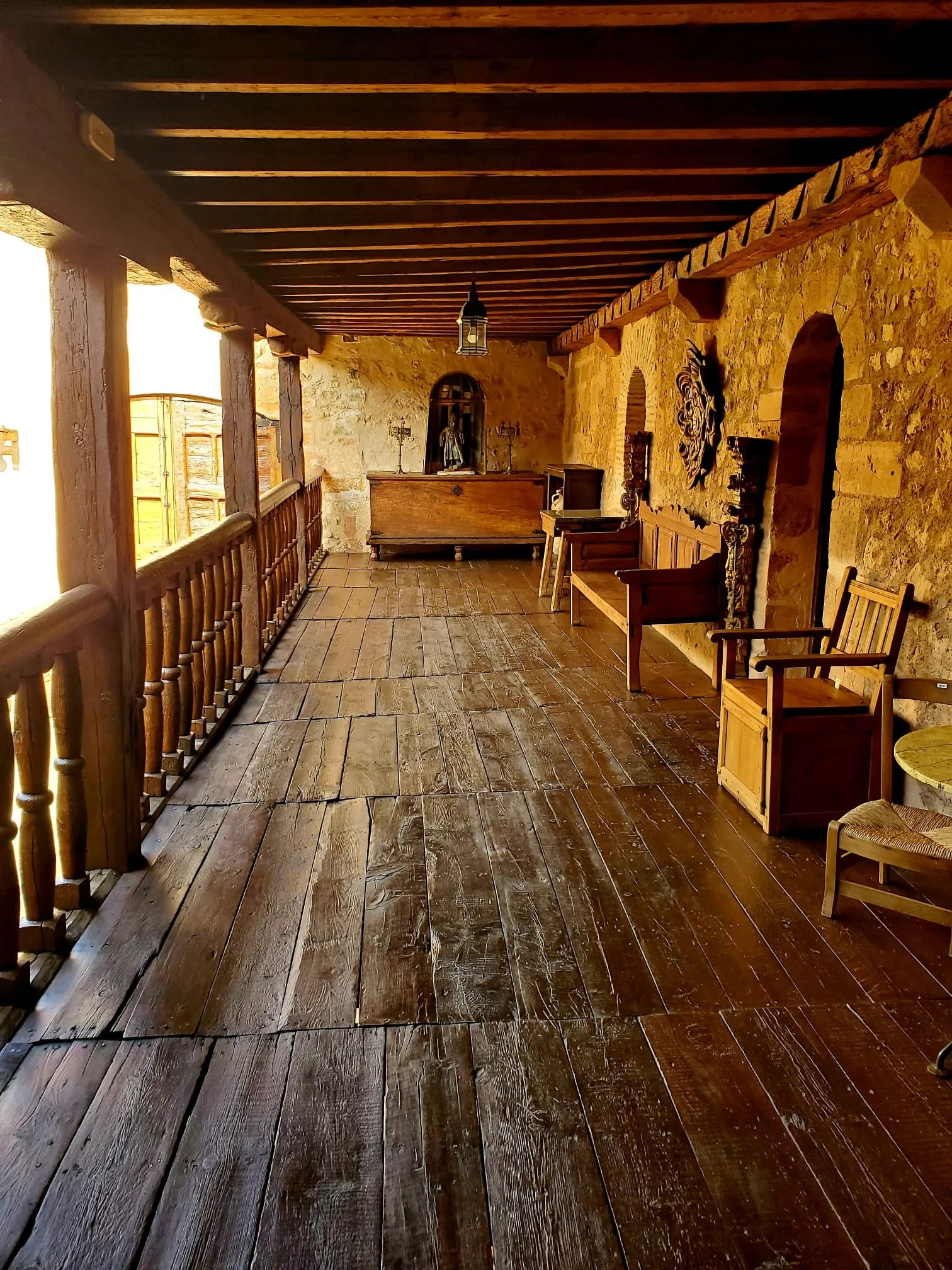
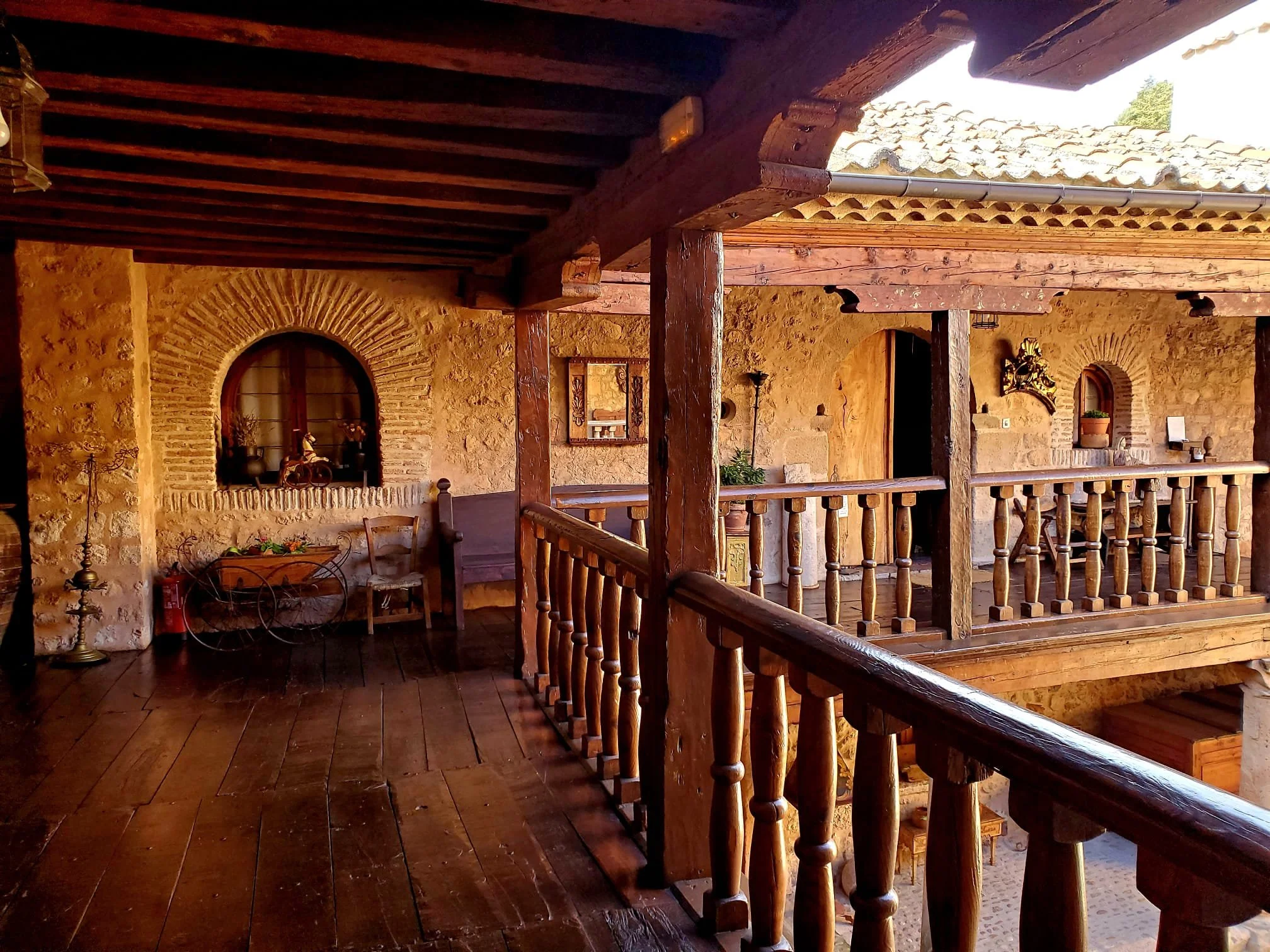
A very friendly man named Rrrrrobby (Robby but with a Spanish accent) checked us in, showed us around and told us about the building (the above-mentioned bits of info). Our room was lovely and the garden out back had a gorgeous view of Sepúlveda.
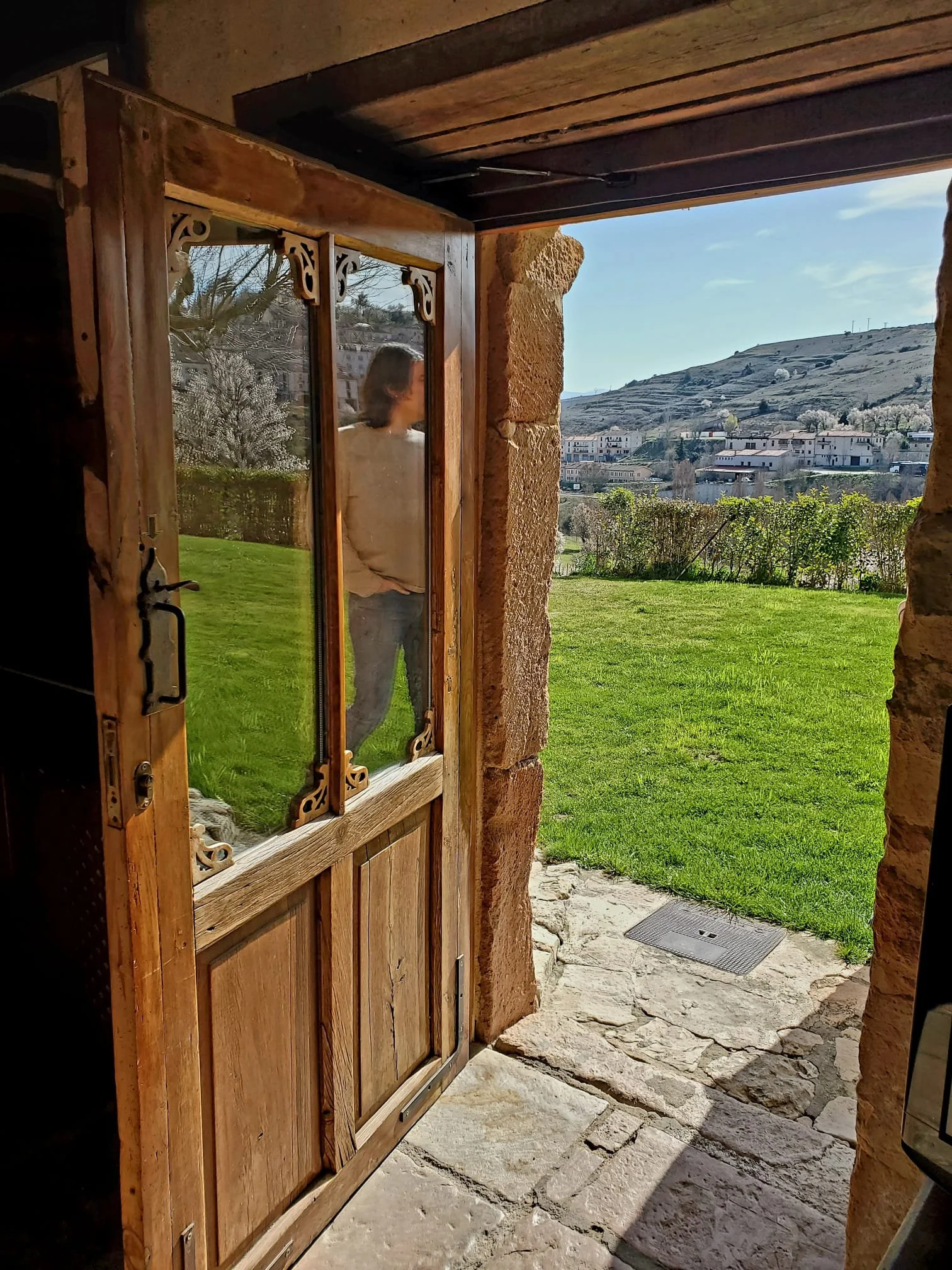
We set out on foot to explore the pueblo and find somewhere to eat. At first I was admiring the fantastic architecture that just screams “history!!”, the narrow cobblestone streets (yes, I’m obsessed with narrow cobblestone streets) and the views.
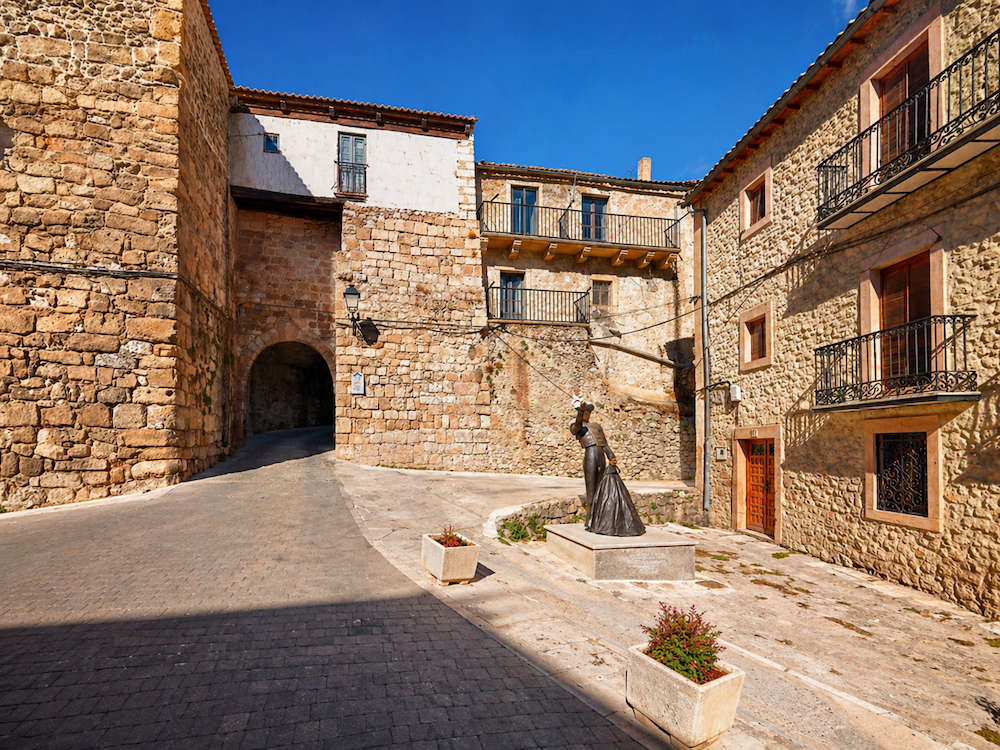
But soon A and I turned to each other and said, “Where is everyone??” Shops and bars were closed, we passed only one or two people and the main plaza was a wide open expanse of emptiness.
We stopped a woman on the street to ask her, and she said the only place open that night (it was a Wednesday around 7pm) was a bar called DeCanto, but not until 8pm. She suggested that if we hang out in front of the place, they might open early. With no other choice, we did just that: sat on a stone ledge on the other side of the narrow street and looked on Maps for the closest town that might actually have restaurants.
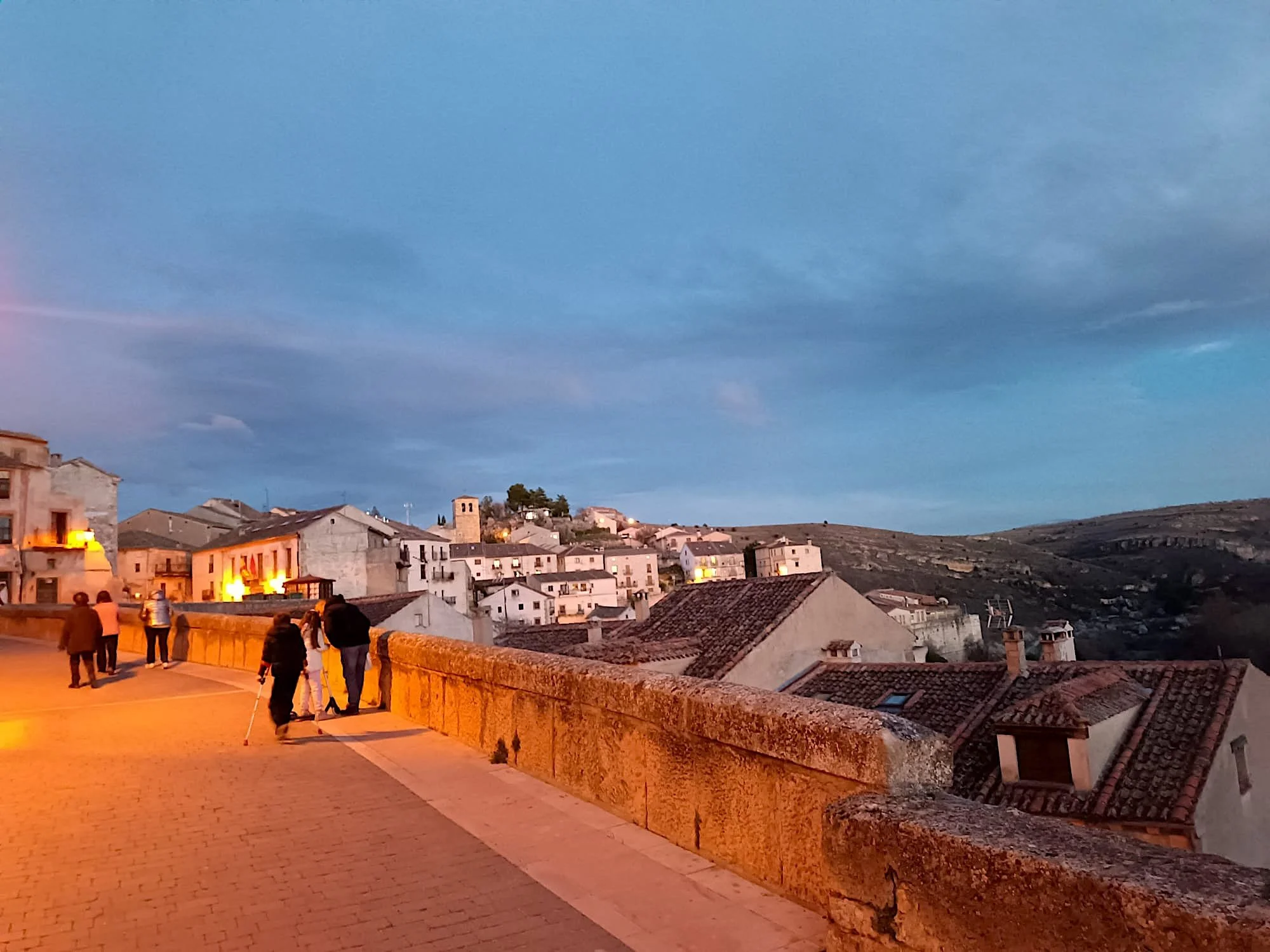
About 15 minutes later, the doors opened. (Did they see us lurking and open early for us?) We had tapas and local red wine (Vizcarra), which was delicious, while we planned the next leg of our trip.
Day 2
After awakening in the super comfortable bed in our super quiet room at the Posada de San Millan, we packed up and went downstairs for a traditional Spanish breakfast (ham, cheese, bread, with crushed tomatoes and olive oil on the side, fruit, orange juice and café con leche), which was included in the price of the room: €78 (about $91 USD or $125 CDN).
Bodega Vizcarra
We had been so enamored with the red wine from last night’s dinner that we decided to add a bit of a detour on our way up to Burgos: Bodega Vizcarra in the Ribera del Duero region.
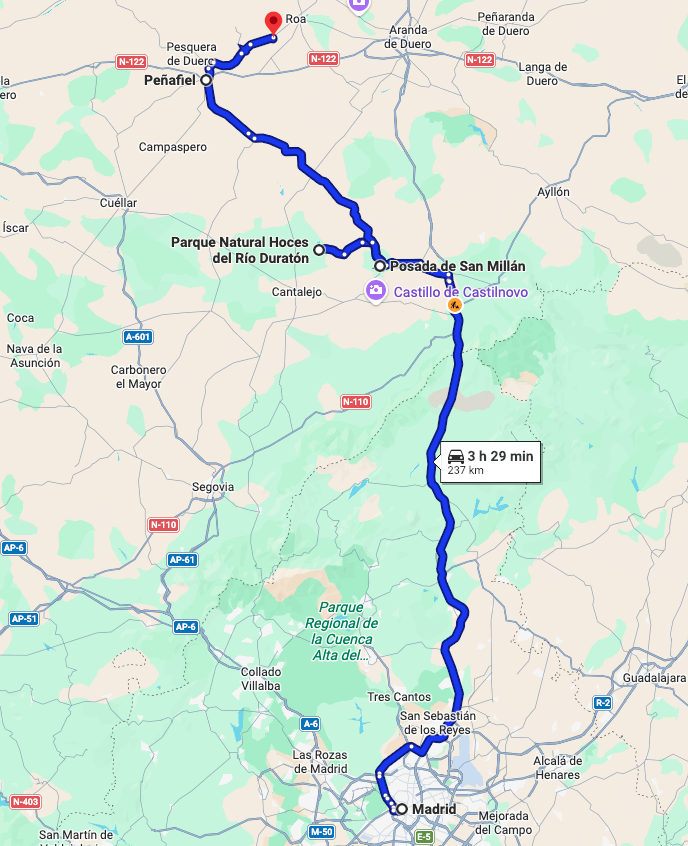
By the way, this is what I friggin’ love about road trips – the spontaneity! Our plan was to stop in, buy a case of this wine and continue on our way. Presumably they’d sell to walk-ins, but it was a small winery, so who knew.
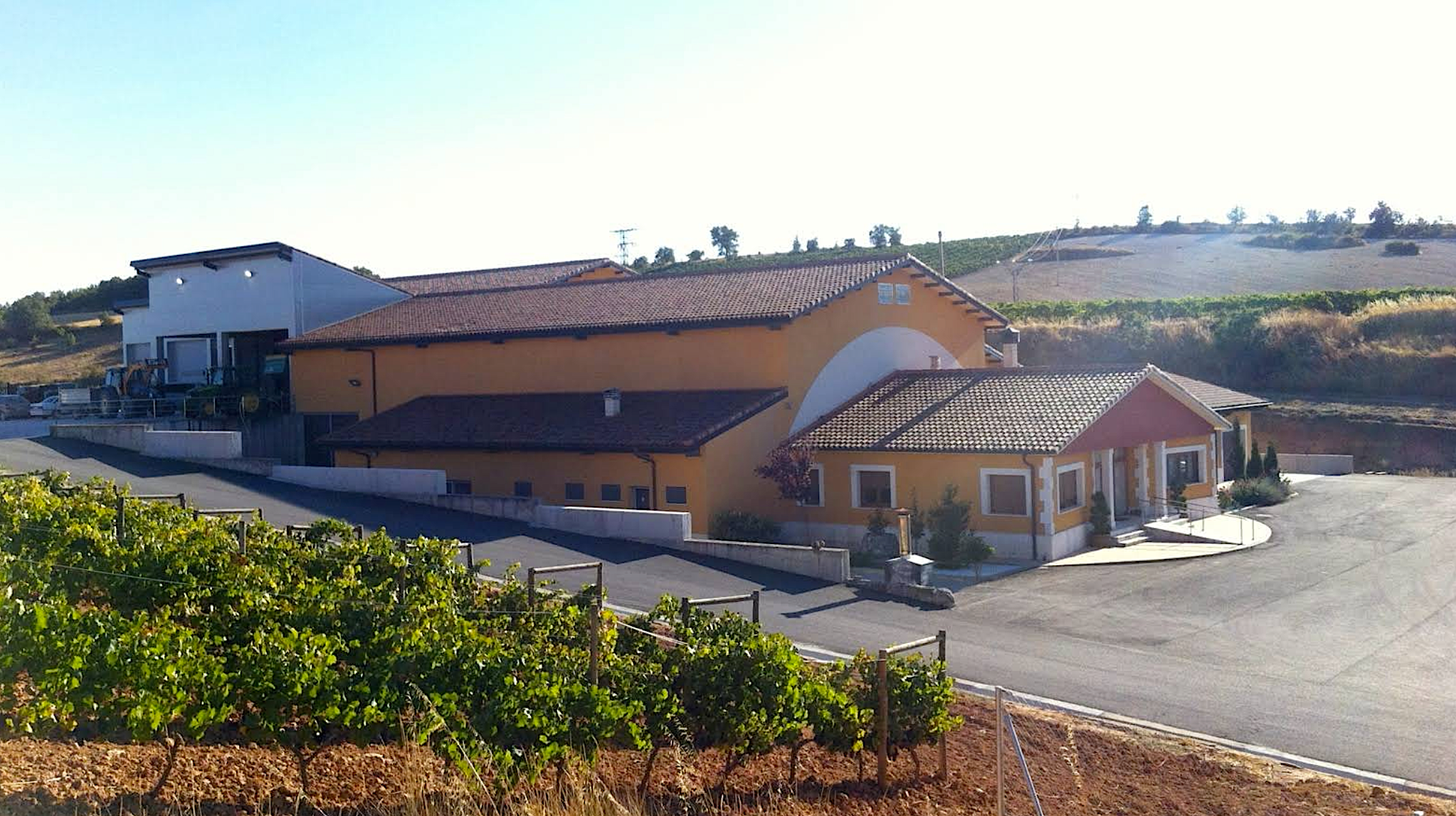
Less than an hour later, we arrived and entered the bodega. It was empty, but a minute later a woman came striding out of the door, saw us and asked if she could help us. We explained our desire and she asked us to wait as she disappeared through a different door.
Source: Maps
A moment later the owner poked his head out of that door and then, instead of simply selling us their wine, cheerfully invited us into the room for a private wine and cheese tasting he was doing for his friends (which also included freshly sliced jamón). The owner, his daughter, the two friends, and A and I had a friendly conversation (well, sans me, since they all spoke so rapidly that I mostly had no clue what they were saying) while tasting two or three different wines, and next thing we knew an hour had passed.
Then the daughter gave us an impromptu tour of their wine-making process (in English, bless her bilingual heart!) and, finally, we bought a small case of their Vizcarra Senda del Oro and headed out amid very warm goodbyes. Now that’s good service!
Bodegas Carrillo García
An hour and 80 km (50 miles) later, we stopped in at the Bodegas Carrillo García, also in the Ribera del Duero region, to see if we could buy a case of one of their wines.
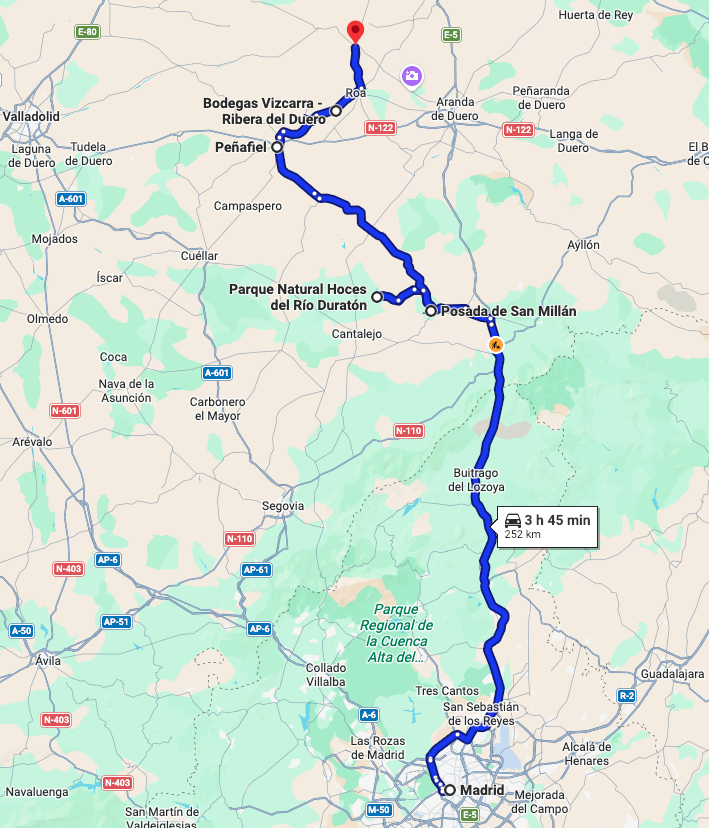
Several weeks ago A and I had gone to a small market in Madrid for tapas, and the glass of red wine we’d ordered turned out to be excellent. The bartender told us that a wine store in the market sold that wine, and we bought a couple bottles. It was so delicious and so ridiculously cheap (a few Euros per bottle), we decided to pop in at the winery on our road trip and stock up.
Still buzzing from our recent impromptu wine tasting and chat, we strolled into the warehouse (after circling the building looking for a main entrance). The lone guy working there was happy to sell it to us, but when A asked for recommendations for their other wines, the guy said he had no idea since he didn’t drink wine. I guess the owner didn’t have to worry about this worker drinking on the job.
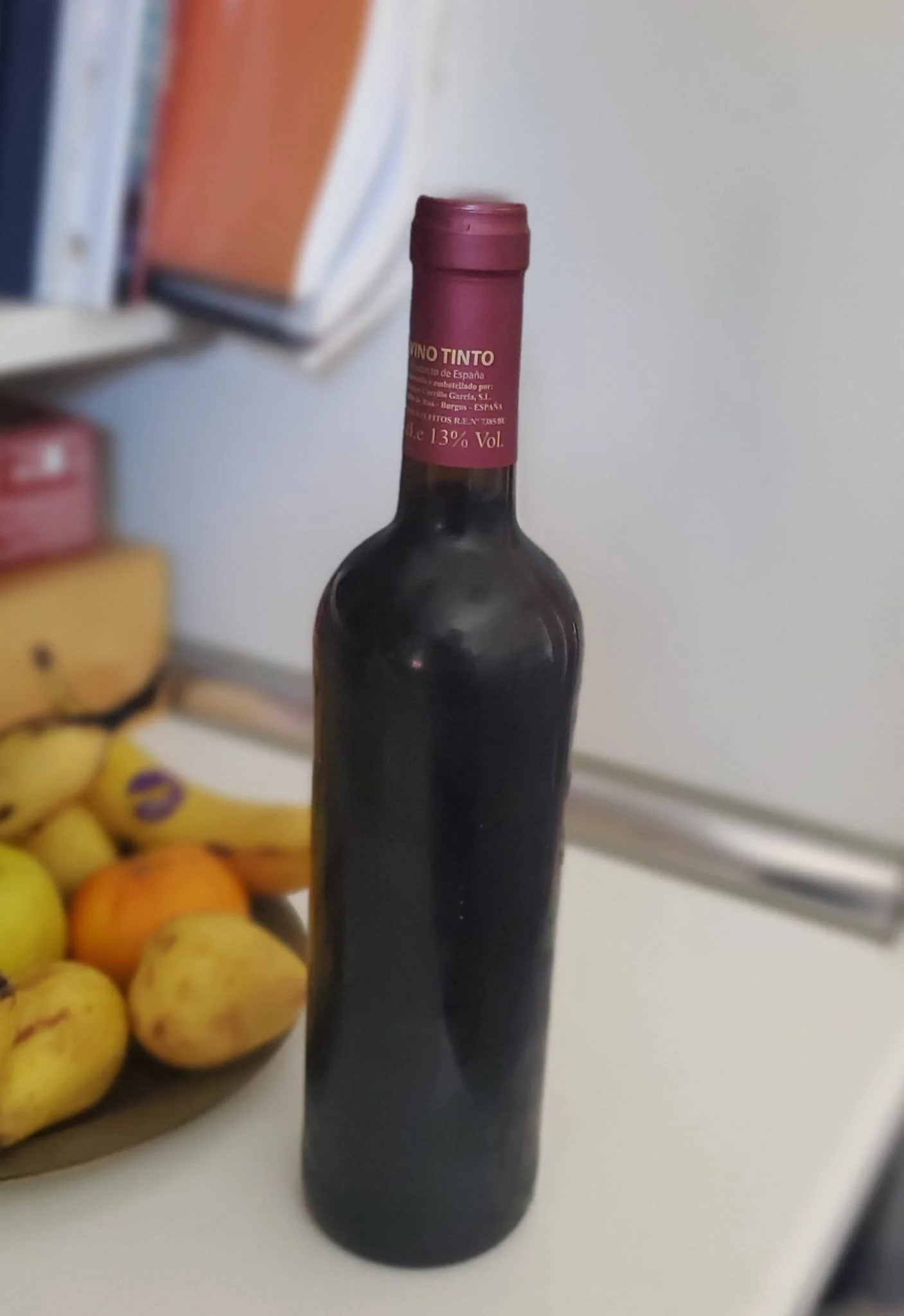
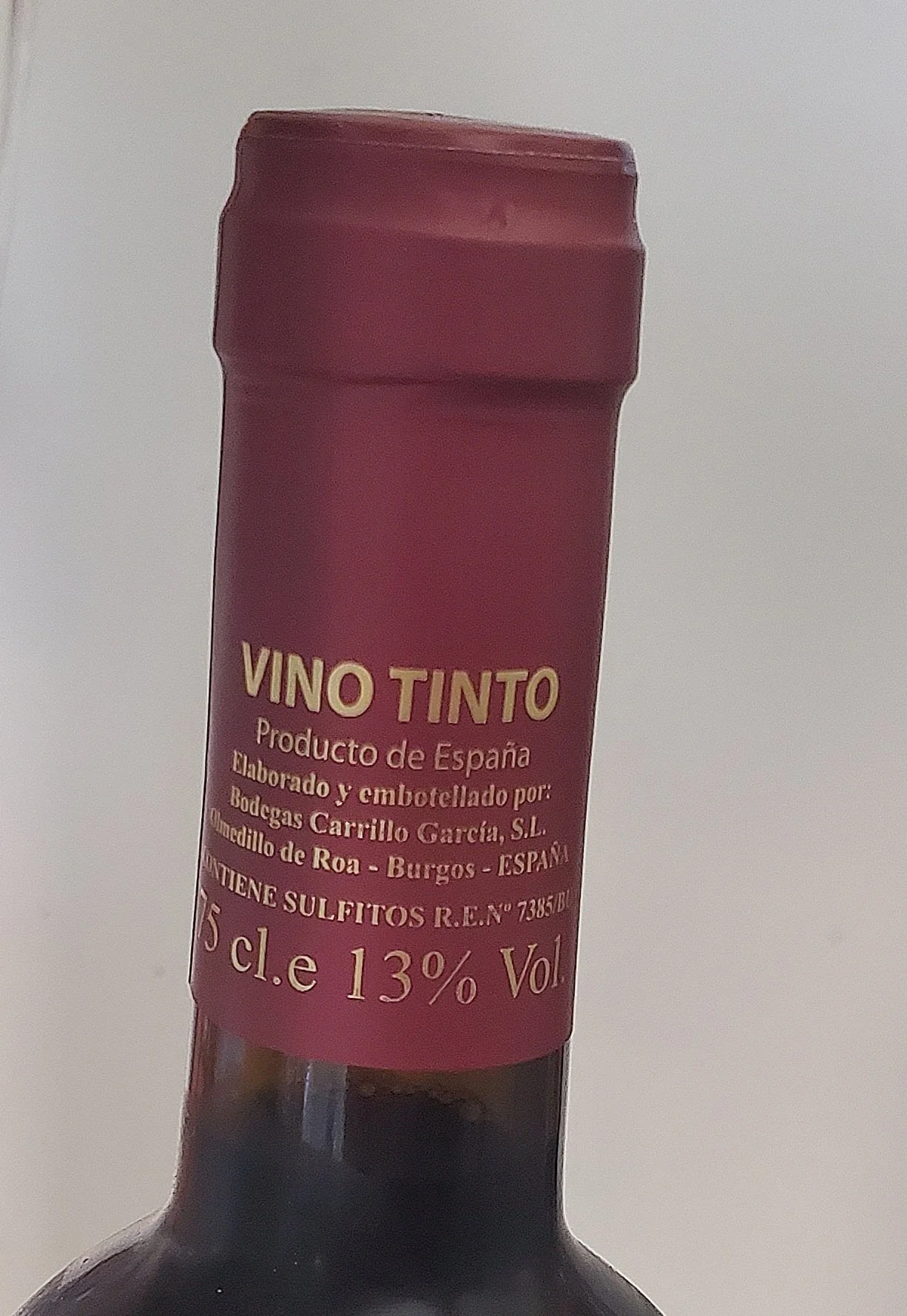
The odd thing about this wine is that there is no label, aside from a small one on the neck saying “Vino Tinto” (which is pretty obvious) from Bodegas Carrillo Garcia S.L. (which is pretty helpful). This is considered “cosecheros sin etiqueta” (harvesters without label).
Trunk of our car stocked up, off we went!
Covarrubias, Burgos
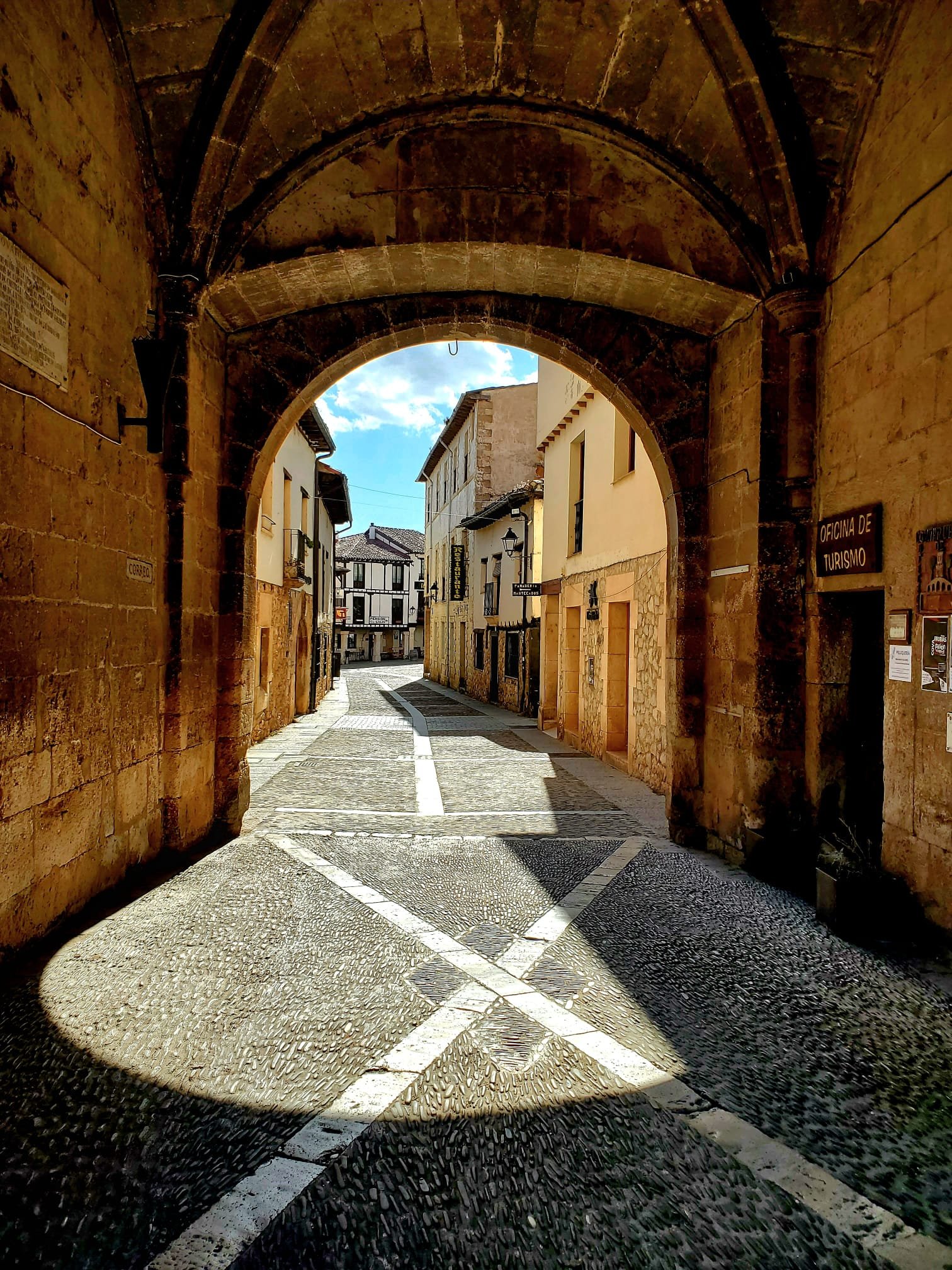
An hour later (60 km/37 miles), we arrived in Covarrubias, in the province of Burgos (and the autonomous community of Castile and León), to visit the Museo del Libro (Book Museum).
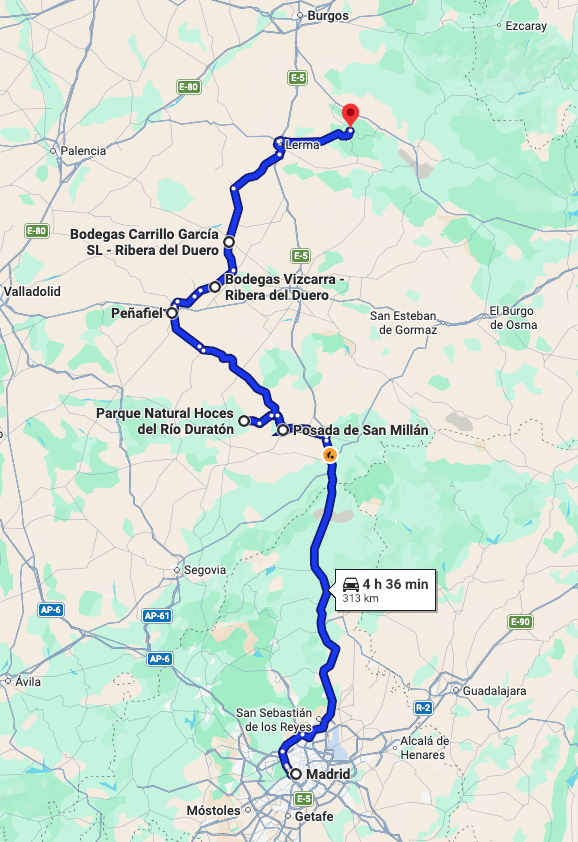
We had originally planned to also visit, in the city of Burgos, the Museo de la Evolución Humana (Museum of Human Evolution) and the Catedral de Santa María de Burgos (Burgos Cathedral), but with the spontaneous stops at the two bodegas, we ran out of time. Plus, we decided that when we did return for the Museum of Human Evolution, we’d also visit Atapuerca, a major archeological and fossil site that has evidence of some of the earliest humans in western Europe (and some of the oldest human DNA)!
Today, however, it was just the history of the book.
The Museo del Libro is a fantastic old building in Covarrubias, a village of 640 inhabitants with medieval streets and timber-and-adobe houses (that kind of reminded me of Swiss architecture). Interesting trivia: In the 1200s, Princess Kristina of Norway came here for an arranged marriage to Prince Philip of Castile, died in 1262 at the age of 28, and was entombed inside the Collegiate Church of San Cosme y San Damián, making her a rare Norse royal to be buried outside of Scandinavia.
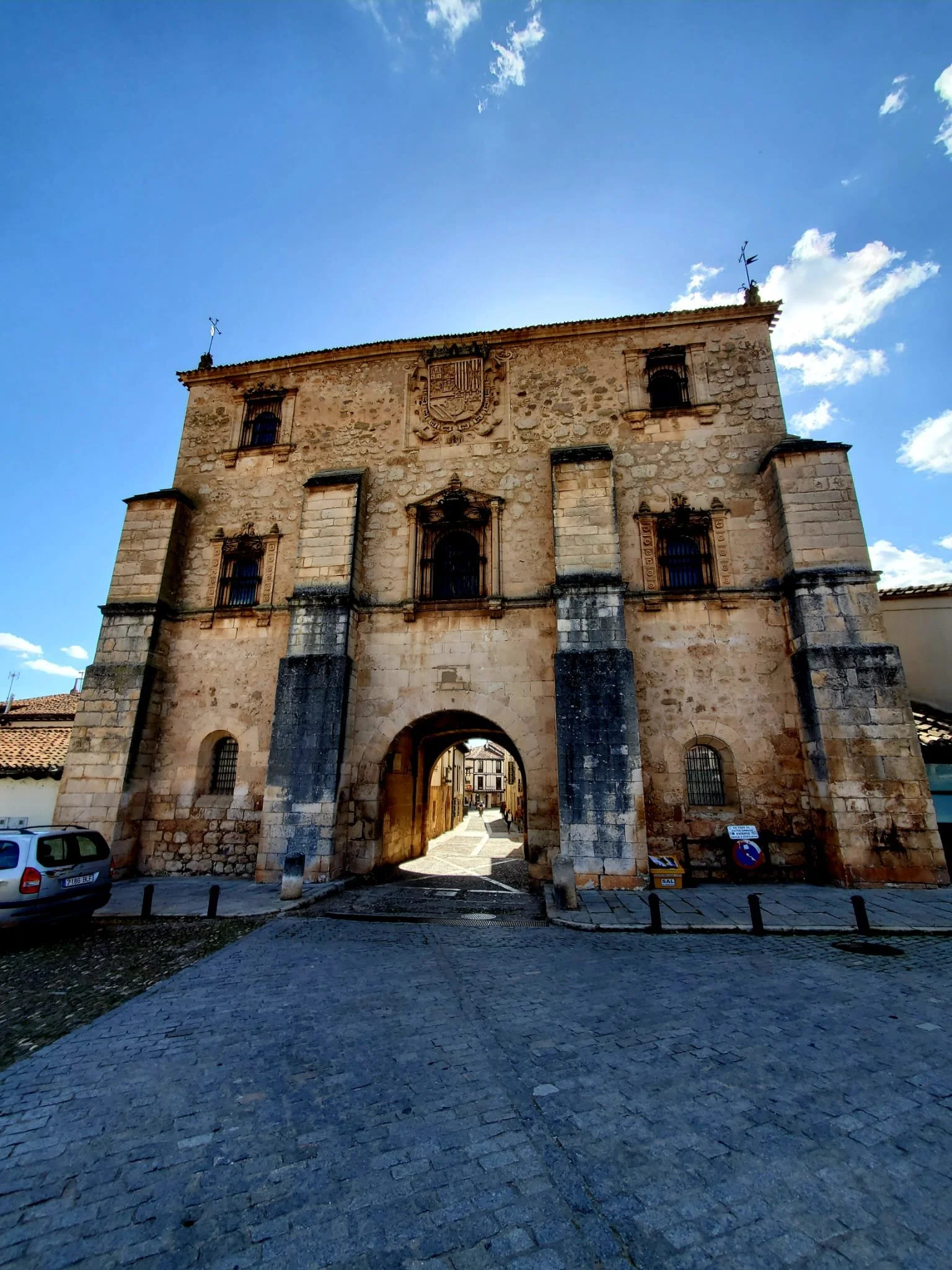
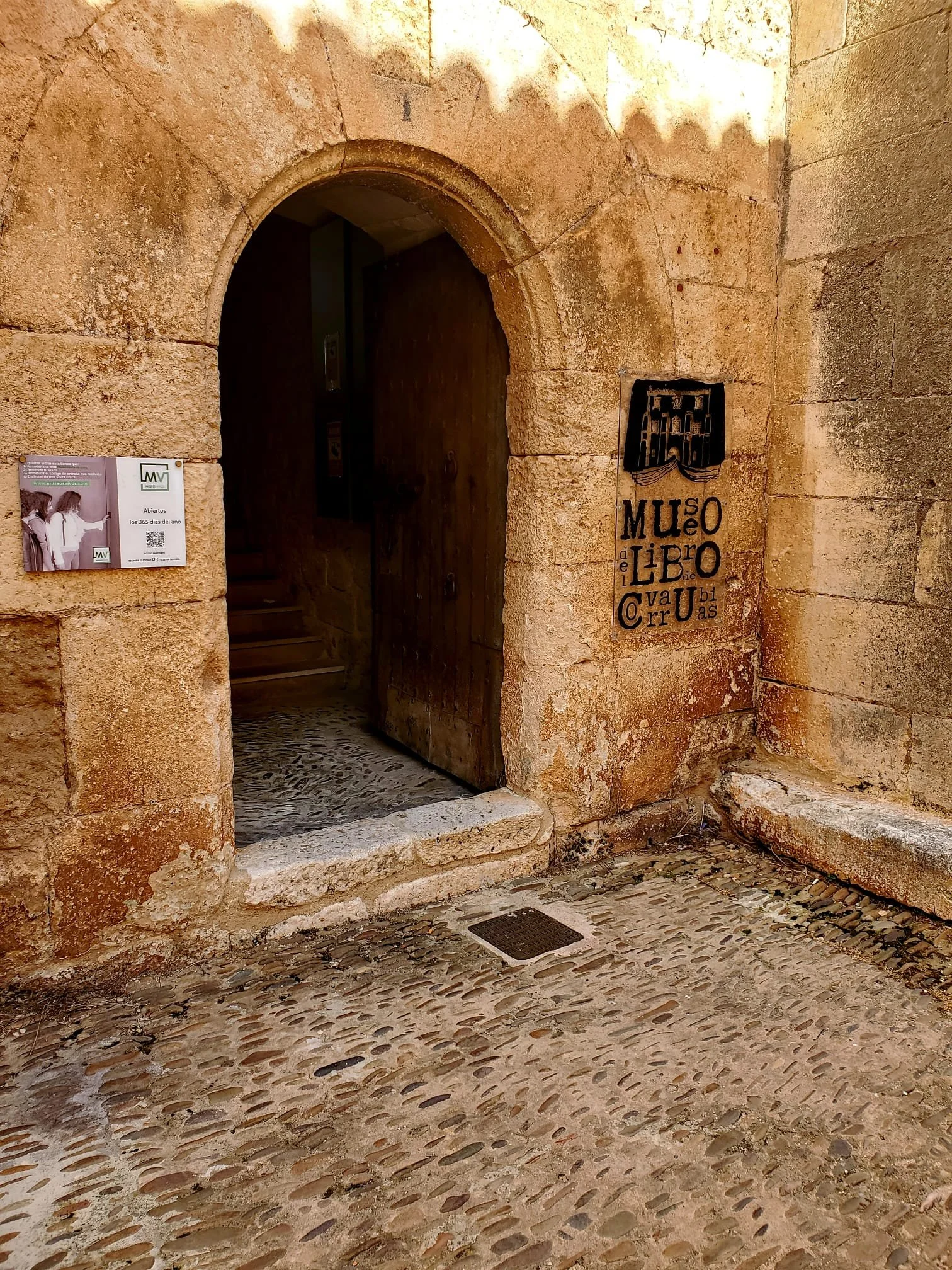
The building itself was originally commissioned in 1575 by Philip II as the “Archivo del Adelantamiento de Castilla” (Archive of the Adelantamiento of Castile, or Archive of the High Sheriff/Governor’s district of Castile), with the purpose of storing official documents. The museum notes that a stone-and-brick building is the perfect fireproof place to store paper.
Because it’s – alas – not generally busy, there is no staff working there, so you need to make a reservation via phone or email, and then will receive a code to get into the building. That was probably the most interesting part about it. In my opinion, for a museum about the history of the book, it was pretty boring. Or, more to the point, way too dry and factual and not enough “storytelling” (yes, even about facts). The only part that really stood out for me was one small display – which was told as a story.
As a girl in the 17th century, Maria Sibylla Merian was known for closely observing insects and plants, a hobby that was odd for that time (what? girls playing in the dirt??). Later, in 1699 she traveled as a divorced single mother with her daughter to Suriname, a small country in South America with huge tropical rainforests, to study and draw insects and flora. After returning to Europe, she published and illustrated a major work on those “exotic” plants and insects. Why she is remembered is that she became one of the most important early scientific illustrators and naturalists.
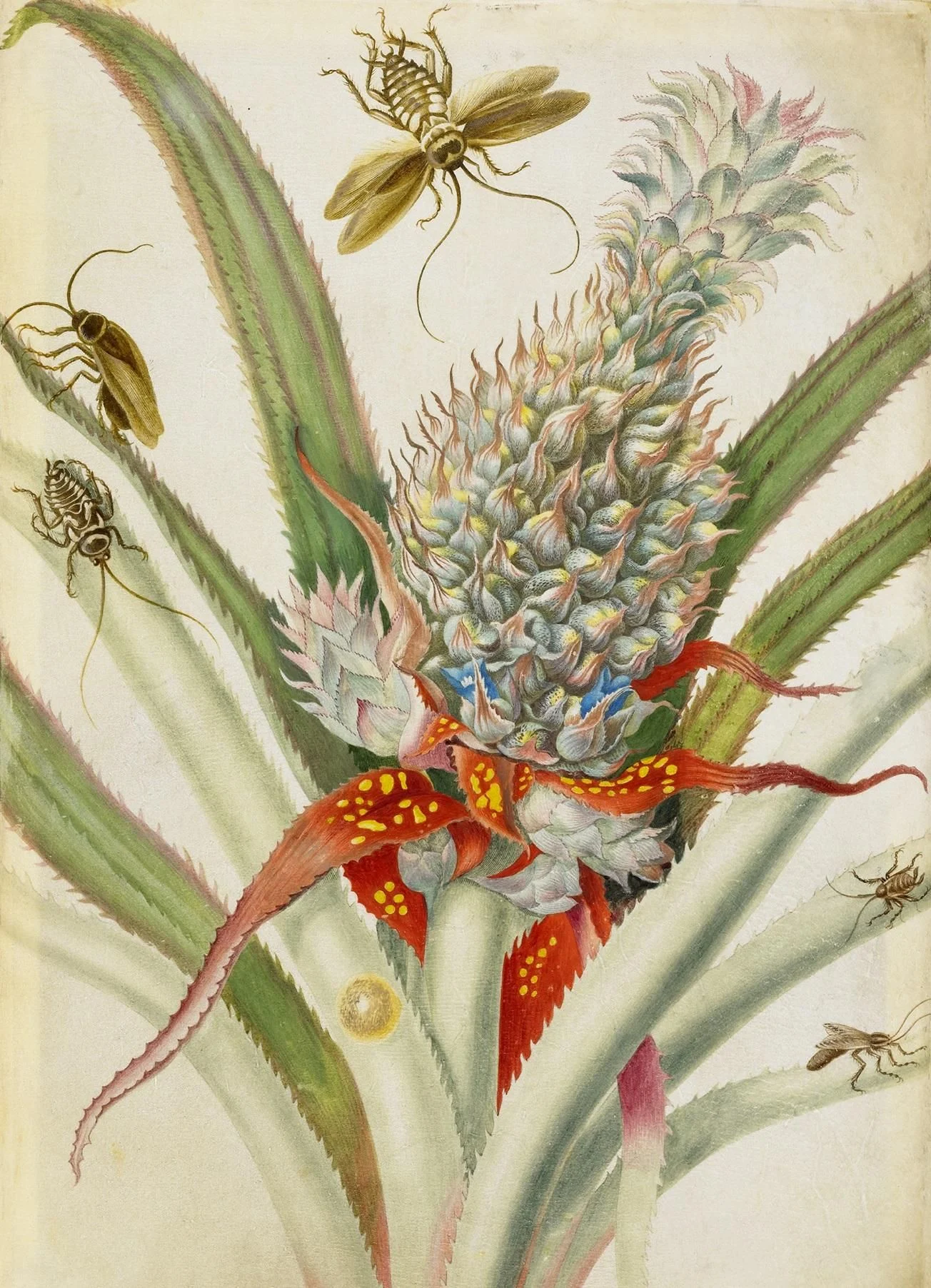
Source: British Museum
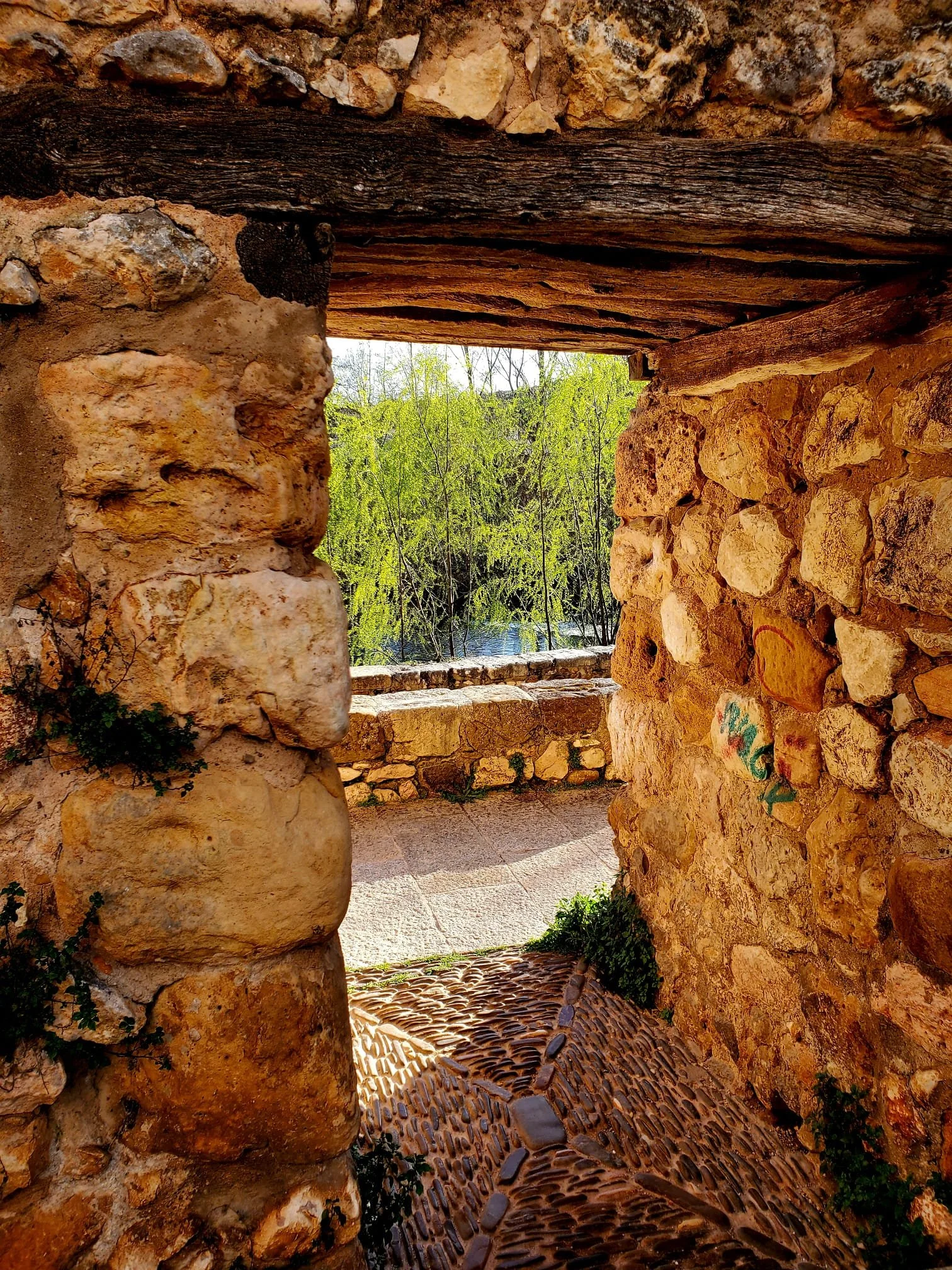
When we were done, we wandered around and had lunch in the the plaza (Plaza de doña Urraca, I think). It was a lovely little village and, just like Sepúlveda, mostly devoid of people.
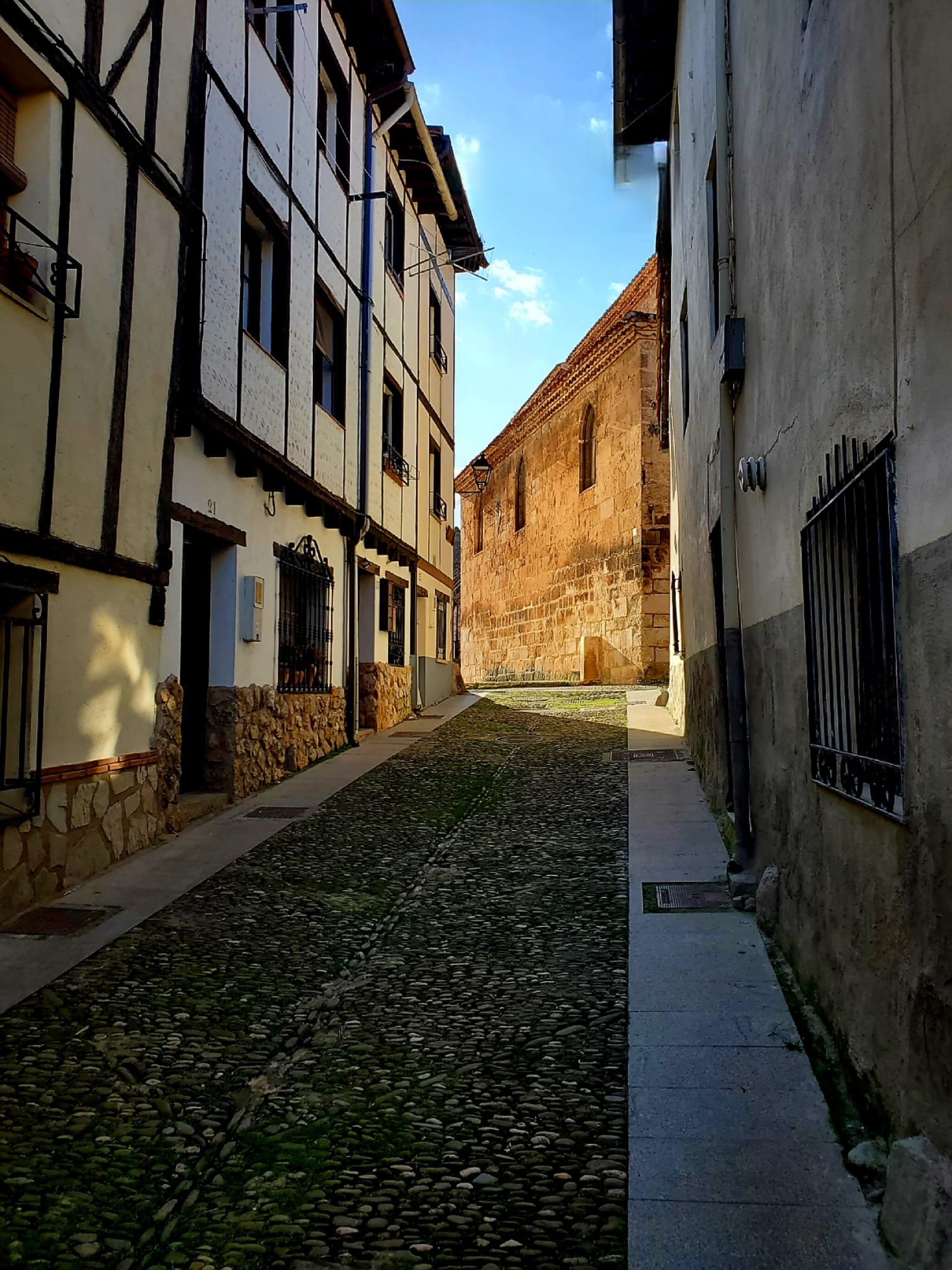
Finally, we got back in the car and headed for Logroño, where we had a dinner reservation with A’s good friend E.
One thing I couldn’t help noticing – and loving – was that when driving from place to place in Spain (especially after leaving Madrid well behind), you’ll be going through the countryside and then suddenly you’ll come to an old pueblo, where the highway turns into a super narrow, windy street with stone buildings right there flanking either side. And then a minute later you’re back in the vast countryside until you eventually squeeze through another small town.
Click here to read Adjusting to Life in Spain: Road Trip Through Spain & Portugal (pt. 2)
Note: All photos taken or created (using DALL-E) by Selena Templeton and Alberto Resino, unless otherwise noted.
If you enjoyed reading this travel blog, check out some of my other adventures:
Adjusting to Life in Spain: Dating in My Non-Native Language
Adjusting to Life in Spain: Using the Spanish Healthcare System
Adjusting to Life in Spain: Damn, I Can’t Find My Favorite Products Here!
From Fiesta Invites to Flamenco Nights: My Adventure in Spain
My Road Trip to the Four Corners: Utah, Colorado, New Mexico, Arizona
